Fishing in United Kingdom
- Lakes
- 11,216
- Rivers
- 37,734
- Access
- 1,572
- Boat Ramps
- 362
- Shops
- 0
The United Kingdom sits at the edge of the North Atlantic, and water is everywhere — chalk streams cutting through southern England, spate rivers draining the Scottish Highlands, tidal estuaries, canal networks, reservoirs, and hundreds of miles of open coastline.
The fishing reflects that variety: coarse angling on stillwaters and lowland rivers, game fishing for salmon and trout on upland streams, and sea fishing that never really has an off-season. Freshwater fishing here divides cleanly into two traditions.
Coarse fishing — carp, tench, bream, pike, perch — is the more accessible of the two, with day-ticket commercial fisheries spread across the country where you pay to fish without joining a club.
Carp are the obsession for many, and purpose-built lakes hold fish well over 40 lbs.
The best coarse fishing on rivers runs from mid-June through to mid-March; rivers close from 15 March to 15 June to protect spawning fish, though many stillwaters and canals stay open year-round.
Autumn is when pike and perch come into their own — the Fens in Cambridgeshire and Scottish lochs both produce well. Game fishing runs on a different calendar and a different culture.
Atlantic salmon return each year to rivers like the Wye and the Dee to spawn, and the fishing for them is almost entirely controlled by private beats and clubs. The River Spey in Scotland gave its name to a casting style still taught and argued about today.
Brown trout and grayling fill out the picture — the River Wye holds strong wild populations of both, and winter grayling on rivers like the Hampshire Avon draws dedicated fly anglers when most other fishing has slowed.
Sea fishing operates outside the freshwater licence system entirely — no licence is required for non-migratory saltwater species. Cod along the Dorset and Northumberland coasts come in through winter.
Ports like Brixham, Newlyn, and Whitby anchor the commercial side of things, but recreational sea anglers work the same coastlines from charter boats and shore marks year-round. Access is the thing that catches newcomers off guard.
Most freshwater fishing is private, controlled by clubs or landowners, and a rod licence from the Environment Agency covers England and Wales but doesn't grant access to any water — that requires a separate permit from whoever owns the fishery.
Scotland and Northern Ireland operate under different rules entirely. The Angling Trust maintains a map of venues and can point you toward beginner-friendly fisheries in England.
Getting the access question sorted before you travel saves a lot of standing at locked gates.
The licence fees fund habitat work, stocking, and enforcement — it's a system that has helped cod recover enough to be reclassified as sustainable after decades of commercial overfishing. That history of pressure and recovery is worth keeping in mind.
The fishing here is good partly because people have been paying attention to it for a very long time.
Species & education
Learn what type of fish are in United Kingdom and what's needed to catch them.
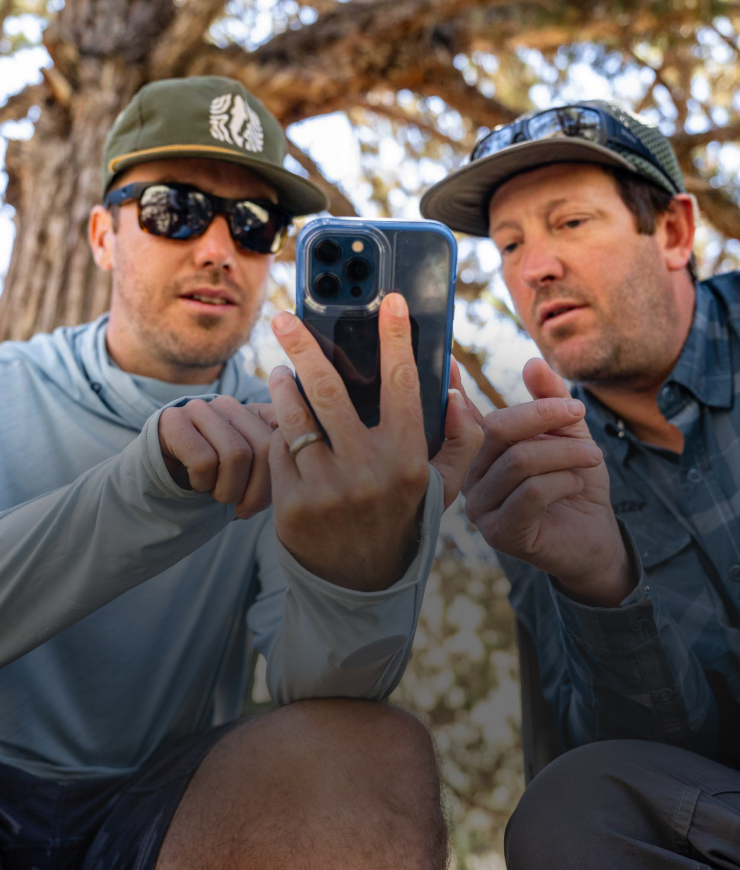
Find which waters have the species you want to catch

Rainbow Trout
Oncorhynchus mykiss

Brown Trout
Salmo trutta

Brook Trout
Salvelinus fontinalis

Northern Pike
Esox lucius

Allis Shad
Alosa alosa

Angler
Lophius piscatorius

Arctic Char
Salvelinus alpinus

Atlantic Bluefin Tuna
Thunnus thynnus

Atlantic Cod
Gadus morhua

Atlantic Halibut
Hippoglossus hippoglossus

Atlantic Herring
Clupea harengus

Atlantic Horse Mackerel
Trachurus trachurus

Atlantic Mackerel
Scomber scombrus

Atlantic Salmon
Salmo salar

Atlantic Wolffish
Anarhichas lupus

Ballan Wrasse
Labrus bergylta

Barbel
Barbus barbus

Black Seabream
Spondyliosoma cantharus

Bleak
Alburnus alburnus

Blonde Ray
Raja brachyura

Blue Shark
Prionace glauca

Bogue
Boops boops

Bourget Whitefish
Coregonus lavaretus

Brill
Scophthalmus rhombus

Bull Huss
Scyliorhinus stellaris

Coalfish
Pollachius virens

Common Bream
Abramis brama

Common Carp
Cyprinus carpio

Common Dace
Leuciscus leuciscus

Common Gudgeon
Gobio gobio

Common Roach
Rutilus rutilus

Common Skate
Dipturus intermedius

Common Sole
Solea solea

Common Stingray
Dasyatis pastinaca

Common Sturgeon
Acipenser sturio

Conger Eel
Conger conger

Corkwing Wrasse
Symphodus melops

Couch's Seabream
Pagrus pagrus

Crucian Carp
Carassius carassius

Cuckoo Ray
Leucoraja naevus
Fish smarter with real-time insights
Whether you're en route and conditions shift or you're looking for the best spot based on current flows, we enable you to make informed decisions on the fly.




Explore United Kingdom by region
Cities in United Kingdom
- Aberdeen, Scotland
- Bangor, Northern Ireland
- Barry, Wales
- Belfast, Northern Ireland
- Birmingham, England
- Bradford, England
- Bridgend, Wales
- Bristol, England
- Buckley, Wales
- Cardiff, Wales
- Carrickfergus, Northern Ireland
- Coventry, England
- Craigavon, Northern Ireland
- Derry, Northern Ireland
- Dundee, Scotland
- Dunfermline, Scotland
- East Kilbride, Scotland
- Edinburgh, Scotland
- Glasgow, Scotland
- Hamilton, Scotland
- Leeds, England
- Leicester, England
- Lisburn, Northern Ireland
- Liverpool, England
- Livingston, Scotland
- Llanelli, Wales
- London, England
- Manchester, England
- Newport, Wales
- Newtownabbey, Northern Ireland
- Newtownards, Northern Ireland
- Paisley, Scotland
- Portadown, Northern Ireland
- Rhondda, Wales
- Sheffield, England
- Swansea, Wales
- Tonypandy, Wales
- Wrexham, Wales
National parks in United Kingdom
- Bannau Brycheiniog National Park
- Cairngorms National Park
- Dartmoor National Park
- Eryri National Park
- Exmoor National Park
- Lake District National Park
- Loch Lomond and The Trossachs National Park
- New Forest National Park
- North York Moors National Park
- Northumberland National Park
- Peak District National Park
- Pembrokeshire Coast National Park
- Yorkshire Dales National Park
Explore United Kingdom waters
Top fishing waters
Popular Cities
Loading popular cities...

Smarter Fishing Starts in the App.
onWater Fish gives you everything you need to plan smarter, fish better, and own every trip from first cast to last.