Brown Trout
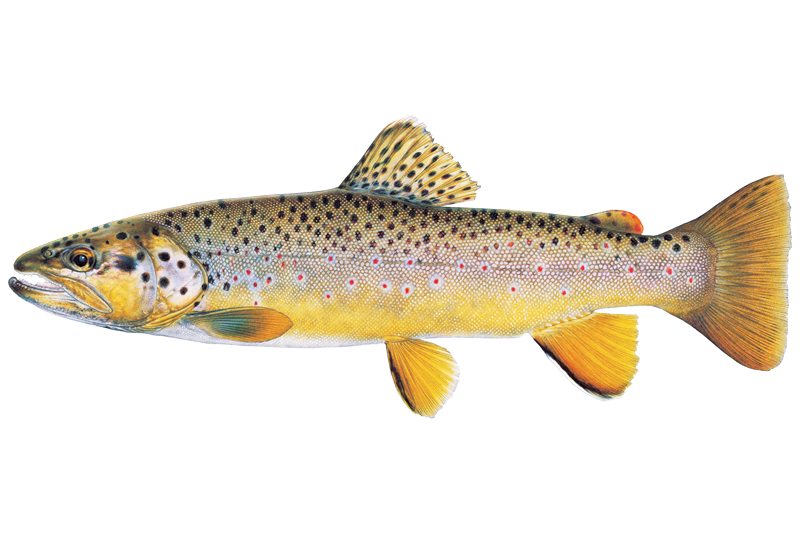
Brown trout are native to the UK and sit at the heart of British fly fishing. From small moorland burns to famous Hampshire chalkstreams, they live in clean, well-oxygenated water across England, Scotland, Wales and Northern Ireland.
Sea-run fish — called sea trout — are the same species in a different mode. Wild fish are selective, spook easily, and reward anglers who read water and match the hatch. Few fish ask more of you, or give more back.
Scientific Name: Salmo trutta
Also known as sea trout (migratory form), ferox trout (large lake predator form), brownie
- Golden-brown to yellowish flanks covered in dark spots ringed with pale halos, plus scattered red spots; belly pale to cream. Colour varies widely by habitat — peaty-water fish run golden, sea trout turn silver.
- Adipose fin (small, fleshy fin between dorsal and tail) marks it as a salmonid; square, near-spotless tail distinguishes it from salmon and rainbow trout.
- Upper jaw extends clearly beyond the eye — a reliable separation from Atlantic salmon of similar size.
- Typical river fish run 20–50 cm; chalkstream and loch fish regularly exceed 2–3 lb, with genuine wild fish over 5 lb considered exceptional. British record stands above 31 lb.
What to know
Habitat Distribution
- Fully native to the British Isles — one of the few salmonids that never needed introduction here. Present in suitable rivers and lakes throughout England, Scotland, Wales and Northern Ireland.
- Needs clean, cool, well-oxygenated water; most abundant in upland streams, spate rivers and spring-fed chalkstreams. Also found in canals and lowland rivers where water quality allows.
- Sea trout (the migratory form) use coastal estuaries and inshore waters as adults, returning to natal rivers to spawn — common on west-coast Scottish and Welsh rivers in particular.
- Large, deep lochs in Scotland hold ferox trout — the same species grown big on a diet of Arctic char and other fish rather than invertebrates.
Key Locations
- River Test and River Itchen, Hampshire — the benchmark chalkstreams, spring-fed and clear, where upstream dry fly fishing developed as a discipline.
- River Frome and River Piddle, Dorset — Wessex chalkstreams known for large, free-rising wild fish and prolific hatches through late spring.
- River Wye (Wales/England border) and Welsh spate rivers — productive for both resident browns and sea trout running from the Severn estuary.
- Scottish Highland lochs and rivers — the Tay, Tweed, and Ness catchments hold strong populations; remote hill lochs offer wild fish in numbers rarely found further south.
- East Lyn River, Exmoor — a steep, rocky spate river with lively small wild trout and good hatches of large dark olives in spring.
Specific Spots
- Current breaks directly behind boulders or submerged timber — trout hold in the slack water and dart into the flow to intercept food without burning energy.
- The head of a pool where fast water slows and deepens; food funnels through a narrow band here, concentrating feeding fish, especially during a hatch.
- Undercut banks and overhanging vegetation give cover from herons and ospreys; bigger fish in particular tuck under these features during daylight.
- Weed-lined channels on chalkstreams — trout sit in the clear lanes between ranunculus beds, rising to surface flies and intercepting nymphs washing through the stems.
Brown Trout FAQ
Answers from onWater's species guide.
What are the best lures and bait for Brown Trout?
Small spinners (sizes 0–2) in gold or silver are the go-to for river brown trout, the blade flash and vibration reads as a small fish or large invertebrate. Mepps and similar blade spinners have decades of track record on UK streams.
What flies work for Brown Trout?
Dry flies covering upwing mayflies, an Adams, Blue Dun, or Comparadun in sizes 14–18, are the first choice when fish are rising. Match the size of the natural as closely as you can; on chalkstreams, pattern matters less than a drag-free drift (where the fly floats naturally with the current, without being pulled by...
When is the best time to fish for Brown Trout?
Most English and Welsh rivers open in late winter and run through to autumn, the early weeks fish best with nymphs and wet flies before hatches establish. Late spring through early summer brings the best dry fly fishing as mayfly, BWO, and sedge hatches peak and fish feed confidently on the surface.
How do you catch Brown Trout?
Most UK anglers approach brown trout by wading or walking the bank, spotting individual fish or rise forms before casting. On chalkstreams the upstream dry fly to a visible rising fish is the classic method; on spate rivers, nymphs and wet flies fished across and down cover more water.
What do Brown Trout eat?
Aquatic invertebrates form the daily staple: mayfly nymphs, caddis larvae (in their stick or stone cases on the riverbed), stonefly nymphs, and midge pupae. Turn a few stones to see what's present, a Pheasant Tail or Hare's Ear nymph imitates the mayfly and caddis stages that drift most often.
See it in the app
Most maps show you water.
onWater shows you Brown Trout.



- 01 · Species map filter
Map every Brown Trout water
Pick Brown Trout and the map zeroes in on the waters they call home. No more guessing which lake holds them.
- 02 · Waterbody species
Tap any water. See what lives there.
Species, behavior and seasonal patterns for every lake, river and pond, before you leave the driveway.
- 03 · Angler Intelligence
Ask how to catch Brown Trout
Tactics, gear and timing from onWater's AI fishing guide, tuned to the species and the water you're on.
Stop guessing where Brown Trout are.
Open the map, filter by Brown Trout, and head to water that holds them. Download onWater and plan your next trip in minutes.
- Species map filter
- Angler Intelligence
- Fishing journal
Explore other species
Trout, bass, salmon, panfish and everything in between. Each guide unpacks the behavior, seasons, and tactics that put fish in the net.
No species information available.
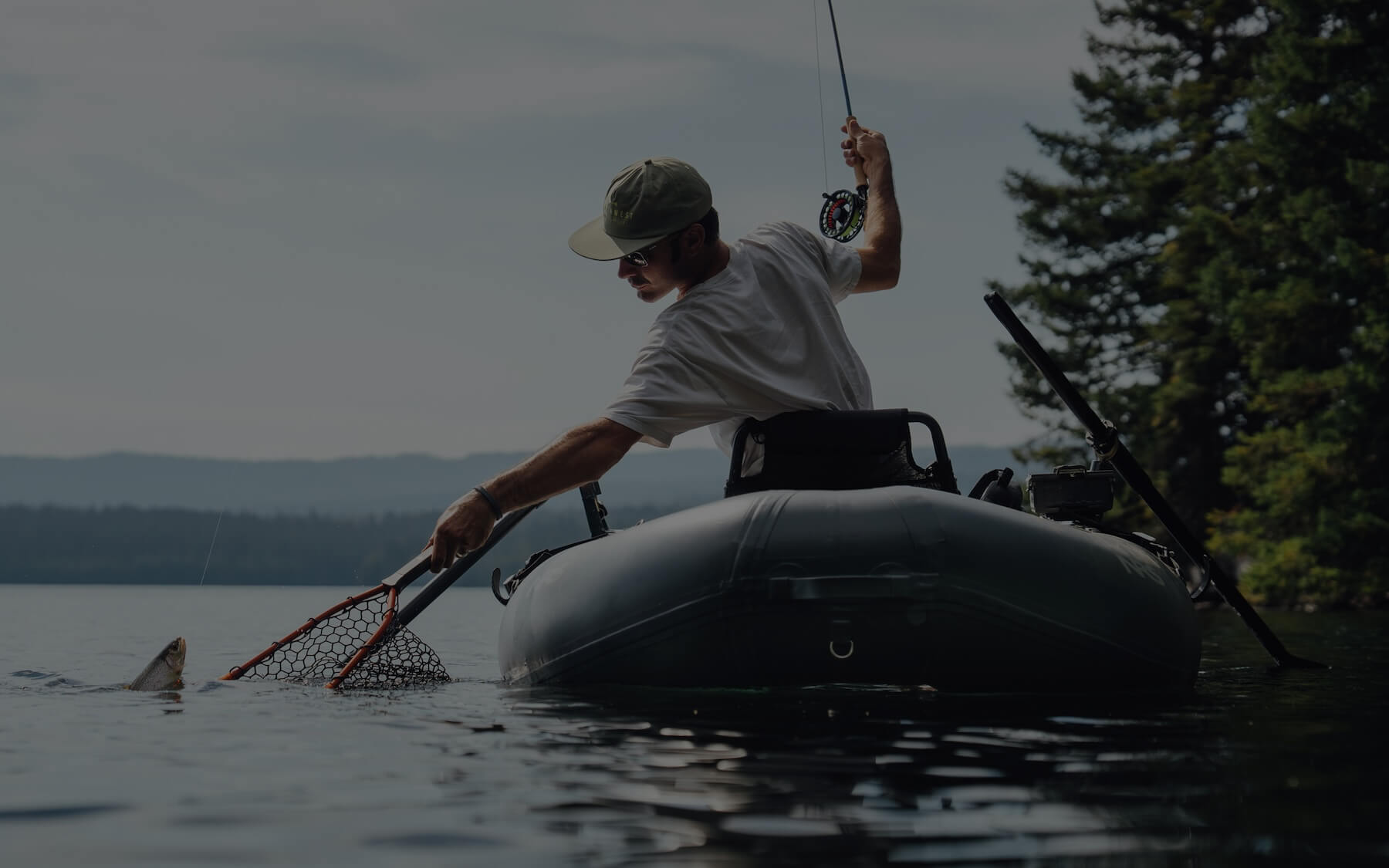
Smarter Fishing Starts in the App.
onWater Fish gives you everything you need to plan smarter, fish better, and own every trip from first cast to last.