Northern Pike
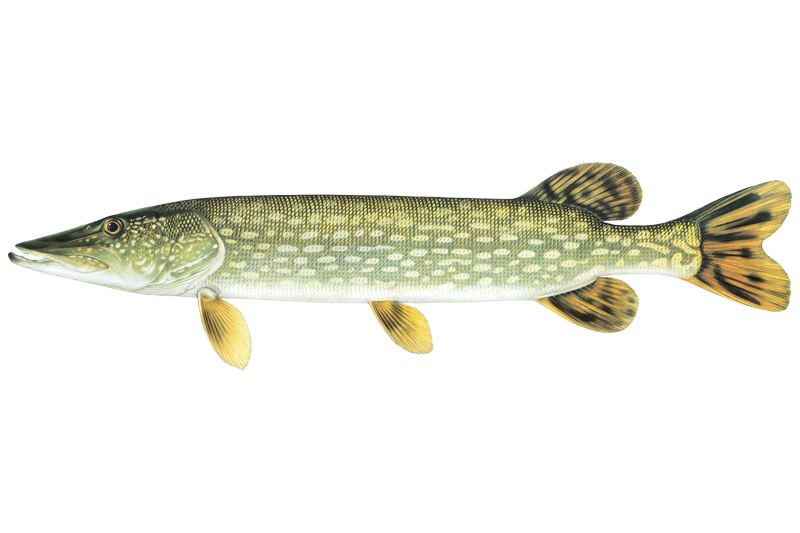
Pike are the UK's dominant freshwater predator and have been here since before the last ice age.
They grow larger in British and Irish waters than almost anywhere in North America — fish over 20 lb are caught regularly, and specimens pushing 40 lb have been recorded.
From Norfolk Broads to Scottish lochs, pike fishing draws a dedicated following year-round.
Scientific Name: Esox lucius
Also known as Pike, Jack, Jackfish
- Long, torpedo-shaped body with a flattened, duck-bill snout packed with backward-pointing teeth — unmistakable in hand.
- Olive-green to grey flanks with pale yellow or cream spots and bars; white or cream belly; dorsal fin set far back near the tail.
- Typical UK fish run 4–12 lb; a 20 lb pike is a serious achievement, and fish over 30 lb are caught each season from top venues.
- Females grow considerably larger than males — most big fish are female.
What to know
Habitat Distribution
- Native to the UK and widespread across England, Wales, Scotland, and Ireland in rivers, lakes, reservoirs, canals, and gravel pits.
- Favour clear, weedy stillwaters and slow river sections — the Norfolk Broads, the Lake District, Scottish lochs, and the Thames valley all hold strong populations.
- Canals throughout England hold pike that are often overlooked and lightly pressured.
- Tolerant of a wide range of conditions; found from small estate lakes to large open reservoirs.
Key Locations
- Norfolk Broads — a network of shallow, weedy waterways in East Anglia long associated with big pike and high catch rates.
- Loch Lomond and other Scottish lochs — deep, clear waters that produce large fish and allow boat and bank fishing.
- River Thames (Oxford to Teddington) — a reliable river pike fishery accessible to a large population of anglers.
- Lake District — Windermere, Coniston, and Ullswater all hold pike and draw visiting anglers throughout the season.
- River Tees and Weardale Reservoirs — well-regarded venues in northeast England known for consistent pike fishing.
Specific Spots
- Weedbed edges and reed margins — pike hold tight to cover and use it to ambush prey moving along the edge.
- Drop-offs where shallow shelves fall into deeper water; pike use the depth change as a patrol route, especially in winter.
- River confluences, lock cuts, and slack water behind bridge pilings where baitfish congregate and pike follow.
- Sunken timber, moored boats, and pontoons in canals and gravel pits provide shade and structure that pike rarely leave far from.
Northern Pike FAQ
Answers from onWater's species guide.
What are the best lures and bait for Northern Pike?
Deadbaits, sea fish such as smelt, sardine, and mackerel alongside freshwater roach or skimmer bream, are the most widely used method in the UK, fished static on the bottom or popped up just above it.
What flies work for Northern Pike?
Large streamer patterns, 6–12 inch flies tied on articulated hooks, imitate injured baitfish and are the foundation of UK pike fly fishing. Patterns with rabbit strip, marabou, or synthetic flash in white, olive, or perch colours are widely used.
When is the best time to fish for Northern Pike?
Autumn (October–November), cooling water concentrates baitfish and triggers pike to feed heavily; widely considered the start of prime season. Winter (December–February), the most popular period for big-fish hunters; pike metabolism slows but large females are at peak weight ahead of spawning.
How do you catch Northern Pike?
Most UK pike anglers fish from the bank with static or slowly retrieved deadbaits, particularly through autumn and winter when fish are at their fattest.
What do Northern Pike eat?
Primarily smaller fish, roach, bream, perch, and rudd make up the bulk of the diet in most UK waters. Dead or live roach and smelt are the classic UK deadbait, and lures that match a struggling silver fish (spoons, shads, jerkbaits) work on the same trigger.
See it in the app
Most maps show you water.
onWater shows you Northern Pike.



- 01 · Species map filter
Map every Northern Pike water
Pick Northern Pike and the map zeroes in on the waters they call home. No more guessing which lake holds them.
- 02 · Waterbody species
Tap any water. See what lives there.
Species, behavior and seasonal patterns for every lake, river and pond, before you leave the driveway.
- 03 · Angler Intelligence
Ask how to catch Northern Pike
Tactics, gear and timing from onWater's AI fishing guide, tuned to the species and the water you're on.
Stop guessing where Northern Pike are.
Open the map, filter by Northern Pike, and head to water that holds them. Download onWater and plan your next trip in minutes.
- Species map filter
- Angler Intelligence
- Fishing journal
Explore other species
Trout, bass, salmon, panfish and everything in between. Each guide unpacks the behavior, seasons, and tactics that put fish in the net.
No species information available.

Smarter Fishing Starts in the App.
onWater Fish gives you everything you need to plan smarter, fish better, and own every trip from first cast to last.