Fishing in Georgia
- Lakes
- 4,085
- Rivers
- 5,726
- Access
- 337
- Boat Ramps
- 736
- Shops
- 75
Georgia covers an unusual amount of fishing ground for a single state.
In a long day's drive you can wade a wild-trout creek in the Blue Ridge, paddle a Piedmont shoal for a native bass that exists almost nowhere else, and watch tarpon roll in a tidal sound off a barrier island.
None of those scenes is a sideshow — each has its own established culture, and together they make Georgia harder to summarize than most southern states.
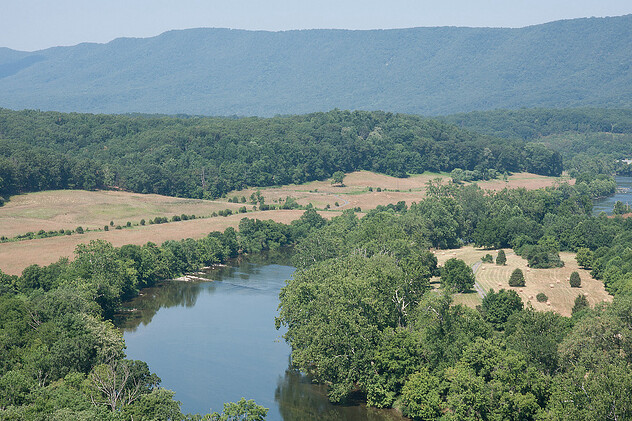
The trout fishing is centered in Fannin County, where the Toccoa runs as a freestone above Lake Blue Ridge and a cold tailwater below it.
Blue Ridge calls itself the Trout Capital of Georgia and largely earns it: drift boats, guides like Appalachian Anglers, and a real spring hatch sequence — blue-winged olives and caddis in March, stoneflies into April and May before the water warms.
Back in the Chattahoochee National Forest, blue-line creeks like Noontootla, Cooper, and Jacks River inside the Cohutta Wilderness hold wild rainbows, browns, and brook trout at the southern edge of the brookie's eastern range.
Noontootla is artificial-only, catch-and-release with a 16-inch minimum; Jacks River isn't stocked at all. Standard trout season runs from the last Saturday in March through October 31, and a separate trout license is required.
Below the fall line, the story becomes bass — and Georgia's bass story is unusually deep. The Flint runs free for 344 miles and remains the last real stronghold of the shoal bass, a species only formally described in 1999.
Sprewell Bluff and Big Lazer Creek WMA are the standard put-ins, and a canoe or kayak is the right tool.
The DNR's Georgia Bass Slam — catch five of the state's ten recognized black bass species in a calendar year — has built a small subculture around the Bartram's, Altamaha, Tallapoosa, Suwannee, and redeye on top of the more familiar fish.
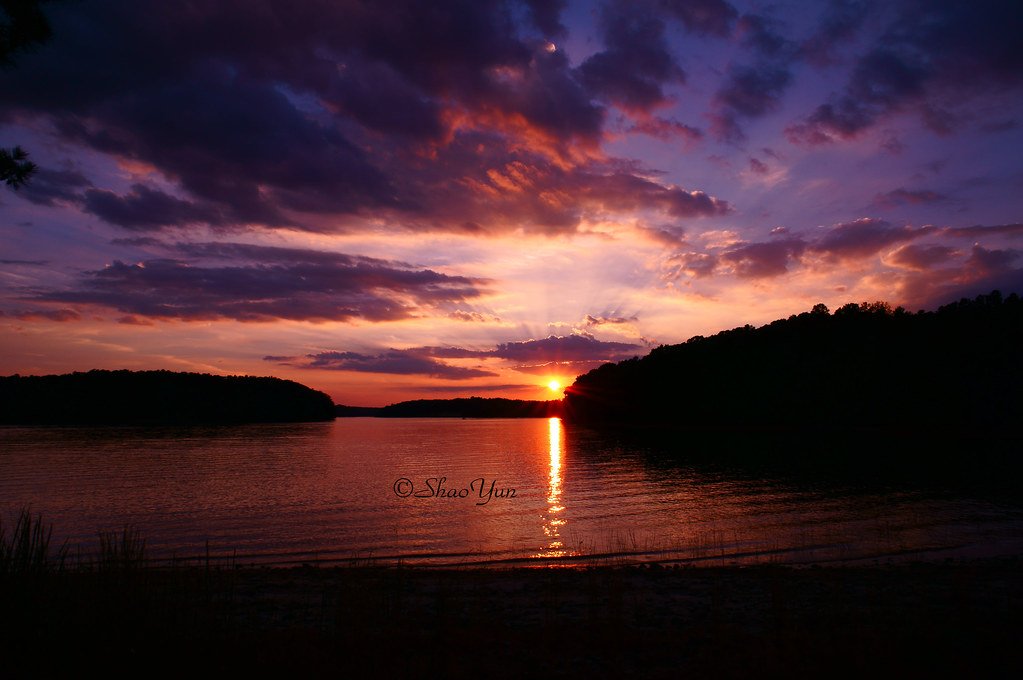
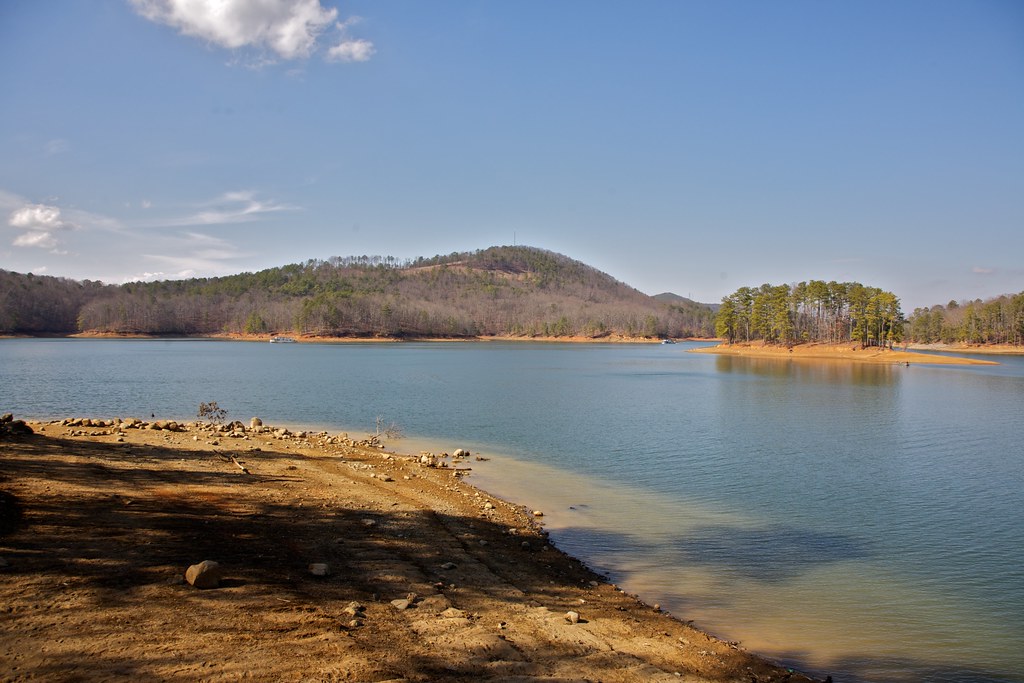
Lake Lanier near Atlanta is the spotted bass factory and a relentless tournament lake; Lake Seminole down on the Florida line grows giant largemouth in its grass.
The George Perry record — 22 pounds, 4 ounces, caught in 1932 from a Telfair County oxbow now inside Horse Creek WMA — still hangs over all of it. The coast is the part most outsiders miss. The Golden Isles around St.
Simons, Jekyll, and Cumberland hold redfish and seatrout year-round in the marsh, with bull reds pushing into the sounds in October and 80-to-200-pound tarpon working the inlets June through September. Tripletail show up nearshore from late April on.
A free SIP permit covers the saltwater side. One thing worth knowing before you wade in: Georgia's stream-access law is a mess. The state's navigability standard is narrow, and on non-navigable water a landowner holding both banks can keep you out.
The 2024 legislation clarified some things and ducked others, and famous water like the Upper Chattahoochee and Toccoa still sit in a gray zone.
National forest, WMA, and state park frontage is where access is actually guaranteed — and it's a lot of why anglers here protect those parcels the way they do.
Species & education
Learn what type of fish are in Georgia and what's needed to catch them.

Find which waters have the species you want to catch

Largemouth Bass
Micropterus salmoides

Smallmouth Bass
Micropterus dolomieui

Rainbow Trout
Oncorhynchus mykiss

Brown Trout

Brook Trout
Salvelinus fontinalis

Muskellunge
Esox masquinongy

Walleye

Black Crappie
Pomoxis nigromaculatus
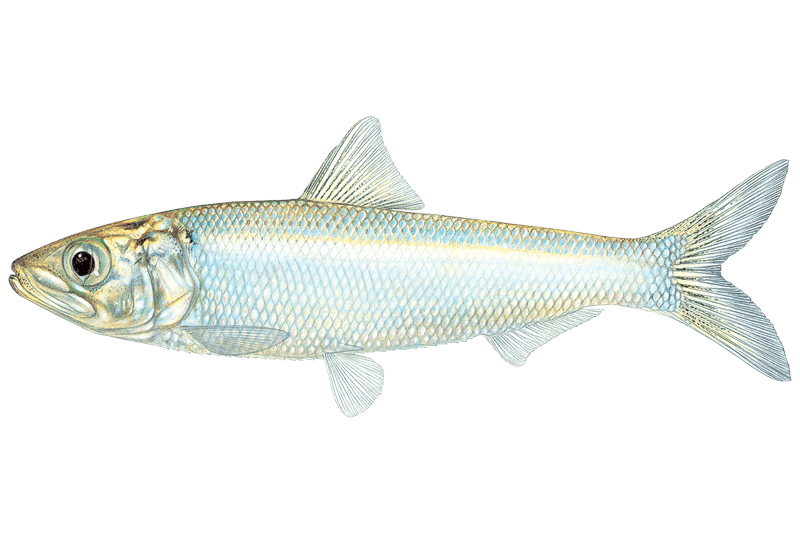
Alabama Shad
Alosa alabamae

Alewife
Alosa pseudoharengus
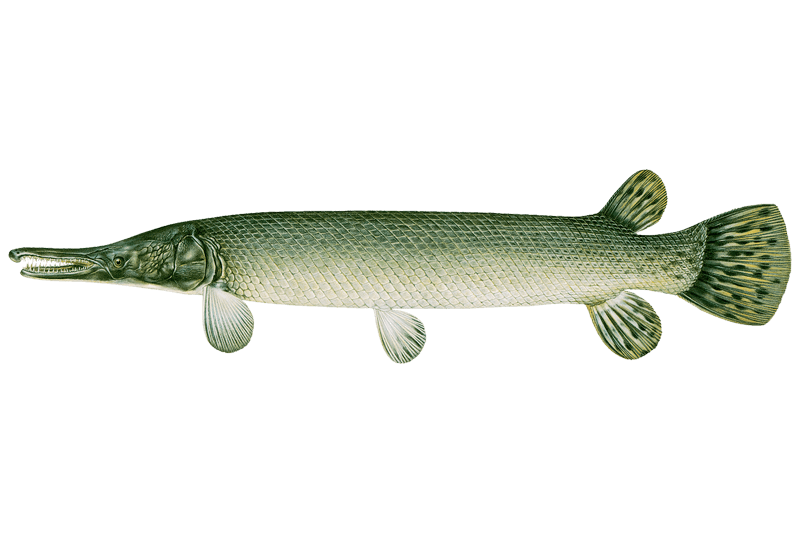
Alligator Gar

American Eel
Anguilla rostrata

American Shad
Alosa sapidissima

Atlantic Croaker
Micropogonias undulatus

Atlantic Sharpnose Shark
Rhizoprionodon terraenovae

Atlantic Sturgeon
Acipenser oxyrinchus

Black Bullhead
Ameiurus melas

Black Drum
Pogonias cromis

Black Sea Bass
Centropristis striata

Blacktip Shark
Carcharhinus limbatus

Blue Catfish
Ictalurus furcatus

Bluefish
Pomatomus saltatrix

Bowfin
Amia calva

Brown Bullhead
Ameiurus nebulosus

Chain Pickerel
Esox niger

Channel Catfish
Ictalurus punctatus

Common Carp
Cyprinus carpio

Creek Chub
Semotilus atromaculatus

Flathead Catfish
Pylodictis olivaris

Flier
Centrarchus macropterus

Freshwater Drum
Aplodinotus grunniens

Gizzard Shad
Dorosoma cepedianum

Grass Carp
Ctenopharyngodon idella

Green Sunfish
Lepomis cyanellus

Hickory Shad
Alosa mediocris

Lake Sturgeon
Acipenser fulvescens

Longear Sunfish
Lepomis megalotis

Longnose Gar

Nile Tilapia
Oreochromis niloticus

Northern Hogsucker
Hypentelium nigricans
Fishing guides in Georgia
Book a trip with a local fishing guide through Guidesly.


James Weeks
Reel N Time Fishing Charters
5.0 (111 reviews)
Professional Crappie Fishing in Georgia
Book on Guidesly, opens in new tab
Bradd Sasser
William Sasser Guide Service
5.0 (59 reviews)
Book Your Next Clarks Hill Lake Fishing Charters
Book on Guidesly, opens in new tab
Zachary Holick
Captain Zach’s Fishing Charter
5.0 (29 reviews)
Unforgettable Fishing Adventures in Savannah, GA
Book on Guidesly, opens in new tab
Brad Whitehead
No Excuses Striper Fishing On Lake Lanier
5.0 (15 reviews)
The Best Lake Lanier Fishing Charters In Georgia!
Book on Guidesly, opens in new tab
Tripp Lang
Captain Tripp Lang's Charters
5.0 (11 reviews)
Discover Georgia's Fishing Charters Haven
Book on Guidesly, opens in new tab
Coosa River Outfitters
Coosa River Outfitters
4.9 (9 reviews)
Best Coosa River Fishing Charter
Book on Guidesly, opens in new tab
Fish smarter with real-time insights
Whether you're en route and conditions shift or you're looking for the best spot based on current flows, we enable you to make informed decisions on the fly.







Georgia licenses and regulations

Georgia Boating Regulations
When using any type of watercraft to access a body of water, it is important to follow all federal, state, and local rules and regulations. These rules and regulations include boat permitting and licensing, invasive species inspections and stamps, life jacket and PFD rules, motor size and horsepower restrictions, noise limitations, restrictions on personal watercraft, and many more. Visit the web link below for the most current rules and regulations for this body of water.

Georgia Delayed Harvest Streams
Anglers fishing delayed harvest streams must release all trout immediately and use and possess only artificial lures with one single hook per lure from Nov. 1–May 14 annually. The use of additional “dropper” lures on one line is permitted as long as each lure contains one single hook. These restrictions do not apply from May 15–Oct. 31 of each year.

Georgia Fishing License
Anglers age 16 and older must have a current Georgia fishing license in their possession while fishing in fresh or salt water in Georgia. Additionally, a free SIP is required to fish in saltwater. A temporary authorization number obtained by telephone or internet sale may be used for seven days until the paper copy is received or printed. Game Wardens may require photo identification when checking fishing licenses. Exception: A fishing license is not required to fish in private ponds (does not include ponds owned by governments—city, county, state, or federal) nor by a resident and their immediate family when fishing on their land.

Georgia Fishing Regulations
When using any type of watercraft to access a body of water, it is important to follow all federal, state, and local rules and regulations. These rules and regulations include boat permitting and licensing, invasive species inspections and stamps, life jacket and PFD rules, motor size and horsepower restrictions, noise limitations, restrictions on personal watercraft, and many more. Visit the web link below for the most current rules and regulations for this body of water.

Georgia Stream Access Laws
Navigable waters are those capable of regular barge traffic. The public may boat and fish to the low water mark only where the streambed is owned by the state. If the streambeds are private, you need permission to wade and fish.
National parks in Georgia
Explore Georgia waters
Smarter Fishing Starts in the App.
onWater Fish gives you everything you need to plan smarter, fish better, and own every trip from first cast to last.