Fishing in Argentina
- Lakes
- 3,063
- Rivers
- 5,397
- Access
- 0
- Boat Ramps
- 246
- Shops
- 0
Argentina is a long country — longer than most people picture when they first look at a map.
It runs from subtropical river systems in the north down to the windswept tip of South America, and that range means the fishing changes completely depending on where you are.
The spine of the Andes divides it from Chile to the west, and the vast, sparsely populated region of Patagonia anchors the southern half. That's where most visiting anglers end up, and for good reason.
Patagonia's trout fishing is built around rivers that drain the eastern slopes of the Andes — freestone streams, spring creeks, big tailwaters, and glacially fed runs that hold brown and rainbow trout introduced over the past century.
The northern Patagonia zone around Junín de los Andes and San Martín de los Andes gives you the greatest variety in one place, with rivers like the Río Chimehuin and the Río Collon Cura within reach.
The Chimehuin in particular has a reputation for large browns in canyon water — the kind of fish that makes you stare at the sky after they come unbuttoned. Further south and east, the Río Limay runs broader and slower, a different kind of challenge.
The fly fishing season runs from November 1st through May 1st, which lines up neatly with the Northern Hemisphere's off-season. Spring fishing, November through January, means hatches and rising fish.
Summer and autumn — January through April — bring lower, clearer water and the need for more precise presentation.
Wind is a constant in the south, especially down toward Tierra del Fuego, where the Río Grande and Río Gallegos draw anglers specifically for sea-run brown trout.
Those fish run large, and the wind that makes casting miserable is also what keeps them catchable during daylight hours — it breaks up the surface and gives the fish enough cover to stay active.
On rare calm days, the fishing slows and you have to scale down your leaders and abandon the big spey casts entirely. The country has nearly 4,700 kilometres of coastline, but saltwater fishing draws far less attention than the interior.
The freshwater experience — wade fishing clear Andean rivers for wild trout in landscapes that feel genuinely remote — is what brings people back. Access to most Patagonian rivers involves a mix of public water and private estancia land.
Lodges and guided operations are the practical way in for most visiting anglers, and the estancia model means you're often fishing water that sees very little pressure.
That low pressure is worth protecting; the trout populations here are self-sustaining and the rivers are still clean, which isn't something to take for granted. Argentina fishes best when the rest of the Northern Hemisphere is locked in winter.
That timing, combined with water that still feels like it did fifty years ago, is the honest reason people make the long trip south.
Species & education
Learn what type of fish are in Argentina and what's needed to catch them.
Find which waters have the species you want to catch

Rainbow Trout
Oncorhynchus mykiss

Brown Trout
Salmo trutta

Brook Trout
Salvelinus fontinalis

Argentine Hake
Merluccius hubbsi

Argentine Sandperch
Pseudopercis semifasciata

Argentine Seabass
Acanthistius patachonicus

Atlantic Bonito
Sarda sarda

Atlantic Chub Mackerel
Scomber colias

Black Drum
Pogonias courbina

Bluefish
Pomatomus saltatrix

Brazilian Codling
Urophycis brasiliensis

Brazilian Sandperch
Pinguipes brasilianus
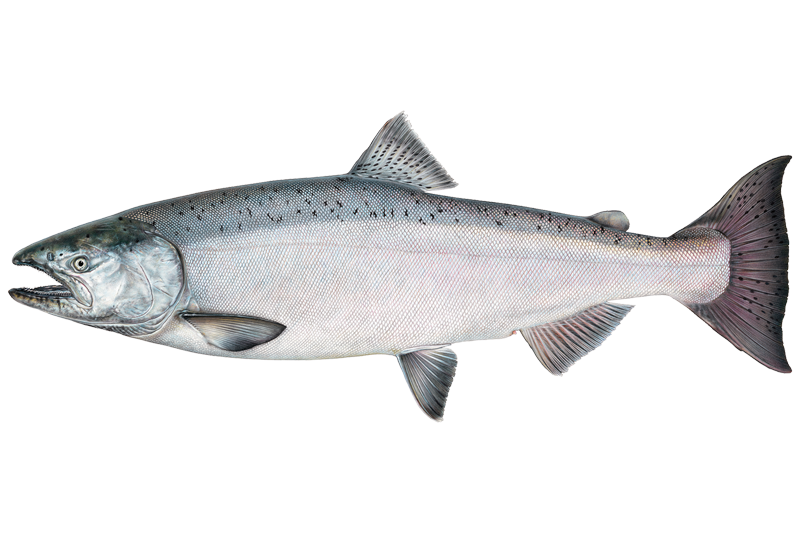
Chinook Salmon
Oncorhynchus tshawytscha

Common Carp
Cyprinus carpio

Common Seabream
Pagrus pagrus

Copper Shark
Carcharhinus brachyurus

Corvina de río
Plagioscion ternetzi

Cucharón
Sorubim lima

Dama
Salminus brasiliensis

Elephant Fish
Callorhinchus callorynchus

Flathead Mullet
Mugil cephalus

King Weakfish
Macrodon ancylodon

Lebranche Mullet
Mugil liza

Lebrancho
Mugil liza

Leporinus obtusidens
Leporinus obtusidens

Mangrullo
Pseudoplatystoma corruscans

Narrownose Smooth-hound
Mustelus schmitti

Pacú
Piaractus mesopotamicus

Palometa picuda
Serrasalmus marginatus

Parona Leatherjacket
Parona signata

Patagonian Blenny
Eleginops maclovinus

Perca
Percichthys trucha

Percichthys colhuapiensis
Percichthys colhuapiensis

Puye
Galaxias maculatus

Puyen grande
Galaxias platei

Rough Scad
Trachurus lathami

Sábalo
Prochilodus lineatus

Sand Tiger Shark
Carcharias taurus

School Shark
Galeorhinus galeus

Sea Trout
Salmo trutta
Fish smarter with real-time insights
Whether you're en route and conditions shift or you're looking for the best spot based on current flows, we enable you to make informed decisions on the fly.




Cities in Argentina
- Abra Pampa, Jujuy
- Aguilares, Tucumán
- Aimogasta, La Rioja
- Albardón, San Juan
- Allen, Río Negro
- Alta Gracia, Córdoba
- Añatuya, Santiago del Estero
- Andalgalá, Catamarca
- Apóstoles, Misiones
- Arauco, La Rioja
- Avellaneda, Buenos Aires
- Bahía Blanca, Buenos Aires
- Barranqueras, Chaco
- Belén, Catamarca
- Bell Ville, Córdoba
- Bella Vista, Tucumán
- Beltrán, Santiago del Estero
- Buenos Aires, Buenos Aires
- Caleta Olivia, Santa Cruz
- Campo Gallo, Santiago del Estero
- Cañada de Gómez, Santa Fe
- Capayán, Catamarca
- Castro Barros, La Rioja
- Catamarca, Catamarca
- Caucete, San Juan
- Centenario, Neuquén
- Chajarí, Entre Ríos
- Chamical, La Rioja
- Charata, Chaco
- Chilecito, La Rioja
- Chos Malal, Neuquén
- Cinco Saltos, Río Negro
- Cipolletti, Río Negro
- Clodomira, Santiago del Estero
- Clorinda, Formosa
- Colón, Entre Ríos
- Comandante Fontana, Formosa
- Comandante Luis Piedrabuena, Santa Cruz
- Comodoro Rivadavia, Chubut
- Concarán, San Luis
- Concepción del Uruguay, Entre Ríos
- Concordia, Entre Ríos
- Córdoba, Córdoba
- Corrientes, Corrientes
- Cruz del Eje, Córdoba
- Curuzú Cuatiá, Corrientes
- Cutral-Có, Neuquén
- Eduardo Castex, La Pampa
- El Bolsón, Río Negro
- El Calafate, Santa Cruz
- El Colorado, Formosa
- Eldorado, Misiones
- Esperanza, Santa Fe
- Esquel, Chubut
- Esquina, Corrientes
- Famaillá, Tucumán
- Formosa, Formosa
- Fraile Pintado, Jujuy
- Gaiman, Chubut
- Garupá, Misiones
- General Acha, La Pampa
- General Alvear, Mendoza
- General Güemes, Salta
- General José de San Martín, Chaco
- General Pico, La Pampa
- General Roca, Río Negro
- Gobernador Gálvez, Santa Fe
- Gobernador Virasoro, Corrientes
- Goya, Corrientes
- Gualeguay, Entre Ríos
- Gualeguaychú, Entre Ríos
- Humahuaca, Jujuy
- Ibarreta, Formosa
- Ingeniero Guillermo N. Juárez, Formosa
- Intendente Alvear, La Pampa
- Ituzaingó, Corrientes
- Jardín América, Misiones
- Jesús María, Córdoba
- José C. Paz, Buenos Aires
- Juan José Castelli, Chaco
- Junín de los Andes, Neuquén
- Justo Daract, San Luis
- La Cocha, Tucumán
- La Plata, Buenos Aires
- La Punta, San Luis
- La Quiaca, Jujuy
- La Rioja, La Rioja
- La Toma, San Luis
- Lago Puelo, Chubut
- Las Breñas, Chaco
- Las Heras, Santa Cruz
- Las Lomitas, Formosa
- Leandro N. Alem, Misiones
- Libertador General San Martín, Jujuy
- Los Altos, Catamarca
- Macachín, La Pampa
- Machagai, Chaco
- Malargüe, Mendoza
- Mar del Plata, Buenos Aires
- Mendoza, Mendoza
- Mercedes, Corrientes
- Merlo, Buenos Aires
- Merlo, San Luis
- Monte Caseros, Corrientes
- Monteros, Tucumán
- Neuquén, Neuquén
- Nogoyá, Entre Ríos
- Oberá, Misiones
- Palo Santo, Formosa
- Palpalá, Jujuy
- Paraná, Entre Ríos
- Paso de los Libres, Corrientes
- Perdriel, Mendoza
- Perito Moreno, Santa Cruz
- Pichanal, Salta
- Pico Truncado, Santa Cruz
- Pirané, Formosa
- Plaza Huincul, Neuquén
- Plottier, Neuquén
- Posadas, Misiones
- Presidencia Roque Sáenz Peña, Chaco
- Puerto Deseado, Santa Cruz
- Puerto Iguazú, Misiones
- Puerto Madryn, Chubut
- Quilmes, Buenos Aires
- Quimilí, Santiago del Estero
- Quitilipi, Chaco
- Rada Tilly, Chubut
- Rafaela, Santa Fe
- Rawson, Chubut
- Realicó, La Pampa
- Reconquista, Santa Fe
- Recreo, Catamarca
- Resistencia, Chaco
- Río Colorado, Río Negro
- Río Cuarto, Córdoba
- Río Gallegos, Santa Cruz
- Río Grande, Tierra del Fuego
- Río Tercero, Córdoba
- Río Turbio, Santa Cruz
- Rivadavia, Mendoza
- Rodeo del Medio, Mendoza
- Rosario de la Frontera, Salta
- Rosario de Lerma, Salta
- Rosario, Santa Fe
- Salta, Salta
- San Antonio Oeste, Río Negro
- San Carlos de Bariloche, Río Negro
- San Francisco de Laishi, Formosa
- San Francisco del Monte de Oro, San Luis
- San Francisco, Córdoba
- San Isidro, Catamarca
- San José de Jáchal, San Juan
- San José de los Cerrillos, Salta
- San José de Metán, Salta
- San José, Catamarca
- San Juan, San Juan
- San Lorenzo, Corrientes
- San Lorenzo, Salta
- San Luis, San Luis
- San Martín de los Andes, Neuquén
- San Martín, Mendoza
- San Miguel de Tucumán, Tucumán
- San Pedro de Jujuy, Jujuy
- San Pedro, Misiones
- San Rafael, Mendoza
- San Ramón de la Nueva Orán, Salta
- San Salvador de Jujuy, Jujuy
- San Vicente, Misiones
- Santa Fe, Santa Fe
- Santa Lucía, San Juan
- Santa María, Catamarca
- Santa Rosa del Conlara, San Luis
- Santa Rosa, La Pampa
- Santiago del Estero, Santiago del Estero
- Santo Tomé, Santa Fe
- Sarmiento, Chubut
- Senillosa, Neuquén
- Simoca, Tucumán
- Sumampa, Santiago del Estero
- Suncho Corral, Santiago del Estero
- Tafí Viejo, Tucumán
- Tartagal, Salta
- Termas de Río Hondo, Santiago del Estero
- Tilcara, Jujuy
- Tilisarao, San Luis
- Tinogasta, Catamarca
- Toay, La Pampa
- Tolhuin, Tierra del Fuego
- Trancas, Tucumán
- Trelew, Chubut
- Trevelin, Chubut
- Tunuyán, Mendoza
- Tupungato, Mendoza
- Ushuaia, Tierra del Fuego
- Veinticinco de Mayo, La Pampa
- Venado Tuerto, Santa Fe
- Victoria, Entre Ríos
- Victorica, La Pampa
- Viedma, Río Negro
- Villa Ángela, Chaco
- Villa Bustos, La Rioja
- Villa Carlos Paz, Córdoba
- Villa Constitución, Santa Fe
- Villa General San Martín, San Juan
- Villa María, Córdoba
- Villa Mercedes, San Luis
- Villa Ojo de Agua, Santiago del Estero
- Villa Regina, Río Negro
- Villaguay, Entre Ríos
- Vinchina, La Rioja
- Yerba Buena, Tucumán
- Yuto, Jujuy
- Zapala, Neuquén
Explore Argentina waters
Top fishing waters
Popular Cities
Loading popular cities...

Smarter Fishing Starts in the App.
onWater Fish gives you everything you need to plan smarter, fish better, and own every trip from first cast to last.