Brown Trout
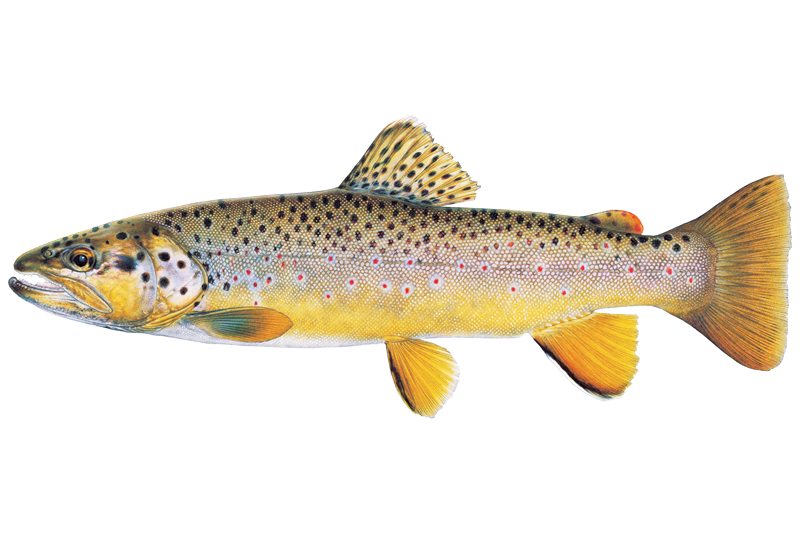
Brown trout were introduced to Tierra del Fuego in the 1930s and discovered the Atlantic on their own — with remarkable results.
The sea-run fish of the Río Grande and Río Gallegos are the main draw: anadromous browns that fatten on sardines in the South Atlantic and return to freshwater averaging 12–20 pounds, with fish over 30 pounds caught regularly.
Resident browns also populate rivers and lakes across Patagonia, but it's the sea-run fishery that pulls anglers from around the world.
Scientific Name: Salmo trutta
Also known as trucha marrón, trucha de mar, sea trout, seatrout
- Golden-brown to olive flanks covered in black and red spots, each red spot often ringed with a pale halo — the classic brown trout pattern, though sea-run fish fresh from the ocean are chrome-silver with faint spotting.
- Sea-run fish returning to Tierra del Fuego rivers are salmon-sized: 12–20 lbs is average on the Río Grande, and fish pushing 30 lbs are caught regularly throughout the season.
- Resident Patagonian browns in rivers and lakes are smaller but still grow well past 10 lbs in productive water.
- Distinguished from rainbow trout by the absence of a pink lateral stripe and by the presence of red spots; distinguished from Atlantic salmon by a squarer tail and heavier body.
What to know
Habitat Distribution
- Introduced — not native to South America. First stocked in Tierra del Fuego in 1935 when 60,000 eggs were planted in the Candelaria and McLennan rivers, both tributaries of the Río Grande.
- Sea-run fish occupy the Río Grande and Río Gallegos drainages in Tierra del Fuego and Santa Cruz provinces, migrating between the rivers and the South Atlantic estuary system.
- Resident (non-migratory) browns are widely distributed across Patagonian rivers and lakes from Neuquén south through Santa Cruz, living year-round in freshwater.
- The Río Grande watershed on Isla Grande is the largest concentration of sea-run browns anywhere — tens of thousands of fish return annually.
Key Locations
- Río Grande, Tierra del Fuego — the largest sea-run brown trout fishery in the world, with tens of thousands of fish returning annually to over 100 named pools on private estancia beats.
- Río Gallegos, Santa Cruz — the other major sea-run destination in southern Patagonia, with similar anadromous fish and open steppe character.
- Estancia María Behety, Río Grande — one of the most established lodges on the river, with access to 32 miles of water and over 100 named pools.
- Estancia Despedida, Río Grande — sits on the middle-to-lower stretch known locally as the heart of the river, considered prime holding water for large fish.
- Neuquén and northern Patagonian lakes and rivers — resident brown trout fishery spread across a network of rivers and lakes for anglers not making the trip to Tierra del Fuego.
Specific Spots
- Undercut banks on the Río Grande are the signature holding lies — the river meanders across open steppe, carving deep cuts where large browns rest out of the current.
- Named pools are the currency of the sea-run fishery; estancias on the Río Grande manage over 100 named pools across their beats, each with distinct current seams and drop-offs where fish stack.
- Low-light edges matter most: the first and last hour of daylight produce the majority of fish, as bright midday sun on clear water pushes browns off the feed and deeper into cover.
- Brackish estuary zones near the river mouths are where fresh-run fish first enter — chrome, strong, and aggressive before they've been in freshwater long.
Brown Trout FAQ
Answers from onWater's species guide.
What are the best lures and bait for Brown Trout?
Large spoons and heavy spinners in silver or gold work for sea-run fish where conventional tackle is permitted, they imitate the baitfish browns have been eating in the ocean.
What flies work for Brown Trout?
Large streamers are the go-to for sea-run fish, Woolly Buggers, Bunny Leeches, and tube flies in black, olive, and purple imitate baitfish and move water that triggers strikes even in low light. Size 2–4 is typical.
When is the best time to fish for Brown Trout?
December through March is the sea-run season in Tierra del Fuego, chrome fish begin pushing into the Río Grande by January, with the peak typically running through mid-March.
How do you catch Brown Trout?
On the Río Grande and Río Gallegos, the standard approach is wading or walking private estancia beats and swinging large streamers or tube flies through named pools at dawn and dusk. Guides assign morning and afternoon beats so anglers cover different water each day.
What do Brown Trout eat?
Sea-run fish build their size in the South Atlantic feeding on sardines and other baitfish abundant off Tierra del Fuego and Santa Cruz, which is why they return so much larger than typical river browns. Streamers and large baitfish patterns imitate this forage once fish are back in the river.
See it in the app
Most maps show you water.
onWater shows you Brown Trout.



- 01 · Species map filter
Map every Brown Trout water
Pick Brown Trout and the map zeroes in on the waters they call home. No more guessing which lake holds them.
- 02 · Waterbody species
Tap any water. See what lives there.
Species, behavior and seasonal patterns for every lake, river and pond, before you leave the driveway.
- 03 · Angler Intelligence
Ask how to catch Brown Trout
Tactics, gear and timing from onWater's AI fishing guide, tuned to the species and the water you're on.
Stop guessing where Brown Trout are.
Open the map, filter by Brown Trout, and head to water that holds them. Download onWater and plan your next trip in minutes.
- Species map filter
- Angler Intelligence
- Fishing journal
Explore other species
Trout, bass, salmon, panfish and everything in between. Each guide unpacks the behavior, seasons, and tactics that put fish in the net.
No species information available.

Smarter Fishing Starts in the App.
onWater Fish gives you everything you need to plan smarter, fish better, and own every trip from first cast to last.