Fishing in Mount Rainier National Park
- National Park
- Open 24 hours
- Lakes
- 51
- Rivers
- 94
- Access
- 0
- Boat Ramps
- 0
- Shops
- 0
- Species
- 11
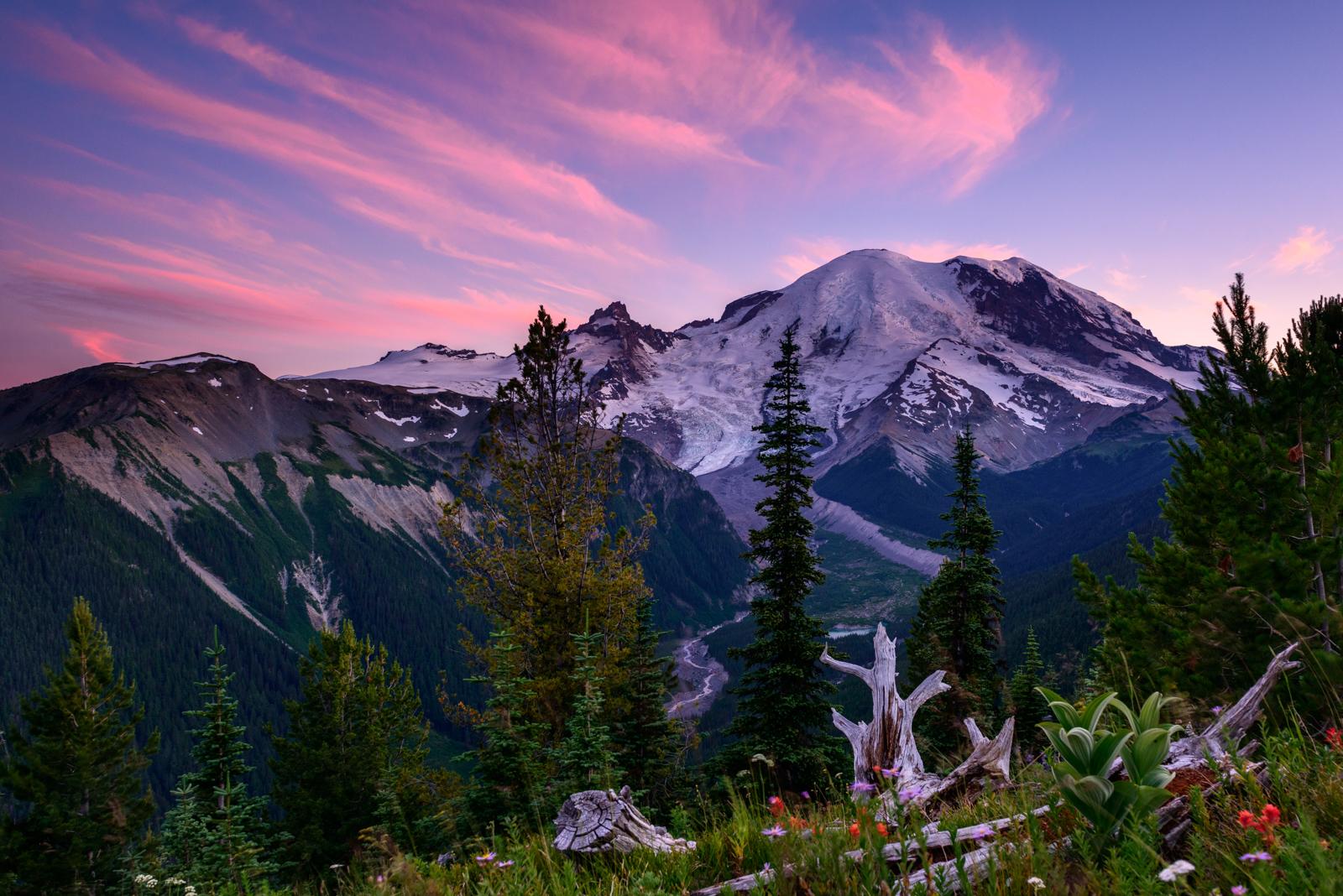
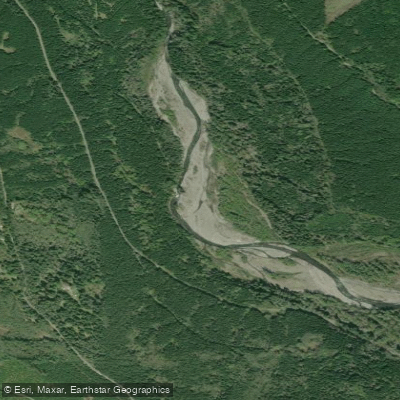
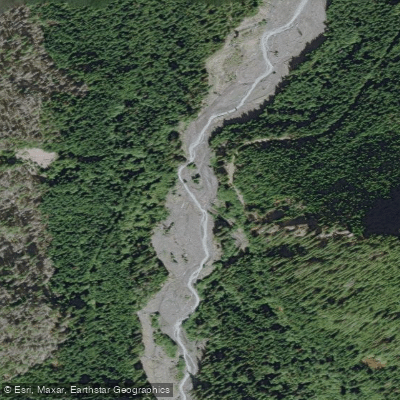
Mount Rainier sits on a volcanic massif in the western Cascades, and the water that drains off it feeds four major river systems — the Nisqually, Cowlitz, Puyallup, and Ohanapecosh — along with dozens of high mountain lakes.
Most of the fishing is small-water fishing: clear streams running through old-growth forest, alpine lakes that hold ice well into June, and a handful of accessible lowland lakes near the park boundary. The park's regulations are their own system.
No state fishing license is required inside park boundaries, but a Washington State catch record card is required if you're fishing for salmon or steelhead. Lead tackle is prohibited parkwide.
Fishing is allowed from one hour before sunrise to one hour after sunset, and fishing from motor road bridges is not permitted. The park publishes its own Fish Regulations Pamphlet — check it before you go, because rules vary by watershed and water body.
Stream seasons open on the first Saturday in June. Rivers and streams in the Nisqually, Cowlitz, Puyallup, and Ohanapecosh watersheds run through October 31.
Watersheds with ESA-listed species — the White, Carbon, Mowich, West Fork, and Huckleberry — close earlier, on Labor Day, to protect spawning fish. Fryingpan Creek above its confluence with the White River is closed entirely to protect threatened species.
Several lakes are also closed: Tipsoo, Shadow, Reflection, and Frozen Lake, along with specific creek reaches that supply park water systems. The conservation framework here is active, not just regulatory.
Around 35 mountain lakes hold breeding populations of nonnative fish — brook trout and kokanee — that compete with native species and amphibians. The park's 2018 Fish Management Plan directs ongoing removal of those nonnatives.
Parkwide, all native fish must be released with the skin intact for identification. Brook trout and kokanee are the only species you can retain.
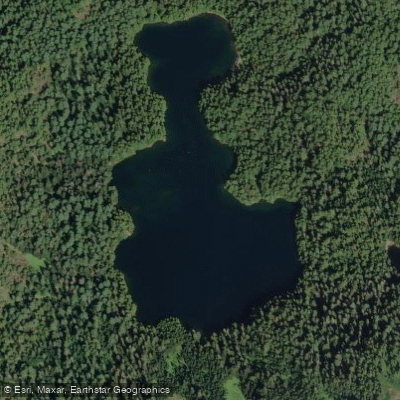
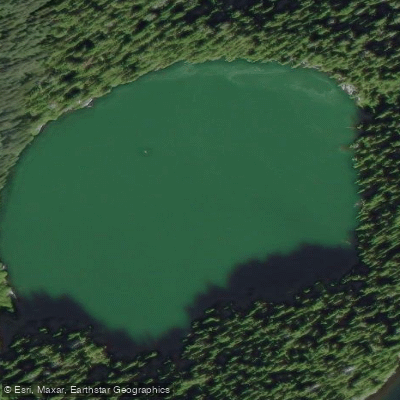
Mowich Lake, in the park's northwest corner, is reachable by paved road and fishes from late spring into early fall. Chinook Creek is noted for stream fishing.
Bench Lake and Snow Lake, along with high lakes like Christine and Goat Lake, round out the alpine options — most of them inaccessible until snowmelt clears the approaches, which can mean waiting until late June or later in a heavy year.
This is not destination fishing in the trophy sense. It's fishing that fits the place — patient, technical in spots, and tied closely to the rhythms of snowpack and season.
The park's conservation priorities shape every outing, which is worth understanding before you go rather than after.
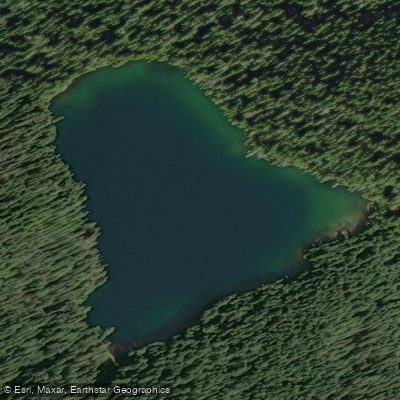
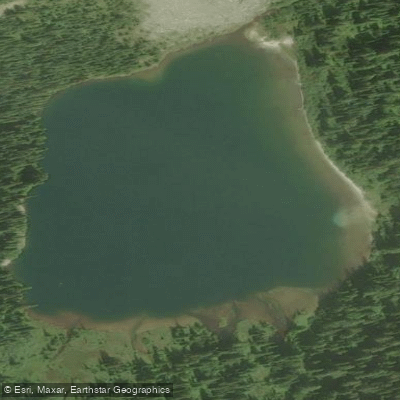
Species & education
Learn what type of fish are in Mount Rainier National Park and what's needed to catch them.
Find which waters have the species you want to catch
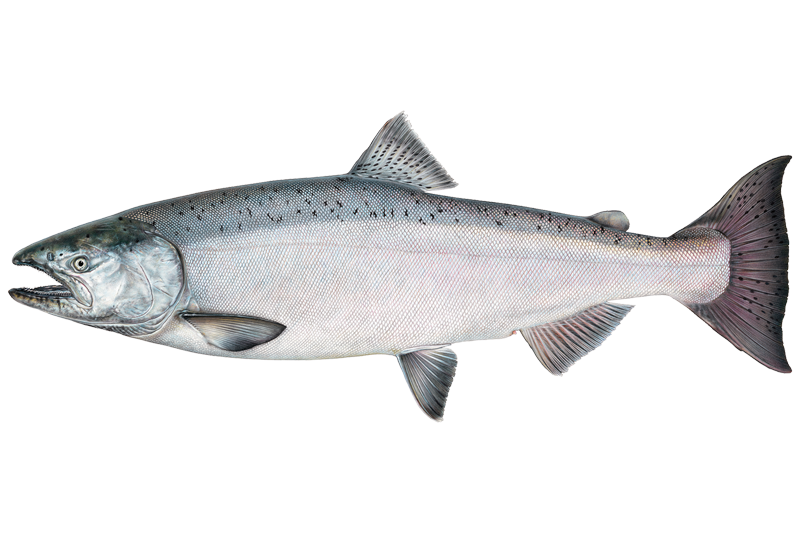
Chinook Salmon
Oncorhynchus tshawytscha

Chum Salmon
Oncorhynchus keta
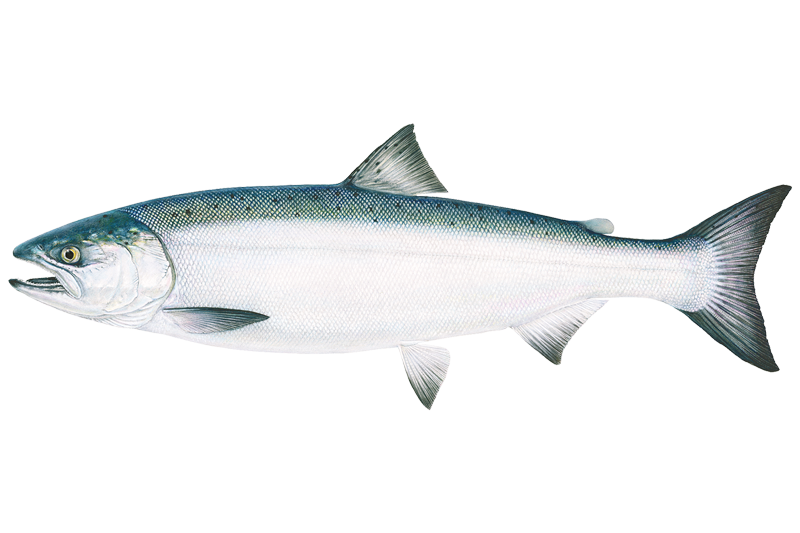
Coho Salmon
Oncorhynchus kisutch
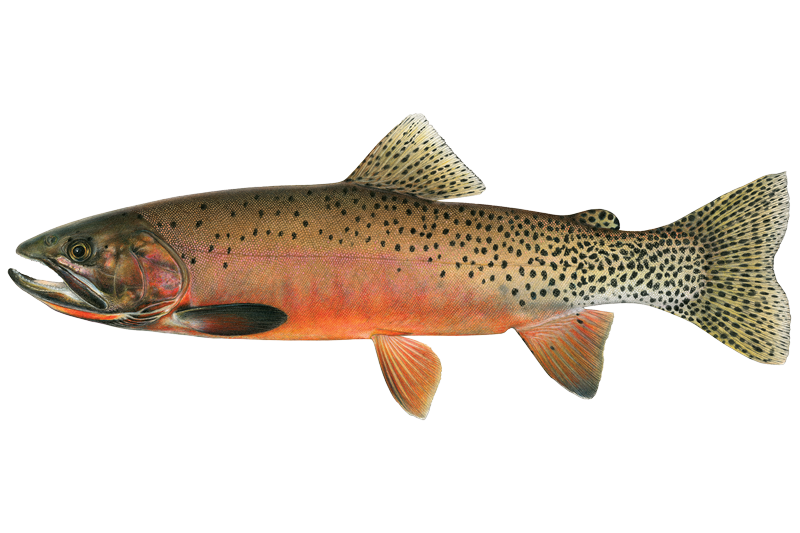
Cutthroat Trout
Oncorhynchus clarkii clarkii (coastal cutthroat), O. clarkii lewisi (westslope cutthroat)

Pink Salmon
Oncorhynchus gorbuscha

Rainbow Trout
Oncorhynchus mykiss

Steelhead
Oncorhynchus mykiss

Brook Trout
Salvelinus fontinalis

Bull Trout

Mountain Whitefish
Prosopium williamsoni

Sockeye Salmon
Oncorhynchus nerka
Water and weather conditions (10 day forecast)
See the best times to fish Mount Rainier National Park and check the forecast before you go.
No forecast data available.
Park alerts & road status
Closures and conditions Mount Rainier National Park has posted, from the National Park Service.
Checking the park's alerts…
Hours & fees
When Mount Rainier National Park is open and what it costs to get in, from the National Park Service.
Hours
Open 24 hoursMount Rainier National Park is open all year. Visitation peaks in July and August with warmer weather and blooming wildflowers. In spring and autumn, weather determines the availability of facilities and roads. During winter months a number of roads, facilities, and entrances close for the season.
Entrance fees
- Entrance - Private Vehicle$30
- Grants unlimited entry for one vehicle and passengers for seven consecutive days. Vehicle must be private, noncommercial, and with a seating capacity of 15 or less.
- Entrance - Per Person$15
- Walk-up or single bicycle fee. Grants unlimited entry for seven consecutive days.
- Entrance - Motorcycle$25
- Valid for 7 days. Admits up to 2 private, non-commercial motorcycles with up to 4 total passengers.
- Commercial Entrance - Mini-bus$100
- These fees are charged only to commercial organizations, such as tour companies. This fee is determined by the seating capacity of the vehicle.
- Commercial Entrance - Motor Coach$200
- These fees are charged only to commercial organizations, such as tour companies. This fee is determined by the seating capacity of the vehicle. NOTE: There are no current road restrictions for unmodified motor coaches of the standard length in the park. However, be aware that roads in the park are steep, narrow, and winding. In particular, it is recommended that RVs and vehicles with trailers longer than 25 feet LOA not travel up the Sunrise Road beyond the White River Campground intersection.
Parking & getting around
Where to leave the car in Mount Rainier National Park. Lots fill early on busy days, so plan where you will park before you head for the water.
Paradise Parking (Upper Lot)
ClosedExpect very limited parking space during construction from Tuesday, July 22 to Saturday, August 9. Parking affected includes areas near Henry M. Jackson Visitor Center (JVC), Paradise Wilderness Information Center, and the Paradise Inn.
Getting around
Mount Rainier National Park is located in west-central Washington state. Several major cities in Washington- Seattle, Tacoma, and Yakima- and Portland, Oregon, are within 200 miles of the park. For GPS to Nisqually Entrance use: 39000 State Route 706 E, Ashford, WA 98304.
Directions on nps.govFishing guides near Mount Rainier National Park
Book a trip with a local fishing guide through Guidesly.

Lamont Nelson
KYS Outdoor adventures
5.0 (10 reviews)
Catch unforgettable Outdoor memories
Book on Guidesly, opens in new tab
David Shaw
Shaw Flyfishing Services
Guided fly fishing on the Yakima River
Book on Guidesly, opens in new tab
Jack Mitchell
The Evening Hatch Fly Fishing Adventures
Try Fly fishing on different spots w/ Capt. Jack!
Book on Guidesly, opens in new tab
Kyle Faust
Pacific Rover LLC
Private fly fishing trips in the PNW.
Book on Guidesly, opens in new tab
David Godfrey
Wind Knot Salmon Guides
Seattle Salmon Fishing | Wind Knot Salmon Guides
Book on Guidesly, opens in new tab
Nevin Steele
Nevin Steele Outfitters LLC
Guided Fishing Trips in Centralia, WA
Book on Guidesly, opens in new tab
Fish smarter with real-time insights
Whether you're en route and conditions shift or you're looking for the best spot based on current flows, we enable you to make informed decisions on the fly.




Fishing near Mount Rainier National Park
Loading...
Gateway towns
Where to base yourself for fishing in Mount Rainier National Park.
- AshfordWA
Closest town to the Nisqually Entrance; your main base for Paradise, Longmire, and wildflower meadows, with cabins, inns, and outfitters.
- PackwoodWA
Near the Stevens Canyon Entrance on the south side, offering access to both Paradise and Sunrise and a quieter lodging scene.
- EnumclawWA
Gateway town on the north side near the White River Entrance, the route to Sunrise and Crystal Mountain ski area.
- ElbeWA
Small community just west of Ashford on the road to the Nisqually Entrance, with lodging options for Nisqually-side visits.
Sits along the highway leading to the White River Entrance, serving visitors headed to Sunrise and the northeast corner of the park.
Mount Rainier National Park fishing rules
The park's own rules, on top of Washington licenses and regulations. Limits, fees and closures change, so check the park's page before you go.
No State License Required
You do not need a Washington State fishing license to fish here. However, a Washington State catch record card is required if you are fishing for salmon or steelhead. Check the park's regulations pamphlet for details.
Catch and Release Native Fish
All native fish species must be released. You may only retain certain nonnative species. Check the park's current regulations to know which fish you can keep and where.
Lead Tackle Is Prohibited
Lead fishing tackle is banned throughout the park. Lead is toxic to aquatic life and humans, so make sure all your gear is lead-free before you cast.

Certain Waters Are Closed
Several streams and lakes are closed to fishing to protect water supplies, sensitive vegetation, and threatened species. Review the current regulations to know exactly which waters are off-limits before you go.

Fishing Hours Are Limited
You may only fish from one hour before sunrise to one hour after sunset. Fishing from any motor road bridge is also prohibited throughout the park.
Seasonal Stream Closures Apply
Streams and rivers follow different seasonal schedules depending on the watershed, with some closing earlier to protect ESA-listed spawning species. Check the current regulations for the specific watershed you plan to fish.
Explore Mount Rainier National Park
Top fishing waters
Popular Cities
Loading popular cities...

Smarter Fishing Starts in the App.
onWater Fish gives you everything you need to plan smarter, fish better, and own every trip from first cast to last.