Mission Bay
- Saltwater
- Bay
- Saltwater
- Bay
- Sq. miles
- 8.1
- Boat Ramps
- 0
- Access Points
- 0
- Species
- 11
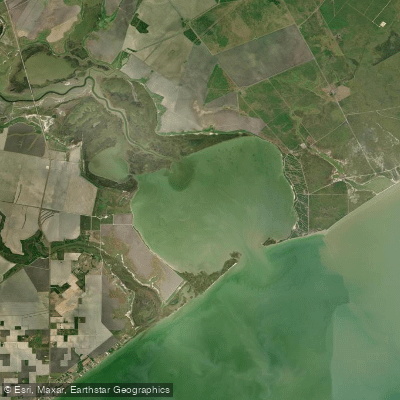
Mission Bay is a tidal bay located in the northwest corner of Copano Bay on the Texas coast, forming part of the larger Aransas Bay ecosystem. This arm of Copano Bay receives freshwater inflow from the Mission River, which can significantly lower the bay's salinity depending on recent rainfall and river flows. The bay features a soft mud bottom interspersed with extensive oyster reefs and is known for its productive inshore fisheries, particularly for red drum and spotted seatrout. Access is primarily by boat, with the surrounding waters presenting navigational challenges due to shallow areas and submerged structure.
Species & education
Learn what type of fish are at Mission Bay and what's needed to catch them.

Find which waters have the species you want to catch

Atlantic Croaker
Micropogonias undulatus

Black Drum
Pogonias cromis

Bull Shark
Carcharhinus leucas

Ladyfish
Elops saurus

Pinfish
Lagodon rhomboides

Redfish
Sciaenops ocellatus

Sheepshead
Archosargus probatocephalus

Southern Flounder
Paralichthys lethostigma

Spot
Leiostomus xanthurus

Spotted Seatrout
Cynoscion nebulosus

Tarpon
Megalops atlanticus
Fishing spots, boat ramps & amenities
Learn how to get on Mission Bay. Uncover great fishing access points, boat ramps, and all the facilities you need for an unforgettable day on the water. Some locations shown may border or include private property. Always check property boundaries and applicable regulations before visiting. onWater's Public & Private Land layer can help you plan your access with confidence.
The extensive oyster reefs within the bay are the primary fishing structure, holding crabs, shrimp, and the gamefish that feed on them. The mouth of Mission Bay, where it meets Copano Bay, is a renowned spot for large winter trout. Points, shell structure, and windward back-lake shorelines are consistently productive areas. The reefs in Copano Bay just outside the mouth of Mission Bay can hold larger speckled trout during calm conditions. Areas with newly revitalized bottom grass along shorelines and spoils also hold fish.
Know where you can legally fish on Mission Bay
See public and private land boundaries along the water, turn on private parcels with owner details to know where permission is required, and find land-trust parcels that offer permitted fishing access.
Texas licenses and regulations

Texas Boating Regulations
When using any type of watercraft to access a body of water, it is important to follow all federal, state, and local rules and regulations. These rules and regulations include boat permitting and licensing, invasive species inspections and stamps, life jacket and PFD rules, motor size and horsepower restrictions, noise limitations, restrictions on personal watercraft, and many more. Visit the web link below for the most current rules and regulations for this body of water.

Texas Coastal & Inland Waters
A saltwater endorsement is required to fish Texas coastal waters, while a freshwater endorsement covers inland waters, and some waters require both. Texas Parks and Wildlife defines where each endorsement applies, including specific boundary rules for reservoirs and tidal areas. Check the general fishing regulations for details on how waters are classified and which licence applies where.

Texas Federal Waters & Offshore Rules
Beyond state waters, federal rules managed by NOAA Fisheries and the regional fishery management councils apply, typically from 3 to 200 nautical miles offshore. Anglers targeting species such as tuna, billfish, swordfish, or sharks in federal waters must hold a federal Atlantic HMS vessel permit issued through NOAA Fisheries. You still need a valid Texas fishing license and saltwater endorsement to possess or land any fish taken in federal waters at a Texas port.

Texas Saltwater Fishing License
Anglers need a Texas fishing license with a saltwater endorsement to fish coastal waters, and Texas Parks and Wildlife issues it. Anglers under 17 and the oldest residents are exempt, as is everyone on the annual Free Fishing Day. Fishing from banks or piers inside Texas State Parks also needs no license.

Texas Saltwater Size & Bag Limits
Size and bag limits apply to every regulated saltwater species and can vary by region and time of year, with Texas Parks and Wildlife setting the rules. Headline species with specific slot, minimum, or bag limits include red drum, spotted seatrout, flounder, red snapper, and black drum. The current limits for all species are kept in the TPWD Outdoor Annual.

Texas Shellfish Closures & Advisories
Recreational harvest of oysters, clams, and mussels is only permitted in areas designated as approved or conditionally approved, and Texas DSHS can close any area at any time due to red tide, harmful algal blooms, heavy rainfall, flooding, or water quality events. Texas Parks and Wildlife sets recreational oyster seasons and possession limits, while DSHS tracks and posts the current open and closed status of all shellfish harvest areas. Check the DSHS shellfish harvest area map before you go, as status can change daily.
Take Mission Bay with you
The onWater Fish app keeps this water's access points, species and conditions in your pocket, with the tools you use once you're there.
Use the map without signal
Download the map around Mission Bay to use it offline when coverage drops.
Log your catches here
Keep a private fishing journal for Mission Bay to find where and when fish are biting for you.
Get the onWater Fish app
Free on iOS and Android
Tides, wind & water conditions (10 day forecast)
On open water, wind and tide matter as much as the weather. See the best times to fish Mission Bay and check the marine forecast before you launch.
Loading tide predictions…
Mission Bay fishing guides
Book a trip with a local fishing guide through Guidesly.


Fishing near Mission Bay
Nueces River
Guadalupe River
Corpus Christi Bay
San Antonio River
Sunset Lake
Nueces Bay
Lake Corpus Christi
Aransas River
Ingleside Cove
Vinson Slough
Explore near Mission Bay
Fish species
Nearby waters
More in Texas
Smarter Fishing Starts in the App.
onWater Fish gives you everything you need to plan smarter, fish better, and own every trip from first cast to last.