Smallmouth Bass
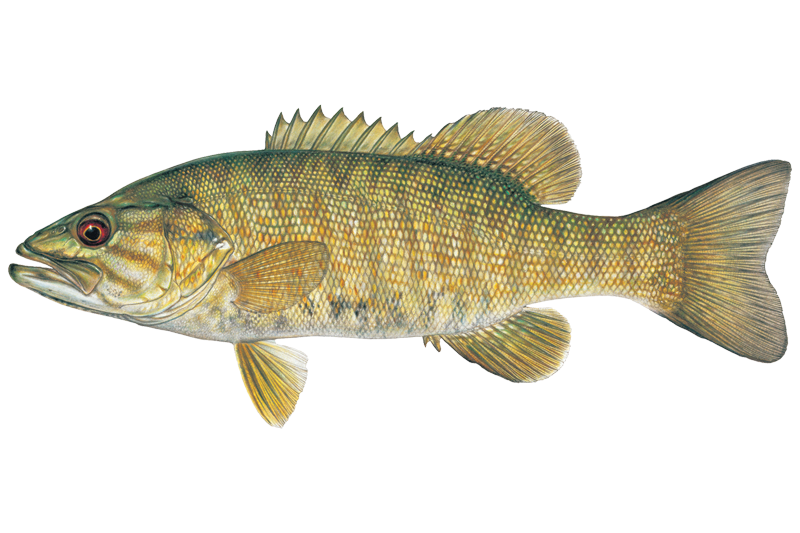
Smallmouth bass were introduced to South Africa roughly 70 years ago and have since established self-sustaining populations in several river systems, particularly in the Western Cape and on the Vaal.
They draw a dedicated following of fly and light-tackle anglers who chase them in clear, rocky streams — the same swift, well-oxygenated water they prefer everywhere. They're also a serious conservation concern, preying on endemic cyprinids.
Scientific Name: Micropterus dolomieu
Also known as Smallie, bronzeback, black bass
- Olive-green to bronze-brown body with 8–16 dark vertical bars along the sides; belly pale yellow-white — the barred pattern is the quickest field ID.
- The jaw doesn't extend past the eye — the clearest way to separate a smallmouth from a largemouth, which has a jaw that reaches well behind the eye.
- Moderately compressed, elongate body; 9–11 dorsal spines. Most fish run 8–22 inches; the all-tackle record is just under 12 lbs, though fish that size are rare anywhere.
What to know
Habitat Distribution
- Introduced — not native to Africa. Established in South Africa for close to 70 years, with populations confirmed in the Western Cape and the Vaal River system.
- Favour clear, cool, fast-flowing rivers and streams with rocky or sandy substrates — the same habitat occupied by endemic redfin and yellowfish species.
- Also found in well-oxygenated impoundments and farm dams where they've been stocked or spread naturally downstream.
- Their spread is limited by water clarity and oxygen levels; turbid, slow lowland rivers don't suit them.
Key Locations
- Vaal River — a major system where smallmouth share water with yellowfish and have been established for decades; both fly and spin anglers target them here.
- Western Cape streams — rivers draining the Cape Fold Mountains hold smallmouth in clear, rocky runs, though their presence conflicts with endemic cyprinid conservation.
- Farm dams across the Western Cape and interior — stocked or naturally spread populations provide accessible still-water fishing.
Specific Spots
- Rocky riffles and the tail-outs below rapids — smallmouth hold in the current seam where fast water slows, waiting for food to wash through.
- Submerged boulders and ledges in mid-river; fish tuck into the slack water directly behind structure, especially in summer heat.
- Shallow gravel runs and rocky shoals during the spawn — males build and guard nests here and will strike anything that enters their territory.
- In dams and impoundments, focus on rocky points, submerged timber, and any hard structure near drop-offs.
Smallmouth Bass FAQ
Answers from onWater's species guide.
What are the best lures and bait for Smallmouth Bass?
Small spinners and inline spinners (sizes 1–3) are reliable across river and dam settings, the flash and vibration draw strikes even in moderate current. Shallow-running crankbaits and minnow plugs in natural baitfish colours work well along rocky structure and over gravel shoals.
What flies work for Smallmouth Bass?
Woolly Buggers in olive, brown, or black, fished with short strips or a slow swing through current, imitate both crayfish and small fish and are the single most versatile pattern for South African smallmouth water.
When is the best time to fish for Smallmouth Bass?
Spring (August–October), warming water triggers pre-spawn and spawn activity; fish move shallow and are most accessible on fly and light lures. Summer (November–February), peak feeding but fish go deep or seek shade during the hottest part of the day; early morning and evening sessions produce best.
How do you catch Smallmouth Bass?
Most South African smallmouth fishing happens by wading rocky rivers and working structure, boulders, current seams, and tail-outs, with fly or light spinning gear. Dam fishing from the bank or a small boat, casting to rocky points and submerged structure, is the other common approach.
What do Smallmouth Bass eat?
Crayfish are a primary food source in rocky rivers, soft-shell crayfish imitations like a weighted brown Woolly Bugger or a crayfish-pattern fly fished along the bottom are consistently effective.
See it in the app
Most maps show you water.
onWater shows you Smallmouth Bass.



- 01 · Species map filter
Map every Smallmouth Bass water
Pick Smallmouth Bass and the map zeroes in on the waters they call home. No more guessing which lake holds them.
- 02 · Waterbody species
Tap any water. See what lives there.
Species, behavior and seasonal patterns for every lake, river and pond, before you leave the driveway.
- 03 · Angler Intelligence
Ask how to catch Smallmouth Bass
Tactics, gear and timing from onWater's AI fishing guide, tuned to the species and the water you're on.
Stop guessing where Smallmouth Bass are.
Open the map, filter by Smallmouth Bass, and head to water that holds them. Download onWater and plan your next trip in minutes.
- Species map filter
- Angler Intelligence
- Fishing journal
Explore other species
Trout, bass, salmon, panfish and everything in between. Each guide unpacks the behavior, seasons, and tactics that put fish in the net.
No species information available.

Smarter Fishing Starts in the App.
onWater Fish gives you everything you need to plan smarter, fish better, and own every trip from first cast to last.