Bluegill
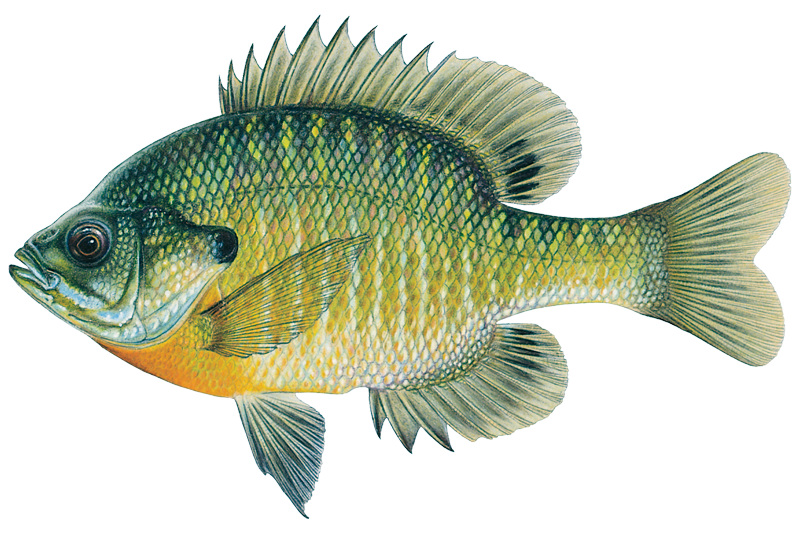
Bluegill are abundant throughout West Virginia's warm-water streams, lakes, ponds, and reservoirs. These fish are habitat generalists, preferring weedy areas and woody cover along shorelines where they can hide and forage.
This species tolerates a wide range of environmental conditions and populations remain resilient, though they can be affected by loss of suitable shallow-water spawning habitat and selective overharvesting of larger males.
Scientific Name: Lepomis macrochirus
- These silver to greenish panfish feature distinctive blue coloration near the gills (especially pronounced in large males), yellow to deep orange breast areas, and long pointed pectoral fins extending past the eye when folded forward.
- Adult bluegill display a characteristic black blotch near the end of the soft dorsal fin and have small mouths that don't extend beyond the eye.
- West Virginia bluegill typically range from 3-8 inches, though specimens over 10 inches are possible.
- The state records include a 13.75-inch fish (1964) and a 2.75-pound specimen (1986).
Fishing in West Virginia
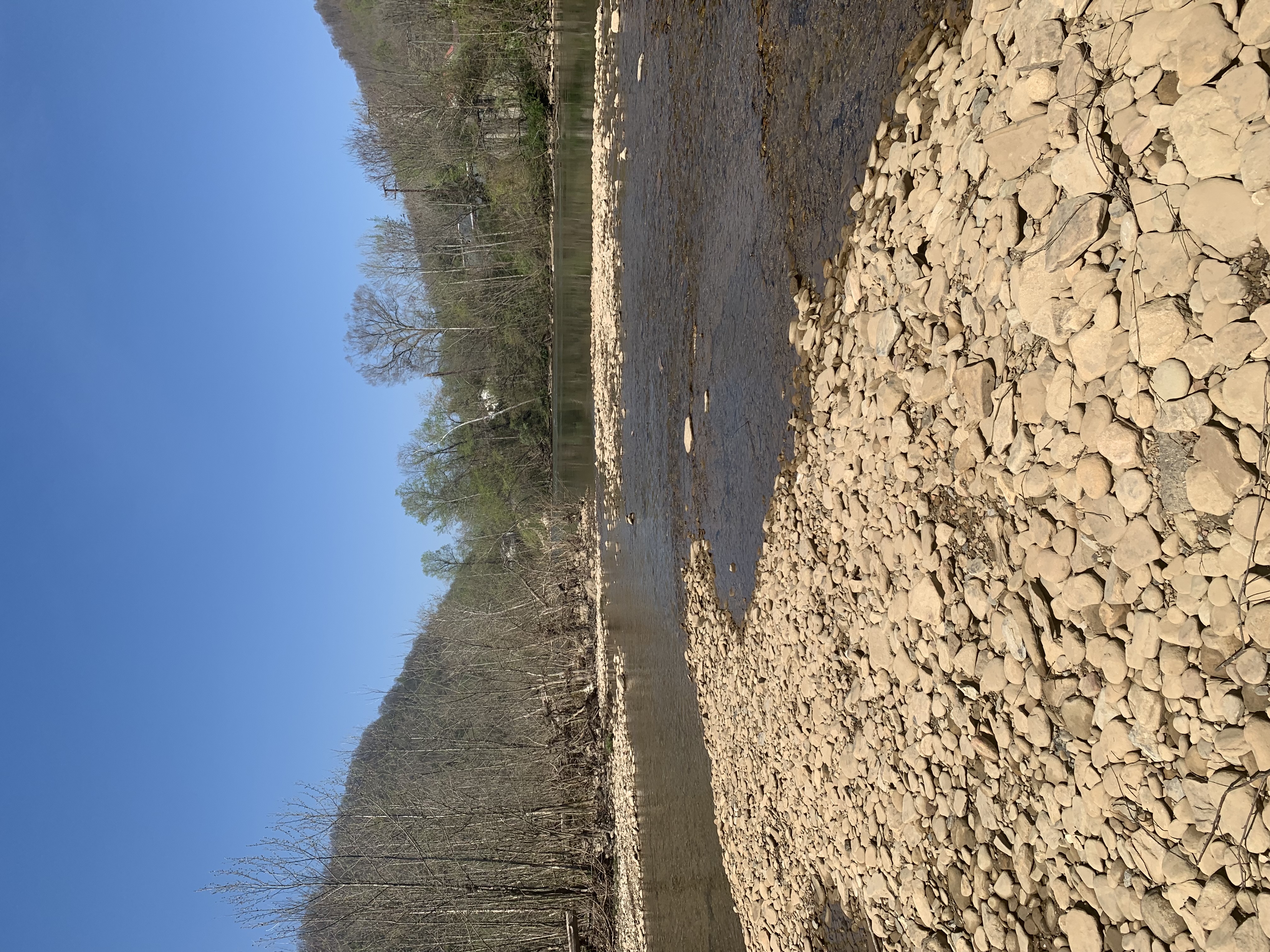
Gauley River
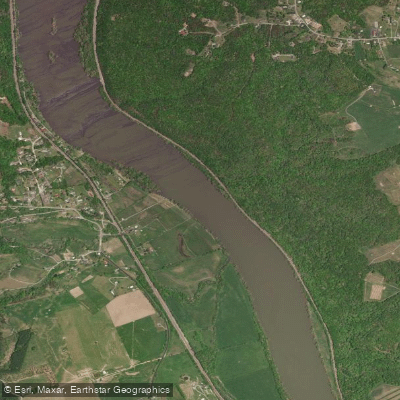
New River
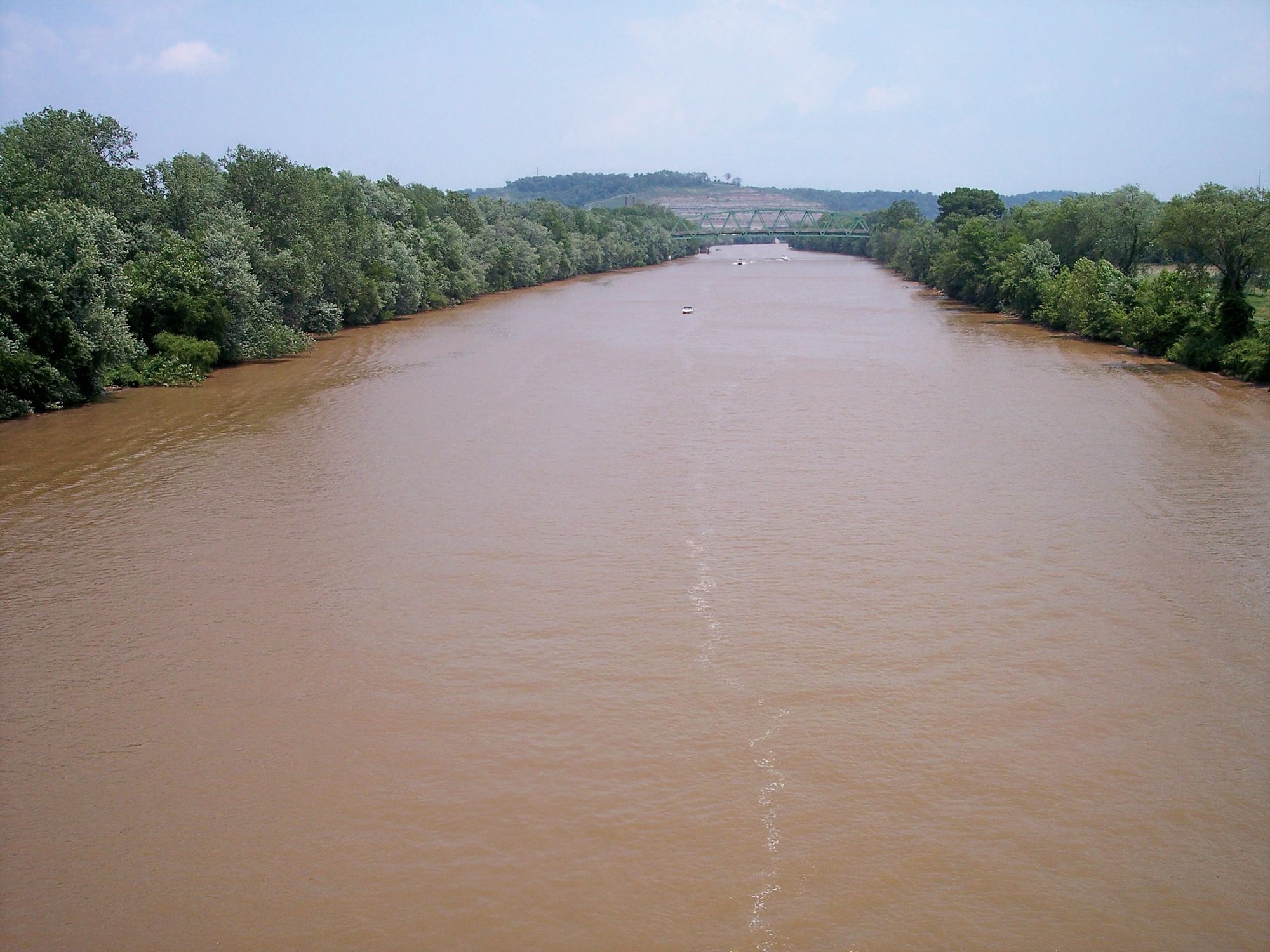
Kanawha River
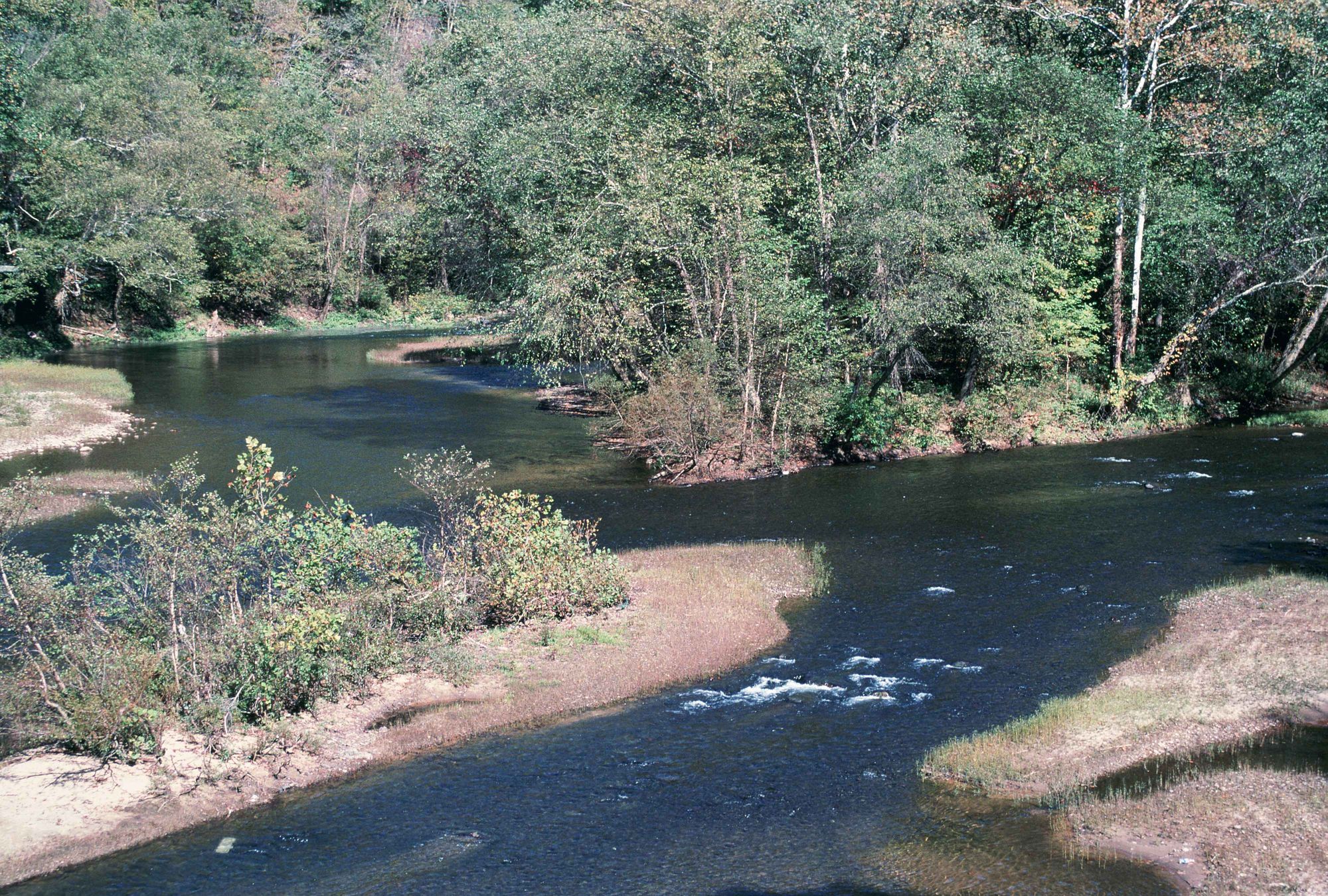
Elk River
Cranberry River
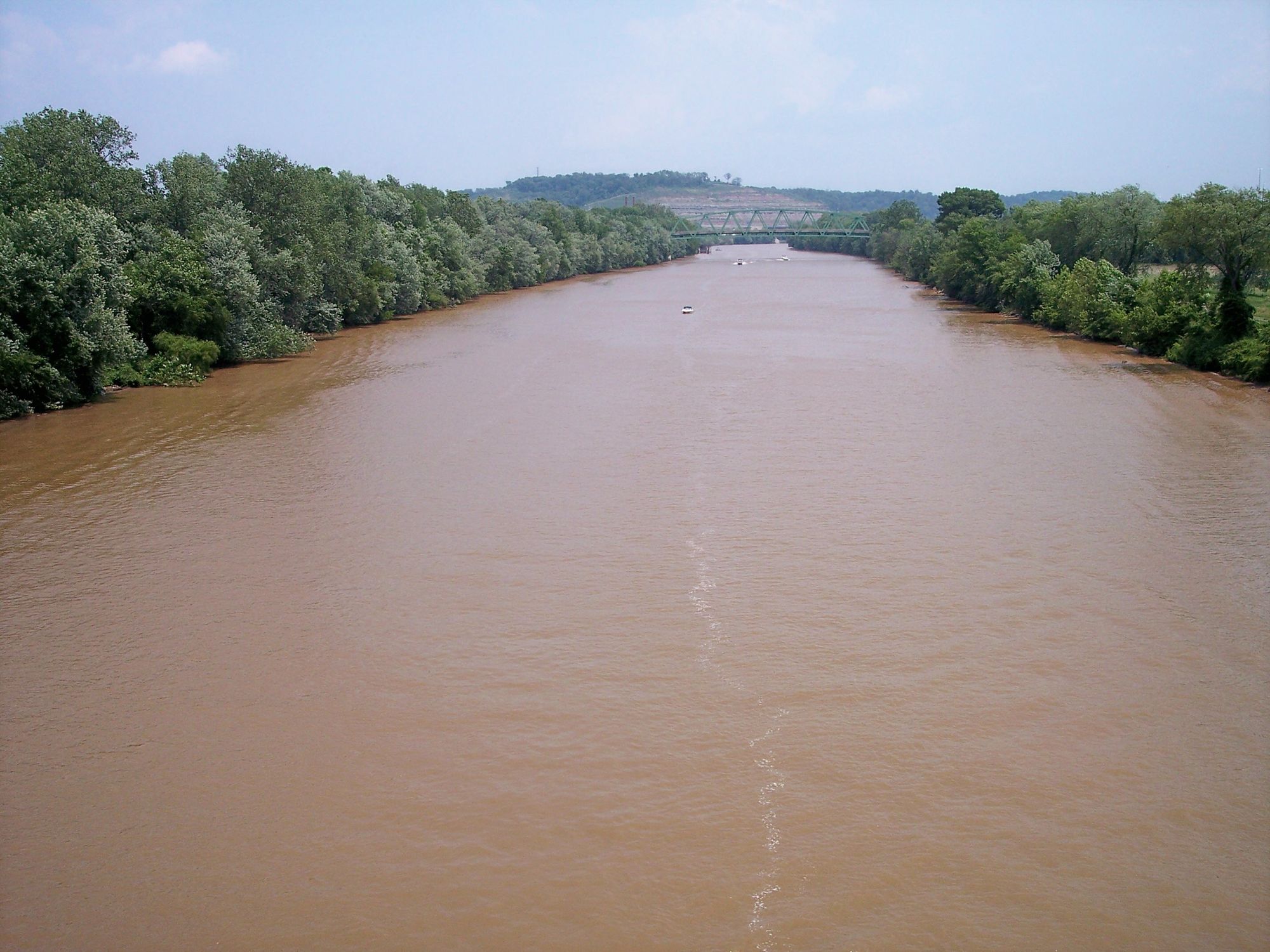
Little Kanawha River
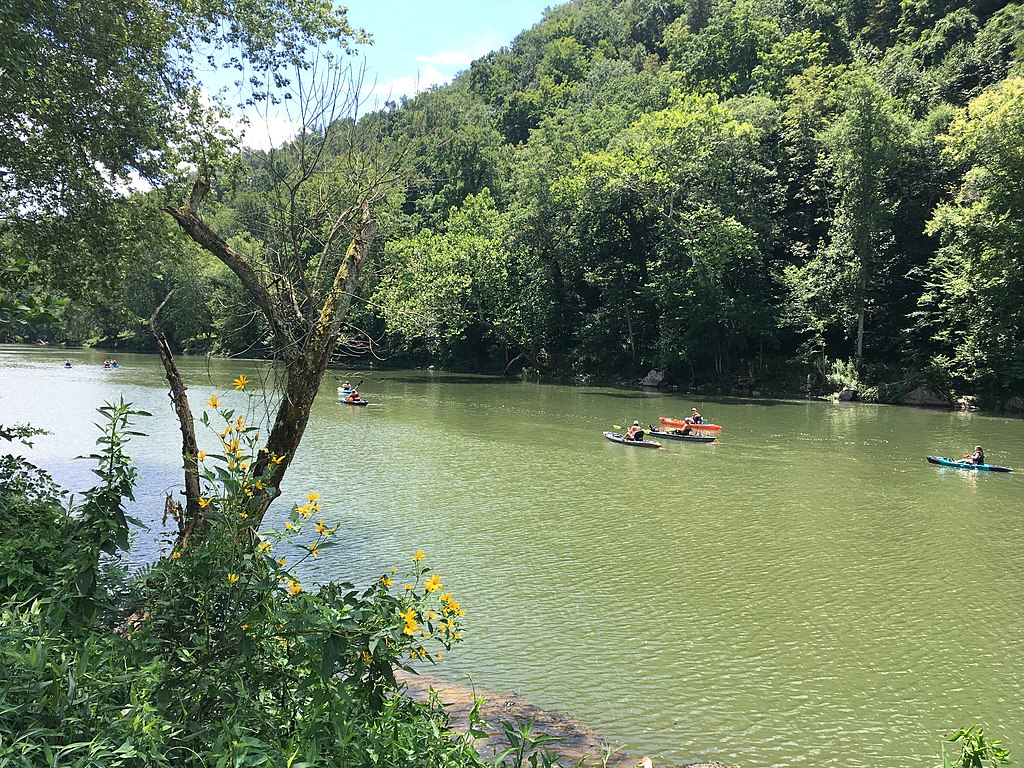
Greenbrier River
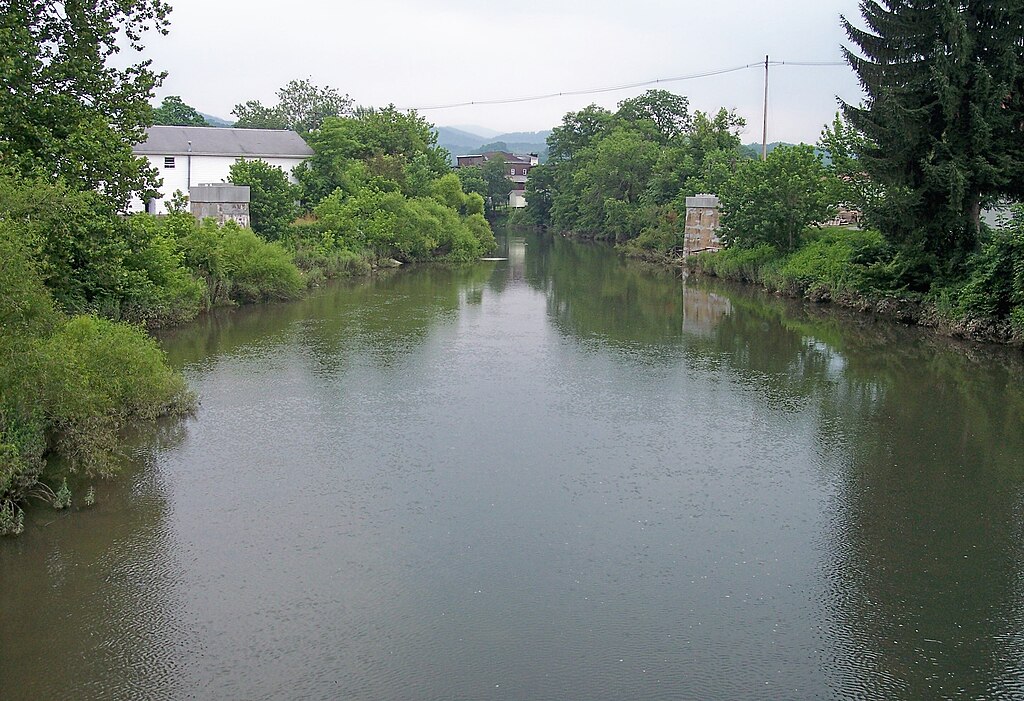
Tygart Valley River
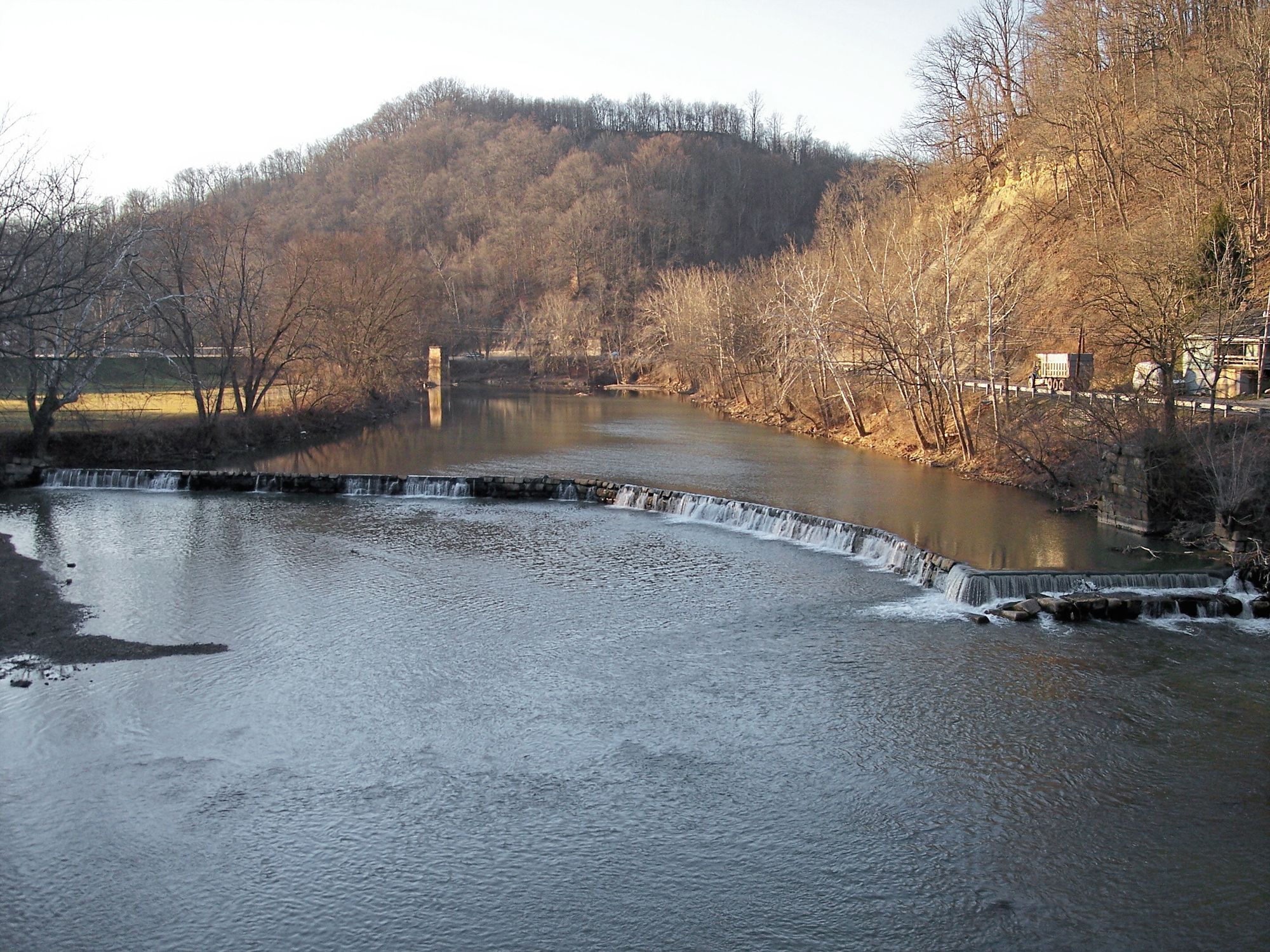
West Fork River
Sutton Lake
What to know
Habitat Distribution
- Abundant throughout West Virginia's warm-water streams, lakes, ponds, and reservoirs.
Key Locations
- Tomlinson Run Lake, Parker Hollow Lake, Big Ditch Lake, Plum Orchard Lake, Barboursville Lake, and Elk Fork Lake.
Specific Spots
- Concentrating around riffles, tributary inflows, and areas with vegetation or submerged structure.
- Weedy areas and woody cover along shorelines where they can hide and forage.
Bluegill FAQ
Answers from onWater's species guide.
What are the best lures and bait for Bluegill in West Virginia?
Effective baits include pieces of nightcrawlers, mealworms, waxworms, red worms, and earthworms. Small lures work exceptionally well - try small spinner baits, wet flies, tiny crankbaits, small jigs with plastic grubs or spiders, and 1/32-ounce jigheads.
What flies work for Bluegill in West Virginia?
Fly patterns like small floating poppers (chartreuse, blue, yellow), Woolly Buggers (size 10-12 in olive or black), foam spiders (black, gray, brown), Royal Coachman, and terrestrial patterns like grasshoppers and ants.
When is the best time to fish for Bluegill in West Virginia?
Summer is prime time. Target them during spawning season when water temperatures exceed 70 degrees.
How do you catch Bluegill in West Virginia?
Popular techniques include bobber fishing, small spinner baits, and fly fishing with poppers. In West Virginia waters use nightcrawlers under bobbers in 3-4 feet of water or target weedbeds and brush with soft plastics and topwater lures.
What do Bluegill eat?
Their diet consists primarily of insects, zooplankton, small crustaceans, worms, and small invertebrates, making them opportunistic feeders that consume anything they can fit in their small mouths.
Fish smarter with real-time insights
Whether you're en route and conditions shift or you're looking for the best spot based on current flows, we enable you to make informed decisions on the fly.




See it in the app
Most maps show you water.
onWater shows you Bluegill.



- 01 · Species map filter
Map every Bluegill water
Pick Bluegill and the map zeroes in on the waters they call home. No more guessing which lake holds them.
- 02 · Waterbody species
Tap any water. See what lives there.
Species, behavior and seasonal patterns for every lake, river and pond, before you leave the driveway.
- 03 · Angler Intelligence
Ask how to catch Bluegill
Tactics, gear and timing from onWater's AI fishing guide, tuned to the species and the water you're on.
Stop guessing where Bluegill are.
Open the map, filter by Bluegill, and head to water that holds them. Download onWater and plan your next trip in minutes.
- Species map filter
- Angler Intelligence
- Fishing journal
Explore other species
Trout, bass, salmon, panfish and everything in between. Each guide unpacks the behavior, seasons, and tactics that put fish in the net.
No species information available.
West Virginia licenses and regulations
Explore nearby waters
Explore West Virginia waters
Top fishing waters
Popular Cities
Loading popular cities...

Smarter Fishing Starts in the App.
onWater Fish gives you everything you need to plan smarter, fish better, and own every trip from first cast to last.