Gray Redhorse
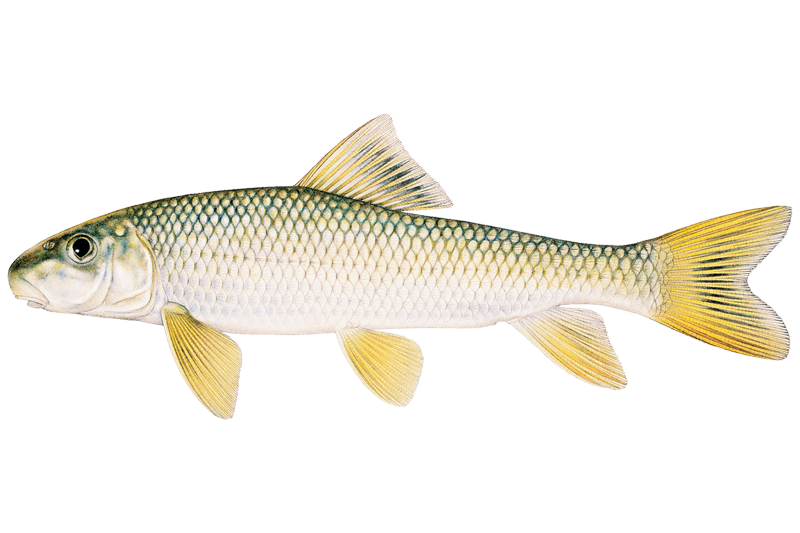
A medium-sized native sucker of the southwestern US, the Gray Redhorse is essentially a Texas and far-southern New Mexico fish — at home in the clear, spring-fed rivers of the Hill Country and the Pecos and Rio Grande drainages.
Most anglers encounter them by accident while nymphing for bass or trout, but for the rough-fish crowd they're a genuine trophy.
Scientific Name: Moxostoma congestum
Also known as matalote gris, gray jumprock
- Cylindrical, fusiform body — grayish-black to greenish on top, fading to silvery sides and a white belly, with a dusky tail.
- The dead-giveaway ID mark: black-banded membranes streaking the dorsal and caudal fins, a feature no other US redhorse shares.
- Classic sucker face — broad snout, small ventral mouth, and plicate (folded) lips built for vacuuming the bottom.
- Adults typically run around 20 inches; the species tops out near 25 inches, with the IGFA all-tackle record sitting at 3 lbs 8 oz.
What to know
Habitat Distribution
- Native to a small slice of the southwestern US — Texas from the Brazos drainage west and south through the Rio Grande and Pecos basins, plus the lower Pecos and Black River in southern New Mexico. Absent from the eastern US and the Mississippi basin entirely.
- A warm-water stream fish that holds in clear-to-moderately-turbid small and medium rivers with rock, sand, or gravel bottoms; also turns up in Hill Country reservoirs.
- Firm substrate is the constant — silt-choked reaches are largely avoided, though adults tolerate some turbidity.
Specific Spots
- Adults sit in deep pools with firm sand or silt bottoms, where they can root through the substrate for invertebrates without fighting current.
- Young fish and subadults school loosely in riffles and gravelly runs — a different look entirely from the solitary, pool-oriented adults.
- In spring, mature fish push upstream into shallower flowing sections with clean gravel or cobble to spawn.
- Limestone-bottomed pools below riffles in clear spring-fed rivers are the classic Hill Country spot — gray sides blend right into the gravel.
Gray Redhorse FAQ
Answers from onWater's species guide.
What are the best lures and bait for Gray Redhorse?
Earthworms and nightcrawlers fished on the bottom are the genus-wide standard and the easiest entry point for redhorse. Crayfish and small live or imitation aquatic insects line up directly with what these fish actually eat.
What flies work for Gray Redhorse?
Subsurface nymphs are the whole game. A double-nymph rig, an attractor up top, a smaller natural nymph trailing, fished deep through pool tailouts is the reported go-to on Hill Country rivers.
What do Gray Redhorse eat?
A bottom-feeding invertivore, mostly aquatic insect larvae, mollusks, amphipods, and ostracods, with bits of algae, seeds, and the rare small fish rounding it out.
Where do Gray Redhorse live?
Native to a small slice of the southwestern US, Texas from the Brazos drainage west and south through the Rio Grande and Pecos basins, plus the lower Pecos and Black River in southern New Mexico. Absent from the eastern US and the Mississippi basin entirely.
See it in the app
Most maps show you water.
onWater shows you Gray Redhorse.



- 01 · Species map filter
Map every Gray Redhorse water
Pick Gray Redhorse and the map zeroes in on the waters they call home. No more guessing which lake holds them.
- 02 · Waterbody species
Tap any water. See what lives there.
Species, behavior and seasonal patterns for every lake, river and pond, before you leave the driveway.
- 03 · Angler Intelligence
Ask how to catch Gray Redhorse
Tactics, gear and timing from onWater's AI fishing guide, tuned to the species and the water you're on.
Stop guessing where Gray Redhorse are.
Open the map, filter by Gray Redhorse, and head to water that holds them. Download onWater and plan your next trip in minutes.
- Species map filter
- Angler Intelligence
- Fishing journal
Explore other species
Trout, bass, salmon, panfish and everything in between. Each guide unpacks the behavior, seasons, and tactics that put fish in the net.
No species information available.

Smarter Fishing Starts in the App.
onWater Fish gives you everything you need to plan smarter, fish better, and own every trip from first cast to last.