Brown Trout
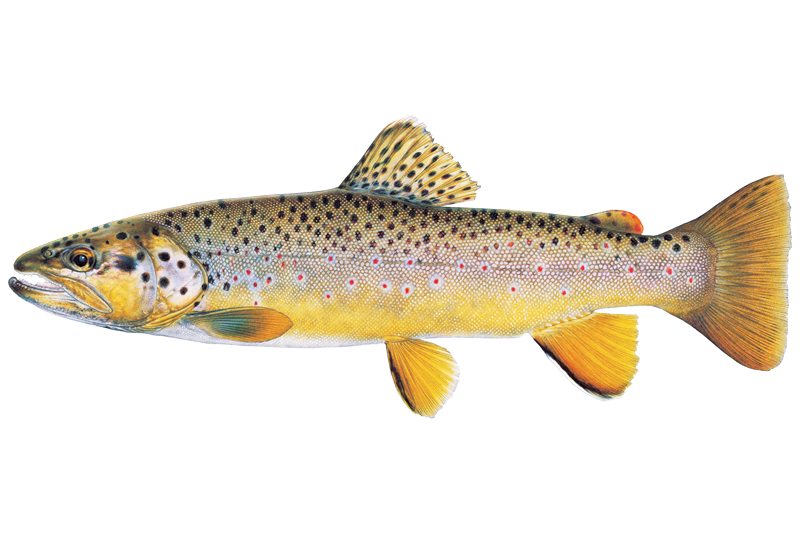
A European native introduced to American waters in 1883, the brown trout has since colonized cold rivers, spring creeks, tailwaters, and lakes in 47 of the lower 48 states.
They're the great humbler of American fly fishing — selective, nocturnal, and capable of growing into 20-pound predators where forage allows.
Scientific Name: Salmo trutta
Also known as German Brown, German Trout, Brownie, Lake-Run Brown
- Brown to gold-brown back fading to yellow or silver sides, marked with black spots in pale halos and red spots sometimes ringed in blue — most vivid in stream fish.
- Tail is nearly square with only sparse spotting on the upper edge, separating it cleanly from the heavily spotted, forked tail of a rainbow.
- Adipose fin carries a reddish-orange margin and dark spots; pelvic and anal fins lack the white leading edges seen on brook trout.
- Stream adults run 14–24 inches and 2.5–10 lbs; lake and Great Lakes fish regularly top 10 lbs and can exceed 20 once they switch to baitfish.
What to know
Habitat Distribution
- Non-native everywhere in North America but now established in 47 states and Puerto Rico, with self-sustaining wild populations strongest in the Appalachians, upper Midwest, Rockies, and Pacific ranges.
- A coldwater fish that thrives at 60–65°F and demands well-oxygenated water; sustained warm temperatures push them toward deep holes, fast riffles, or thermal refuges.
- Three forms matter to US anglers: stream residents in riffle-run-pool rivers, lake fish in cool oligotrophic lakes that run tributaries to spawn, and the Great Lakes lake-run fish that feed on alewives and smelt.
- Southern tailwater releases below dams have extended the range well past the species' natural thermal limits, producing oversized fish on stocking-dependent fisheries.
Specific Spots
- Big browns sit in soft water tight to bank cover — undercuts, rootwads, sunken logs, boulder pockets — where they can ambush prey without burning energy in the main current.
- Current seams between fast and slow water, eddies behind boulders, and the tailouts of deep pools concentrate feeding fish, especially at low light when they slide out of cover.
- Summer heat pushes them either deep or into oxygen-rich riffles and plunge pools; winter sends them to the slowest, deepest water available.
- In stillwaters, work weed-bed edges and drop-offs near structure; depth shifts with thermal stratification and where the baitfish are holding.
Brown Trout FAQ
Answers from onWater's species guide.
What are the best lures and bait for Brown Trout?
Minnow-style jerkbaits and crankbaits, Rapala Husky Jerks, Countdowns, jointed floaters, in gold, silver, brown trout, or perch finishes are the trophy lure across rivers and Great Lakes nearshore water.
What flies work for Brown Trout?
Dries: Parachute Adams, Elk Hair Caddis, Chubby Chernobyl, plus hatch-specific patterns for Pale Morning Dun (PMD), Sulphur, Green Drake, and Trico mayflies. Hopper, ant, and beetle terrestrials carry summer through early fall.
What do Brown Trout eat?
Juveniles and small stream fish key on aquatic insects, mayfly, caddis, and stonefly nymphs and the adults that hatch from them, which is exactly what Pheasant Tails, Hare's Ears, Elk Hair Caddis, and Parachute Adams imitate.
Where do Brown Trout live?
Non-native everywhere in North America but now established in 47 states and Puerto Rico, with self-sustaining wild populations strongest in the Appalachians, upper Midwest, Rockies, and Pacific ranges.
See it in the app
Most maps show you water.
onWater shows you Brown Trout.



- 01 · Species map filter
Map every Brown Trout water
Pick Brown Trout and the map zeroes in on the waters they call home. No more guessing which lake holds them.
- 02 · Waterbody species
Tap any water. See what lives there.
Species, behavior and seasonal patterns for every lake, river and pond, before you leave the driveway.
- 03 · Angler Intelligence
Ask how to catch Brown Trout
Tactics, gear and timing from onWater's AI fishing guide, tuned to the species and the water you're on.
Stop guessing where Brown Trout are.
Open the map, filter by Brown Trout, and head to water that holds them. Download onWater and plan your next trip in minutes.
- Species map filter
- Angler Intelligence
- Fishing journal
Explore other species
Trout, bass, salmon, panfish and everything in between. Each guide unpacks the behavior, seasons, and tactics that put fish in the net.
No species information available.
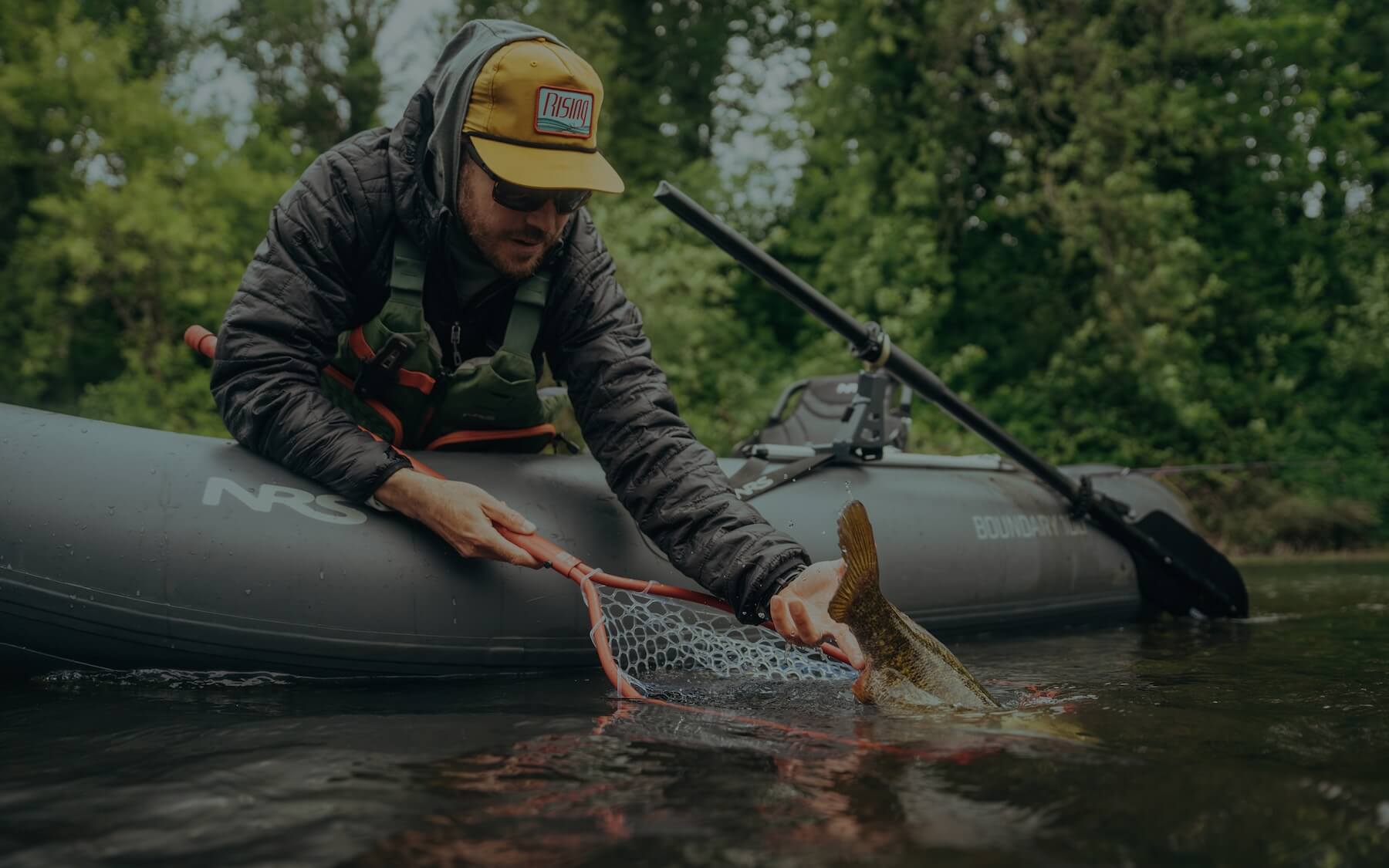
Smarter Fishing Starts in the App.
onWater Fish gives you everything you need to plan smarter, fish better, and own every trip from first cast to last.