Chinook Salmon
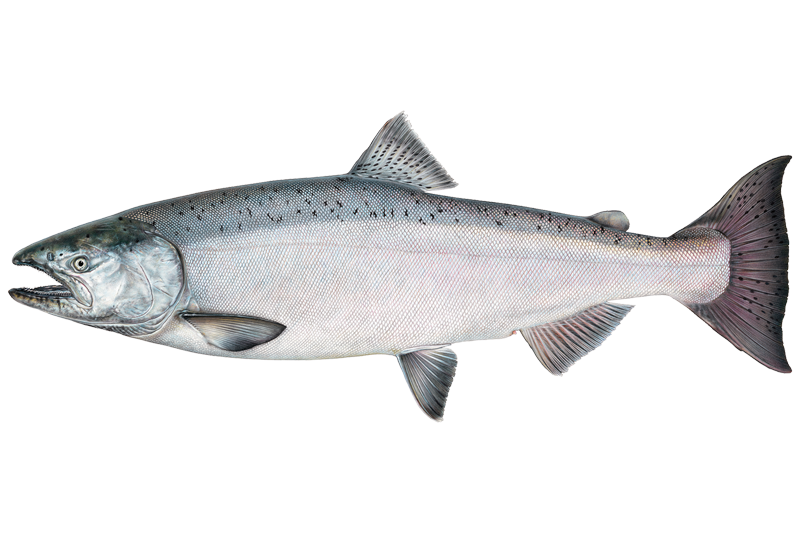
Chinook salmon, also known as King salmon, are the largest Pacific salmon species and Alaska's state fish.
Also known as King salmon
- They're distinguished by black irregular spotting on their back and dorsal fins, spots on both lobes of the tail fin, and a distinctive black gum line.
- Adult Chinook in Alaska typically measure 36 inches and often exceed 30 pounds, with the Kenai River producing particularly large specimens - the world record 97.25-pound Chinook was caught there in 1985.
What to know
Habitat Distribution
- In Alaska, Chinook are abundant from the southeastern panhandle to the Yukon River.
- They're anadromous, spending 1-5 years feeding in the ocean before returning to spawn.
Key Locations
- Prime locations include the Kenai River (famous for trophy-sized fish), Copper River, Gulkana River, and Klutina River.
- Major populations returning to the Yukon, Kuskokwim, Nushagak, Susitna, Kenai, Copper, Alsek, Taku, and Stikine rivers.
Specific Spots
- Fish deeper pools and main channel areas where Chinook prefer to hold.
- For saltwater trolling, use downriggers to reach 150-250 foot depths where large Chinook often hold.
Chinook Salmon FAQ
Answers from onWater's species guide.
What are the best lures and bait for Chinook Salmon in Alaska?
Large lures like Vibrax spinners sizes 5-6, Mepps spinners sizes 5-6, Pixee spoons (7/8 ounce), and Tee Spoons sizes 4-6. Effective baits include salmon e.g.g clusters, cured roe, herring chunks, or eulachon. Cut-plug herring, hoochies, or large spoons behind flashers. Kwikfish plugs.
What flies work for Chinook Salmon in Alaska?
Large bright flies like Fat Freddies, Bunny bugs, Popsicles, or bucktail streamers.
When is the best time to fish for Chinook Salmon in Alaska?
In Alaska, Chinook salmon fishing is best from May through July when they're actively migrating and feeding. Alaska streams normally receive a single run of Chinook from May through July. Gulkana River peak run around July 4th, Klutina River mid to late June through third week of July.
How do you catch Chinook Salmon in Alaska?
Trolling techniques with cut-plug herring, hoochies, or large spoons behind flashers for saltwater. In rivers, drift fishing with roe sacks or back-trolling Kwikfish plugs can be very effective.
What do Chinook Salmon eat?
Juvenile Chinook initially feed on plankton and insects in freshwater, then transition to a diet of herring, pilchard, sandlance, squid, and crustaceans in the ocean.
Fish smarter with real-time insights
Whether you're en route and conditions shift or you're looking for the best spot based on current flows, we enable you to make informed decisions on the fly.




See it in the app
Most maps show you water.
onWater shows you Chinook Salmon.



- 01 · Species map filter
Map every Chinook Salmon water
Pick Chinook Salmon and the map zeroes in on the waters they call home. No more guessing which lake holds them.
- 02 · Waterbody species
Tap any water. See what lives there.
Species, behavior and seasonal patterns for every lake, river and pond, before you leave the driveway.
- 03 · Angler Intelligence
Ask how to catch Chinook Salmon
Tactics, gear and timing from onWater's AI fishing guide, tuned to the species and the water you're on.
Stop guessing where Chinook Salmon are.
Open the map, filter by Chinook Salmon, and head to water that holds them. Download onWater and plan your next trip in minutes.
- Species map filter
- Angler Intelligence
- Fishing journal
Explore other species
Trout, bass, salmon, panfish and everything in between. Each guide unpacks the behavior, seasons, and tactics that put fish in the net.
No species information available.
Alaska licenses and regulations
Explore nearby waters
Explore Alaska waters
Top fishing waters
Popular Cities
Loading popular cities...

Smarter Fishing Starts in the App.
onWater Fish gives you everything you need to plan smarter, fish better, and own every trip from first cast to last.