Common Carp
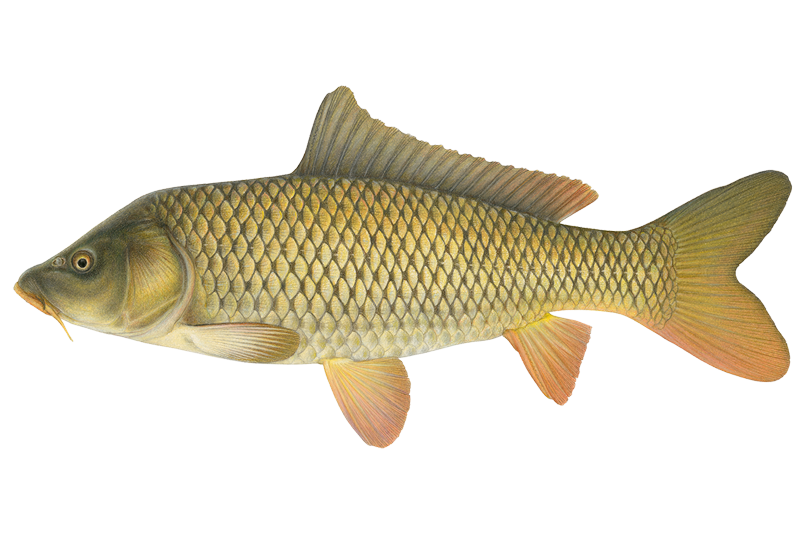
Carp are the backbone of Dutch freshwater fishing.
They're everywhere — canals, polders, gravel pits, rivers — and the Netherlands has built a serious carp culture around them, from casual canal sessions to dedicated big-fish venues in Drenthe and Gelderland where 40-pound-plus fish are realistic targets.
Dutch anglers and visiting British carpers both chase them hard.
Scientific Name: Cyprinus carpio
Also known as karper, spiegelkarper (mirror carp), schubkarper (fully scaled common carp)
- Gold to olive-brown body with large, regular scales; reddish-orange fins; two short barbels at each corner of the fleshy, downturned mouth — the easiest ID feature.
- Mirror carp (spiegelkarper) carry large, irregular scales scattered across the flanks; linear carp have a single row along the lateral line; fully scaled commons are covered edge to edge in even scales.
- Dutch canal and polder fish typically run 5–15 lbs; dedicated fisheries regularly produce 30–45 lb fish, with lake records above 60 lbs at managed venues like Carplantis in Drenthe.
- Deep, broad body with a rounded belly — older fish become noticeably hump-backed and thick across the shoulders.
What to know
Habitat Distribution
- Native to Europe and present throughout the Netherlands in canals, polders, rivers, lakes, gravel pits, and reservoirs — one of the most widely distributed freshwater fish in the country.
- Thrives in the slow, warm, nutrient-rich waters typical of the Dutch lowland system: the Rhine and Maas river networks, South Holland's plas-and-polder landscape, and the IJssel valley in Gelderland.
- Managed private fisheries — converted gravel pits and quarry lakes — are concentrated in provinces like Drenthe, Noord-Brabant, and Gelderland, and hold the heaviest fish.
- Also common in urban and suburban canals across North Holland, South Holland, and Utrecht, where canal-bank fishing is a popular and accessible option.
Key Locations
- Carplantis, Drenthe (near Rolde) — a purpose-built 17-acre quarry with an average stock weight above 30 lbs and multiple fish over 50 lbs.
- Carpvalley, Eibergen, Gelderland — a former ballast pit in the Achterhoek with islands, slopes, and a mixed stock of mirror, linear, and common carp.
- Danny's Carplake, Noord-Brabant (near Eindhoven) — a smaller exclusive-hire venue with a mature stock of deep-bodied mirrors and strong commons.
- Bergse Plassen and Kralingse Plas, South Holland — accessible public waters near Rotterdam with a solid carp population and good angler ratings.
- IJssel river and Veluwsche Wetering, Gelderland — river and canal systems where carp are present alongside other species, suited to roving or float-fishing approaches.
Specific Spots
- Marginal shelves and reed-lined banks: carp move into shallow margins — especially at dawn and dusk — to root through silt and fallen debris for food.
- Islands, plateaus, and underwater slopes in gravel-pit fisheries concentrate fish; channels between islands are natural patrol routes worth baiting consistently.
- Lily pad edges and weed lines give carp shade and cover in warm weather; fish the clear water just outside the weed, not in the middle of it.
- In deep pits (40+ ft), fish show in the upper layers on hot, sunny days — a zig rig fished 3–5 ft below the surface can be the only thing that works when bottom rigs go untouched.
Common Carp FAQ
Answers from onWater's species guide.
What are the best lures and bait for Common Carp?
Boilies are the go-to hook bait at dedicated fisheries; 15–20 mm sizes in fishmeal, squid, or fruit-based flavors cover most situations, match the free offerings you're pre-baiting with to keep the presentation consistent.
When is the best time to fish for Common Carp?
Late spring through early summer (May–June): pre-spawn and post-spawn feeding windows produce some of the year's best action as fish actively replenish energy reserves.
How do you catch Common Carp?
Most Dutch carp fishing is done from fixed swims with multiple rods on bite alarms, a static, pre-baiting approach where anglers build a spot over one or more sessions before expecting consistent action. Canal and urban fishing is more mobile, with anglers walking the bank to find fish before presenting a single rod.
What do Common Carp eat?
Bottom feeders by nature, rooting through silt for bloodworms (chironomid larvae), freshwater mussels, snails, and plant material, match this with a boilie or pellet fished on or just above the lakebed, or a hair-rigged piece of corn or tiger nut.
Where do Common Carp live?
Native to Europe and present throughout the Netherlands in canals, polders, rivers, lakes, gravel pits, and reservoirs, one of the most widely distributed freshwater fish in the country.
See it in the app
Most maps show you water.
onWater shows you Common Carp.



- 01 · Species map filter
Map every Common Carp water
Pick Common Carp and the map zeroes in on the waters they call home. No more guessing which lake holds them.
- 02 · Waterbody species
Tap any water. See what lives there.
Species, behavior and seasonal patterns for every lake, river and pond, before you leave the driveway.
- 03 · Angler Intelligence
Ask how to catch Common Carp
Tactics, gear and timing from onWater's AI fishing guide, tuned to the species and the water you're on.
Stop guessing where Common Carp are.
Open the map, filter by Common Carp, and head to water that holds them. Download onWater and plan your next trip in minutes.
- Species map filter
- Angler Intelligence
- Fishing journal
Explore other species
Trout, bass, salmon, panfish and everything in between. Each guide unpacks the behavior, seasons, and tactics that put fish in the net.
No species information available.
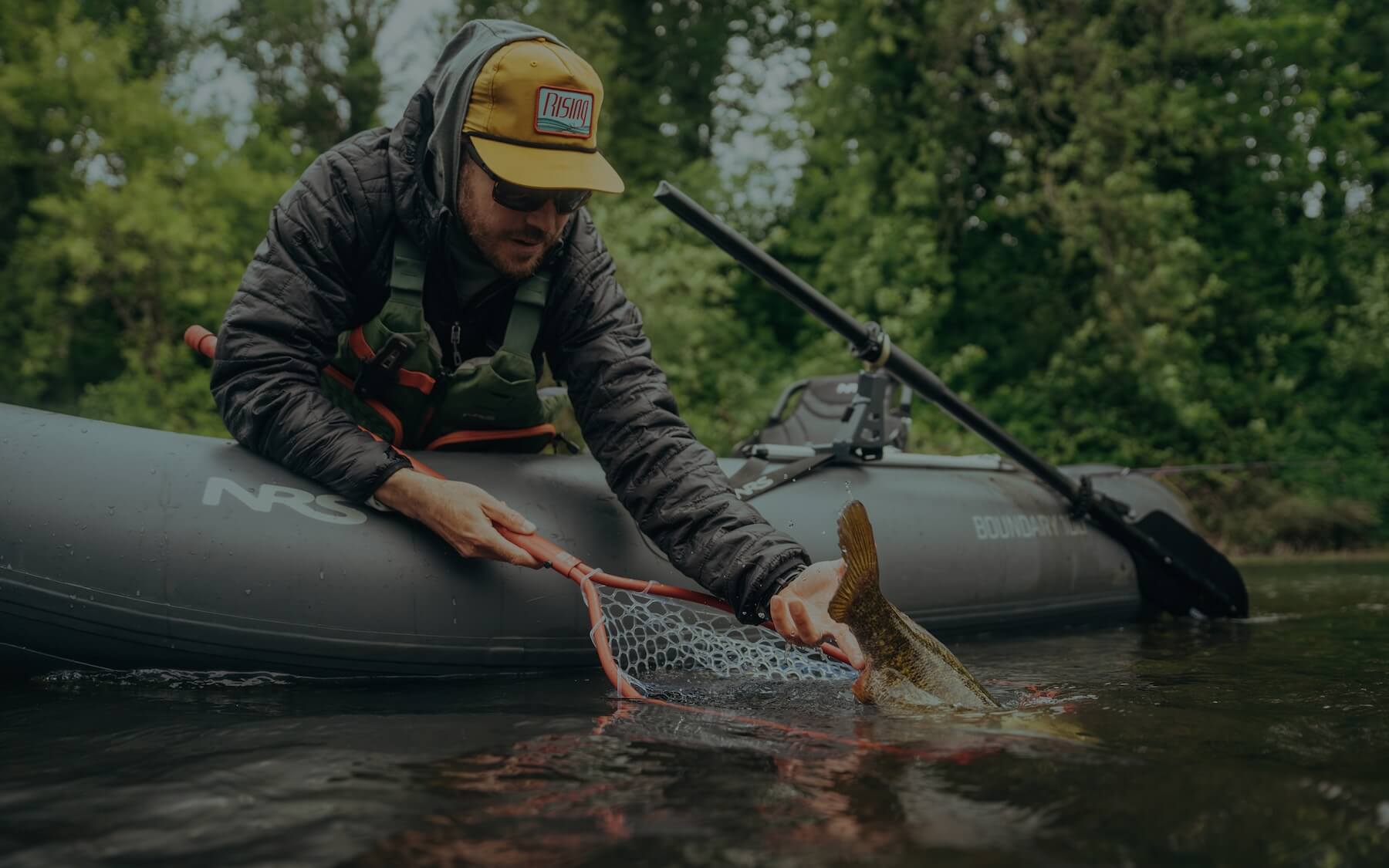
Smarter Fishing Starts in the App.
onWater Fish gives you everything you need to plan smarter, fish better, and own every trip from first cast to last.