Brown Trout
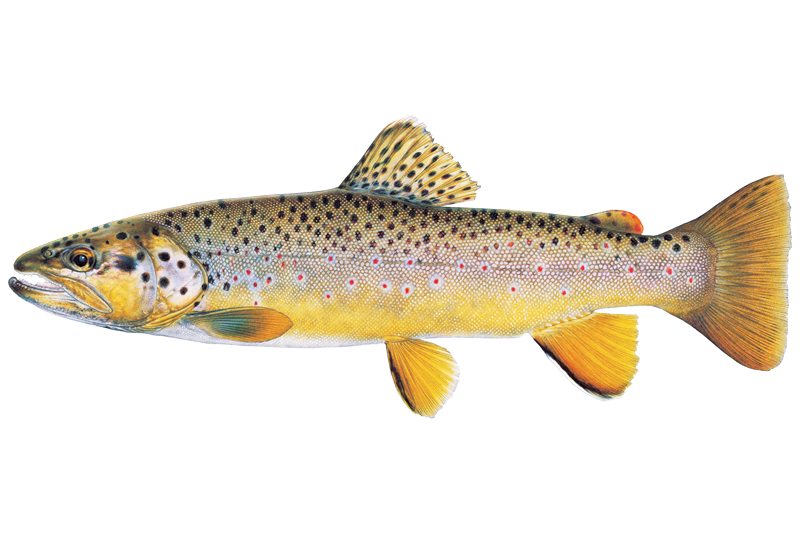
Brown trout in the Netherlands don't follow the classic mountain-stream script. Most are stocked into large lakes — Oostvoornse Meer near Rotterdam being the best-known — where they grow to respectable sizes in cool, clear water.
A small migratory sea-trout population also pushes into rivers to spawn, an increasingly common sight as fish passes improve. For Dutch fly anglers especially, trout represent a genuine technical challenge in an otherwise flatland fishery.
Scientific Name: Salmo trutta
Also known as Beekforel, Bruine forel
- Golden-brown to olive back covered in red and black spots, each often ringed by a pale halo; belly runs yellowish to white — unmistakable in hand.
- Small fleshy adipose fin between the dorsal and tail fin marks it as a salmonid; useful when separating it from stocked rainbow trout.
- Resident stream fish in Dutch waters typically run 25–35 cm; lake-held fish can push larger, and migratory sea-trout form of the same species reaches 50–70 cm.
- Sea-trout form is noticeably more silver with less prominent spotting — easy to confuse with a salmon smolt if you haven't seen both side by side.
What to know
Habitat Distribution
- Native to the Netherlands in a limited way; most fishable populations are stocked into large lakes, with Oostvoornse Meer near Rotterdam the flagship water.
- Geestmerambacht and Lauwersmeer also hold trout; these are relatively brackish or transitional waters, which suits the species' tolerance range.
- A small wild population persists in cleaner stream headwaters; sea trout migrate from the North Sea into rivers to spawn, using fish passes that have been installed or improved in recent decades.
- Demands cold, well-oxygenated water — the flat, warm lowland canals that cover much of the country are largely unsuitable, which is why trout fishing here is concentrated in specific managed lakes.
Key Locations
- Oostvoornse Meer (near Rotterdam) — the primary trout lake in the Netherlands, with stocked brown and rainbow trout and a fly-fishing-friendly reputation; best fished February through June.
- Geestmerambacht — a recreational lake complex in North Holland known to hold trout alongside other species.
- Lauwersmeer — a large lake on the Groningen/Friesland border; transitional water that holds trout and also sees sea-trout movement.
Specific Spots
- In lakes like Oostvoornse Meer, work the deeper drop-offs and channel edges where cooler, oxygenated water collects — trout suspend here when surface temperatures climb.
- Weedline edges and submerged structure give trout a current break and a feeding lane; work flies or lures along these transitions rather than open water.
- In streams, look behind boulders, under cut banks, and at the tail of deeper pools — trout hold in these spots and intercept food drifting down with the current.
- Early morning and evening, fish move shallower to feed; midday in summer, drop down or slow down your presentation as fish push to deeper, cooler water.
Brown Trout FAQ
Answers from onWater's species guide.
What are the best lures and bait for Brown Trout?
Small spinners (Mepps-style, size 1–3) and spoons in silver or gold are reliable across both lake and stream fishing, they cover a lot of water and draw reaction strikes from territorial fish.
What flies work for Brown Trout?
Nymphs cover the most ground: a Pheasant Tail (mayfly nymph imitation) and a Hare's Ear (general nymph/larva imitation) in sizes 12–16 are the starting point for stream fishing; Czech nymphing, fishing weighted nymphs tight to the bottom in fast water, is particularly effective in Dutch streams.
When is the best time to fish for Brown Trout?
February through June is the prime window at lake fisheries like Oostvoornse Meer, when water temperatures are in the trout's comfort zone and fish are actively feeding. Spring (March–May) brings the best dry-fly and nymph action in streams as insect hatches pick up and fish move to feed near the surface.
How do you catch Brown Trout?
Most Dutch trout anglers work from the shore or a float tube on stocked lakes, with fly fishing on a sinking line the favored method at waters like Oostvoornse Meer.
What do Brown Trout eat?
Insects and their larvae form the core of the diet: caddisflies, mayflies, and midges are the main ones. Dry flies like an Elk Hair Caddis (imitates an adult caddisfly) or a Blue-Winged Olive (BWO) dry work when fish are visibly rising; nymphs like a Pheasant Tail (imitates a mayfly nymph) or Hare's Ear cover...
See it in the app
Most maps show you water.
onWater shows you Brown Trout.



- 01 · Species map filter
Map every Brown Trout water
Pick Brown Trout and the map zeroes in on the waters they call home. No more guessing which lake holds them.
- 02 · Waterbody species
Tap any water. See what lives there.
Species, behavior and seasonal patterns for every lake, river and pond, before you leave the driveway.
- 03 · Angler Intelligence
Ask how to catch Brown Trout
Tactics, gear and timing from onWater's AI fishing guide, tuned to the species and the water you're on.
Stop guessing where Brown Trout are.
Open the map, filter by Brown Trout, and head to water that holds them. Download onWater and plan your next trip in minutes.
- Species map filter
- Angler Intelligence
- Fishing journal
Explore other species
Trout, bass, salmon, panfish and everything in between. Each guide unpacks the behavior, seasons, and tactics that put fish in the net.
No species information available.
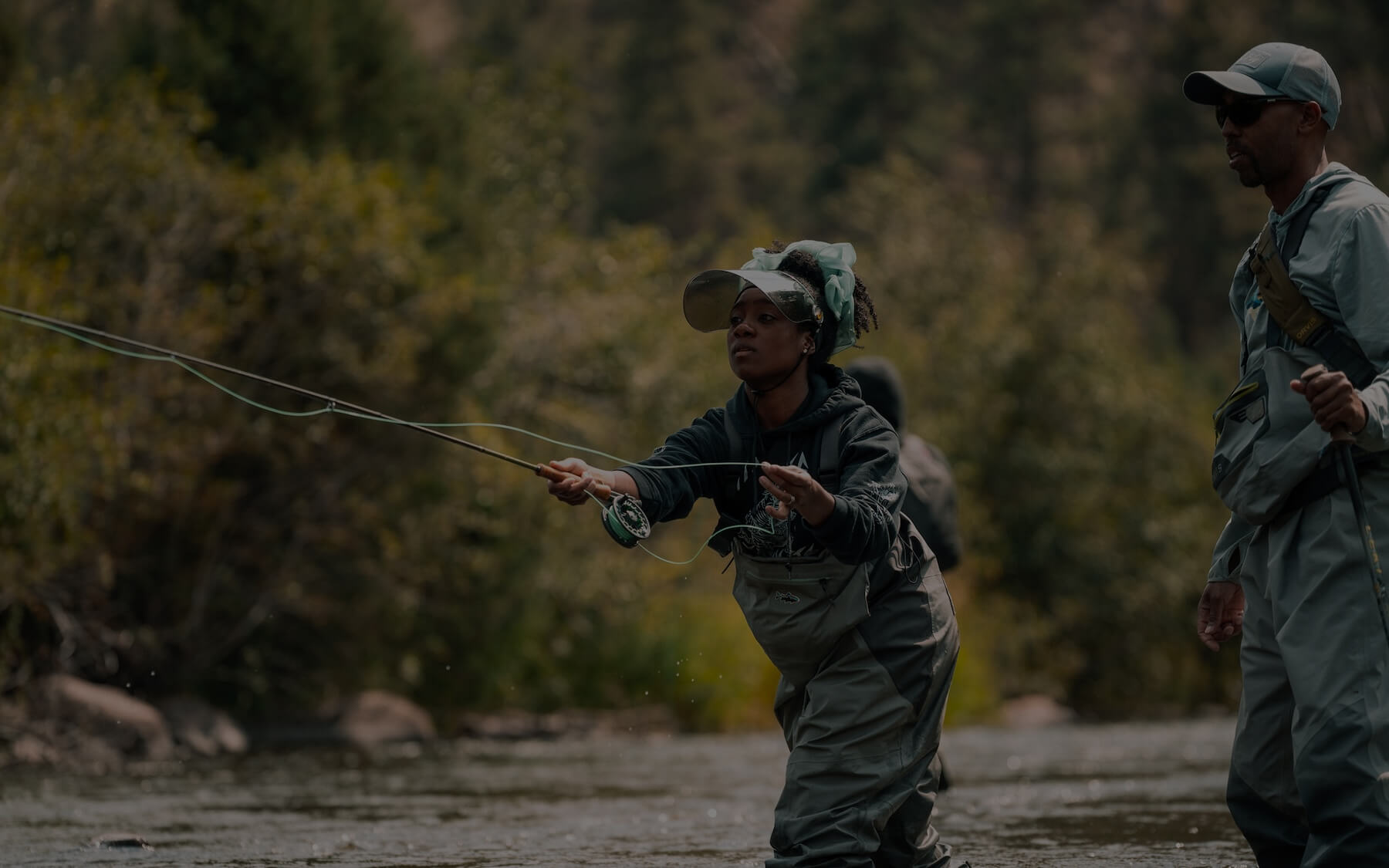
Smarter Fishing Starts in the App.
onWater Fish gives you everything you need to plan smarter, fish better, and own every trip from first cast to last.