Atlantic Salmon
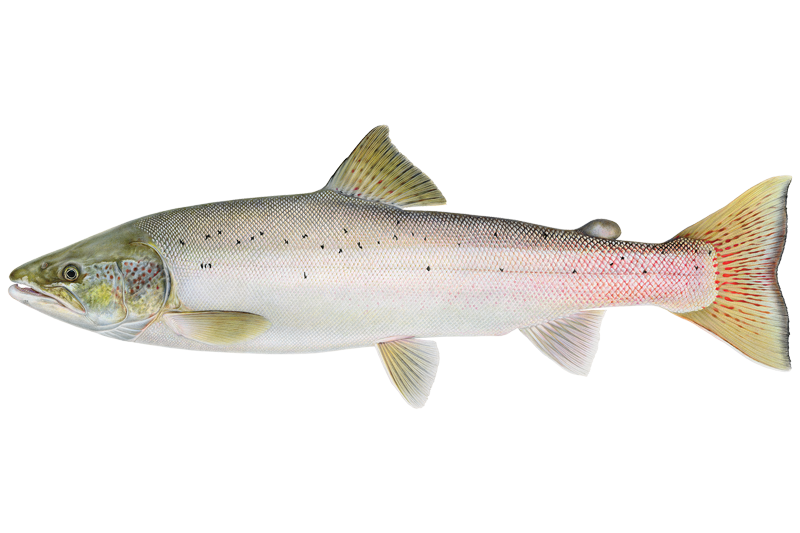
Atlantic salmon were once a cornerstone of commercial fishing on the Rhine, but overfishing, pollution, and river engineering drove them extinct in Dutch waters by the 1950s.
Reintroduction efforts — hatchery stocking in the Rhine and Meuse systems — have brought small numbers back, but this is not a sport fishery in any meaningful sense today. Salmon in the Netherlands are a conservation story, not a target species.
Scientific Name: Salmo salar
Also known as zalm, hengst, Jacobzalm, IJle zalm
- Large, torpedo-shaped body; silvery sides with a bluish-green back and scattered black spots above the lateral line — classic sea-run coloration.
- Distinguished from brown trout by a shallower, less-spotted tail base and a more forked tail; the wrist of the tail is narrow enough to grip.
- Returning adults typically run 8–12 lbs; fish that spend two winters at sea average around 30 inches and can exceed that in exceptional cases.
- Smolts — the juvenile stage photographed in the Netherlands — are 5–6 inches, silvery, and parr-marked before seaward migration.
What to know
Habitat Distribution
- Historically native to the Rhine and Meuse river systems; went extinct in Dutch waters by the 1950s due to pollution, damming, and overfishing.
- Reintroduction programs have released hatchery-reared smolts into the Rhine and Meuse, with the Haringvliet serving as the critical estuary gateway between the North Sea and the river network.
- The Haringvliet locks, regularly opened since 2019, are now the main migration corridor; without passage here, returning adults cannot reach spawning habitat upstream.
- Anadromous by nature — adults feed and grow in the North Atlantic, returning to freshwater rivers to spawn over clean gravel in fast-flowing reaches.
Key Locations
- Haringvliet — the estuary gateway to the Rhine; locks reopened in 2019 to allow migrating salmon passage for the first time in decades.
- Roermond (Meuse) — individual returning salmon have been documented here, evidence of reintroduction fish reaching the lower Meuse system.
- Rhine mainstem — the historic migration corridor and the focus of ongoing Dutch and international reintroduction efforts.
Specific Spots
- The Haringvliet estuary is the primary chokepoint where migrating fish stage before moving upriver — conservation focus, not a fishing zone.
- In the Meuse near Roermond, individual fish have been documented on the river bottom, reflecting the patchy presence of reintroduced fish in the system.
- Deep pools and current breaks below weirs and fish passes are where returning adults rest during upstream migration.
Atlantic Salmon FAQ
Answers from onWater's species guide.
How do you catch Atlantic Salmon?
Atlantic salmon are not a target sport species in the Netherlands. The population is entirely dependent on conservation stocking, and active fishing pressure around migration corridors like the Haringvliet is a recognized threat. Anglers encountering a salmon should release it immediately.
What do Atlantic Salmon eat?
At sea, salmon feed heavily on small fish, sand eels, herring, capelin, and crustaceans, building the body mass they'll burn during the freshwater spawning run. Returning adults in rivers feed little or not at all.
Where do Atlantic Salmon live?
Historically native to the Rhine and Meuse river systems; went extinct in Dutch waters by the 1950s due to pollution, damming, and overfishing.
See it in the app
Most maps show you water.
onWater shows you Atlantic Salmon.



- 01 · Species map filter
Map every Atlantic Salmon water
Pick Atlantic Salmon and the map zeroes in on the waters they call home. No more guessing which lake holds them.
- 02 · Waterbody species
Tap any water. See what lives there.
Species, behavior and seasonal patterns for every lake, river and pond, before you leave the driveway.
- 03 · Angler Intelligence
Ask how to catch Atlantic Salmon
Tactics, gear and timing from onWater's AI fishing guide, tuned to the species and the water you're on.
Stop guessing where Atlantic Salmon are.
Open the map, filter by Atlantic Salmon, and head to water that holds them. Download onWater and plan your next trip in minutes.
- Species map filter
- Angler Intelligence
- Fishing journal
Explore other species
Trout, bass, salmon, panfish and everything in between. Each guide unpacks the behavior, seasons, and tactics that put fish in the net.
No species information available.
Smarter Fishing Starts in the App.
onWater Fish gives you everything you need to plan smarter, fish better, and own every trip from first cast to last.