Yellow Bullhead
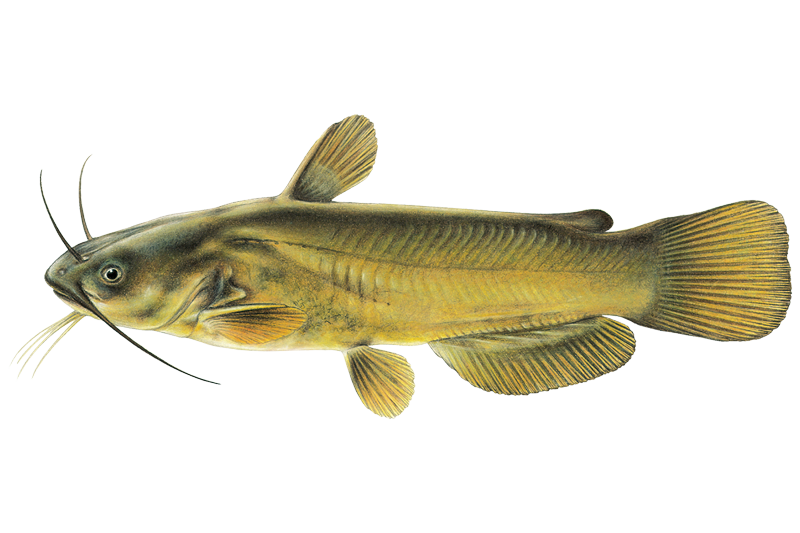
Yellow bullhead are the least common of the three bullhead species in Canada, found mainly in southern Ontario and Quebec, with isolated introduced populations elsewhere.
They're a legitimate table fish — firm, white meat — and a reliable target for anglers fishing after dark with simple bottom rigs. Not a glamour species, but dependable and accessible from shore.
Scientific Name: Ameiurus natalis
Also known as Yellowbelly, Mud Cat, Chucklehead
- Yellow to olive-brown on the back, fading to a bright yellow or cream belly — the yellow belly is more vivid than on brown or black bullhead.
- The key ID mark: chin barbels are white or pale yellow. Both black and brown bullhead have dark-pigmented chin barbels — check there first when you're not sure.
- Rounded, unforked tail fin distinguishes all bullhead from channel and flathead catfish, which have forked tails.
- Typically 7–12 inches in Canadian waters; fish over 14 inches are uncommon, and the world record sits just over 4 pounds.
What to know
Habitat Distribution
- Native to southeastern Canada — primarily southern Ontario and southwestern Quebec — as part of the broader Great Lakes–St. Lawrence drainage system.
- A single specimen has been recorded from Silvermere Lake in the Lower Fraser River drainage in British Columbia, likely an accidental introduction rather than natural range expansion.
- Warm, slow-moving or still water is the core habitat: ponds, weedy lake bays, backwaters, and sluggish stream reaches with soft or silty bottoms.
- More tolerant of low oxygen and murky water than most sport fish, which lets them persist in warm, eutrophic lakes and drainage ditches where other species struggle.
Key Locations
- Southern Ontario — particularly warm, weedy ponds and lake bays in the Great Lakes–St. Lawrence lowlands where the species is native and most consistently present.
- Southwestern Quebec — the species reaches the eastern edge of its Canadian range here, in slow-water habitats connected to the St. Lawrence drainage.
- Lower Fraser River delta area, British Columbia — warm, weedy, eutrophic water provides suitable habitat, though the population here stems from an accidental introduction rather than native range.
Specific Spots
- Dense aquatic vegetation — lily pad edges, cattail margins, submerged weed beds — gives yellow bullhead cover and concentrates the invertebrates they feed on.
- Soft, muddy bottom areas in the 2–8 foot range are prime; they root through substrate for food and rarely hold over hard, clean gravel.
- Warm, shallow bays that heat up quickly in summer hold fish through the night feeding window; deeper water is used mainly to escape midday heat.
- Undercut banks, submerged logs, and dock pilings in slow rivers or connected backwaters act as daytime resting spots — fish these edges after sunset.
Yellow Bullhead FAQ
Answers from onWater's species guide.
What are the best lures and bait for Yellow Bullhead?
Nightcrawlers are the standard bait, a whole worm or large piece on a size 4–8 bait hook, fished on the bottom with a slip sinker. Hard to beat for consistency. Cut bait from local forage fish (sucker, perch, shiner) works well for larger fish, especially in summer.
When is the best time to fish for Yellow Bullhead?
Late spring through early fall is the productive window in Canada, once water temperatures warm into the mid-60s°F and above. Peak fishing typically falls in summer, July and August, when warm nights bring fish into the shallows to feed actively.
How do you catch Yellow Bullhead?
Most Canadian anglers targeting yellow bullhead fish from shore after dark, using a simple bottom rig with worms or cut bait cast to weedy edges or soft-bottom flats in ponds and slow lake bays.
What do Yellow Bullhead eat?
Bottom-oriented invertebrates make up the bulk of the diet: aquatic insect larvae, freshwater mussels and snails, and crayfish. A simple worm on a hook fished on the bottom covers most of this, nightcrawlers are the go-to bait across Canada. Small fish and carrion round out the menu, especially in summer.
Where do Yellow Bullhead live?
Native to southeastern Canada, primarily southern Ontario and southwestern Quebec, as part of the broader Great Lakes–St. Lawrence drainage system.
See it in the app
Most maps show you water.
onWater shows you Yellow Bullhead.



- 01 · Species map filter
Map every Yellow Bullhead water
Pick Yellow Bullhead and the map zeroes in on the waters they call home. No more guessing which lake holds them.
- 02 · Waterbody species
Tap any water. See what lives there.
Species, behavior and seasonal patterns for every lake, river and pond, before you leave the driveway.
- 03 · Angler Intelligence
Ask how to catch Yellow Bullhead
Tactics, gear and timing from onWater's AI fishing guide, tuned to the species and the water you're on.
Stop guessing where Yellow Bullhead are.
Open the map, filter by Yellow Bullhead, and head to water that holds them. Download onWater and plan your next trip in minutes.
- Species map filter
- Angler Intelligence
- Fishing journal
Explore other species
Trout, bass, salmon, panfish and everything in between. Each guide unpacks the behavior, seasons, and tactics that put fish in the net.
No species information available.

Smarter Fishing Starts in the App.
onWater Fish gives you everything you need to plan smarter, fish better, and own every trip from first cast to last.