White Perch
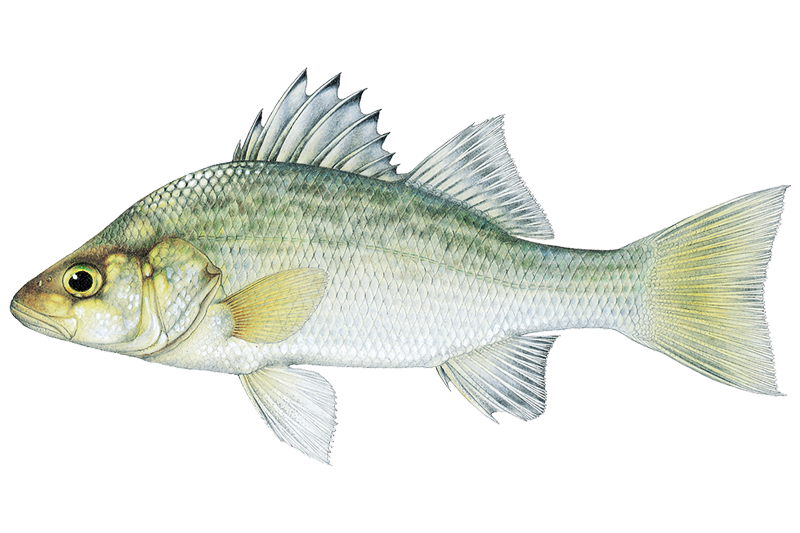
White perch are a small temperate bass native to Atlantic coastal drainages from Nova Scotia and the St. Lawrence River south through the eastern seaboard.
In Canada they're well established in Nova Scotia's lakes and rivers, Lake Ontario, and have spread through the Great Lakes via the Welland Canal. Easy to catch in numbers and genuinely good table fare, they fill a panfish niche wherever they've taken hold.
Scientific Name: Morone americana
Also known as Silver Bass, Black-back
- Silvery to greenish-gray overall, often darker — almost olive — across the back; the "black-back" nickname comes from this domed, dusky dorsal surface.
- No distinct horizontal stripes on the sides — the key visual difference from the similar White Bass, which carries clear lateral lines.
- Deep notch between the two dorsal fins; lower jaw projects slightly forward; tail is mildly forked.
- Most fish run 6–10 inches; anything over 12 inches is a solid specimen. Maximum reported size is around 19 inches and just under 5 lbs, but that's rare.
What to know
Habitat Distribution
- Native to Atlantic slope drainages — in Canada that means Nova Scotia and the St. Lawrence River system, including Lake Ontario.
- Spread through the Great Lakes after entering Lake Erie via the Welland Canal in 1953; now present across the lower Great Lakes basin.
- Naturally at home in brackish estuaries and tidal rivers, but fully capable of living in freshwater lakes and ponds — that flexibility is what makes them so hard to contain.
- Prefer flat-bottomed areas with silt, mud, sand, or clay; less tied to heavy structure or vegetation than most panfish.
Key Locations
- Nova Scotia lakes and coastal rivers — the species' native Canadian stronghold, with good numbers in many accessible lakes across the province.
- Lake Ontario and the lower Great Lakes — established since the mid-20th century; fish are abundant but their presence is ecologically contentious.
- St. Lawrence River system — native range; fish move between brackish and fresh sections seasonally, concentrating near tributary mouths in spring.
Specific Spots
- Shallow flats with soft bottoms draw feeding fish, especially in low-light hours when they move up from deeper water to feed.
- River mouths and tributary inflows concentrate white perch during spring runs — current breaks where moving water meets still water are reliable holding spots.
- Drop-offs adjacent to flat, muddy basins give fish a quick escape route and a feeding edge; work the transition zone between the flat and the deeper water.
- Bridge pilings, docks, and any hard structure in otherwise open water will hold fish, particularly in summer when they school tightly.
White Perch FAQ
Answers from onWater's species guide.
What are the best lures and bait for White Perch?
Small jigs, 1/32 to 1/8 oz, tipped with a soft-plastic grub, waxworm, or small piece of nightcrawler are the most consistent producers across all seasons. Inline spinners (Mepps-style) in sizes 0–2 work well when fish are actively chasing baitfish; silver and white blades are reliable in clear water.
What flies work for White Perch?
Small streamers, Clouser Minnows (which imitate baitfish) in white/chartreuse or white/gray, size 6–8, are the go-to when fish are chasing shiners and small minnows near current breaks.
When is the best time to fish for White Perch?
Spring, the spawn run draws large concentrations of fish into rivers and tributary mouths, making this the most reliable time to find numbers. Summer, fish school in deeper water during midday heat and move to shallow flats at dawn and dusk; early morning and evening sessions outproduce midday by a wide margin.
How do you catch White Perch?
Shore fishing and small-boat angling both work well. Most anglers drift or anchor over soft-bottom flats and fish small jigs or bait rigs vertically, then move until they locate a school.
What do White Perch eat?
Juveniles eat aquatic insects and small crustaceans, small jigs tipped with a waxworm or maggot imitate this well, and soft-plastic micro-jigs in the 1–2 inch range cover the same ground.
See it in the app
Most maps show you water.
onWater shows you White Perch.



- 01 · Species map filter
Map every White Perch water
Pick White Perch and the map zeroes in on the waters they call home. No more guessing which lake holds them.
- 02 · Waterbody species
Tap any water. See what lives there.
Species, behavior and seasonal patterns for every lake, river and pond, before you leave the driveway.
- 03 · Angler Intelligence
Ask how to catch White Perch
Tactics, gear and timing from onWater's AI fishing guide, tuned to the species and the water you're on.
Stop guessing where White Perch are.
Open the map, filter by White Perch, and head to water that holds them. Download onWater and plan your next trip in minutes.
- Species map filter
- Angler Intelligence
- Fishing journal
Explore other species
Trout, bass, salmon, panfish and everything in between. Each guide unpacks the behavior, seasons, and tactics that put fish in the net.
No species information available.

Smarter Fishing Starts in the App.
onWater Fish gives you everything you need to plan smarter, fish better, and own every trip from first cast to last.