Walleye
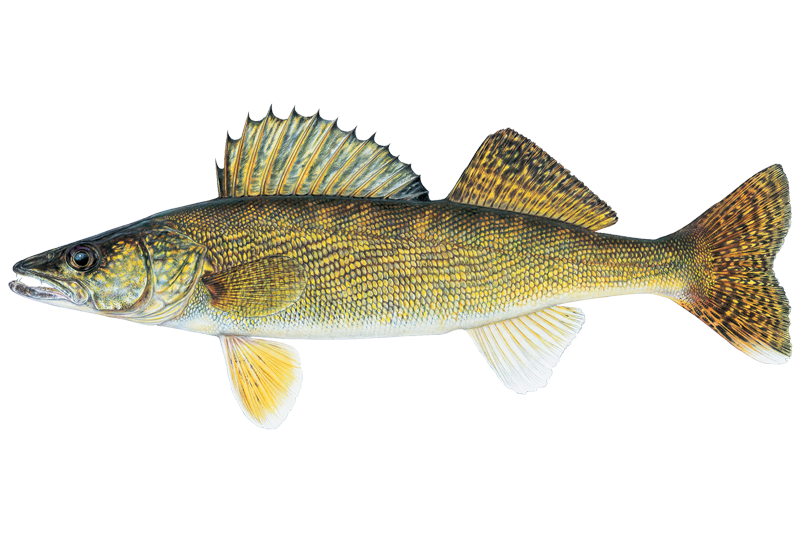
Walleye are Canada's most widely pursued freshwater table fish — native across the country from Labrador to the Mackenzie drainage, and the backbone of the fishing economy in boreal Ontario and Manitoba.
Their reputation rests on two things: the eating (firm, white, mild flesh) and the sheer numbers available in northern lakes. Most Canadian anglers chase them from mid-May through September.
Scientific Name: Sander vitreus
Also known as Pickerel, Yellow Pickerel, Doré, Doré Jaune, Walleyed Pike, Yellow Pike
- Dark olive-green back fading to gold-yellow sides and a white belly — the French name doré (golden) fits perfectly.
- Two key ID marks: a white tip on the lower lobe of the tail fin, and a black blotch at the rear base of the spiny dorsal fin. These separate walleye from the similar-looking sauger, which has neither.
- Eyes have a reflective layer (tapetum lucidum) that appears milky or glassy out of the water — the source of the name — and gives them a low-light feeding advantage.
- Most Canadian fish run 15–24 inches and 1.5–4 lbs; fish over 27 inches (7–10 lbs) are considered large, and anything over 30 inches is genuinely exceptional.
What to know
Habitat Distribution
- Native across most of Canada — from the Arctic river basins and Mackenzie drainage in the Northwest Territories east through the boreal forest to Labrador, and south through the Great Lakes and St. Lawrence system.
- Walleye form the dominant predator in the fish communities of central Canada's boreal zone, particularly in Ontario and Manitoba, where they inhabit thousands of lakes and river systems.
- Prefer large, shallow turbid lakes and the deeper sections of clear lakes — both water types suit their low-light vision advantage. Found in rivers and reservoirs as well.
- An introduced population is now spreading through the Canadian portion of the Columbia River drainage in British Columbia, where they are considered invasive.
Key Locations
- Lake of the Woods, Ontario — one of Canada's most recognized walleye fisheries, with a long season and consistent numbers across its vast structure.
- Lac Seul, Northern Ontario — a large Canadian Shield lake with rocky points, reefs, and a strong forage base of perch and cisco that supports high catch rates and large fish.
- Lake Winnipeg and Northern Manitoba lakes — Manitoba's walleye fishery is among the most productive in the country; the Manitoba Master Angler program reflects the quality of fish available.
- Great Slave Lake, Northwest Territories — one of the largest lakes in North America, with walleye reaching exceptional sizes in its cold, clear water.
- Saskatchewan River system — a major river corridor connecting multiple productive walleye lakes across Saskatchewan and Manitoba.
Specific Spots
- In spring, fish shallow bays and spawning flats — walleye move into these areas first as water warms, and they're concentrated and catchable.
- As summer progresses, shift to rocky points, reefs, and hard-bottom structure in 10–25 feet; walleye use these as feeding stations, especially on the windward side where wave action stirs up baitfish.
- Weedline edges and the transitions between weedy flats and deeper basins hold fish through summer — walleye use the edge as a hunting lane.
- In fall, walleye often push back shallow or suspend near schools of cisco and perch; follow the baitfish and you'll find the walleye.
Walleye FAQ
Answers from onWater's species guide.
What are the best lures and bait for Walleye?
Jigs are the single most versatile walleye tool in Canada, 1/8 to 1/2 oz lead-head jigs tipped with a soft-plastic twister tail, paddle tail, or live leech cover everything from shallow spring bays to deep summer structure. Pitch them, drift them, or drag them slowly along bottom.
When is the best time to fish for Walleye?
Spring (mid-May to June), season opener on most Ontario and Manitoba waters; fish are shallow, concentrated near spawning areas, and actively feeding. Often the highest catch-rate period of the year.
How do you catch Walleye?
Most Canadian walleye anglers fish from boats, drifting or slow-trolling jigs and live bait along structure, rocky points, reefs, and weedline edges. Shore fishing is productive in spring near spawning areas.
What do Walleye eat?
Mature walleye eat primarily smaller fish, perch, cisco, shiners, and young-of-year panfish. Match this with jigs tipped with soft-plastic minnow bodies, or hard-bodied minnow plugs like a Rapala, retrieved slowly near bottom structure.
Where do Walleye live?
Native across most of Canada, from the Arctic river basins and Mackenzie drainage in the Northwest Territories east through the boreal forest to Labrador, and south through the Great Lakes and St. Lawrence system.
See it in the app
Most maps show you water.
onWater shows you Walleye.



- 01 · Species map filter
Map every Walleye water
Pick Walleye and the map zeroes in on the waters they call home. No more guessing which lake holds them.
- 02 · Waterbody species
Tap any water. See what lives there.
Species, behavior and seasonal patterns for every lake, river and pond, before you leave the driveway.
- 03 · Angler Intelligence
Ask how to catch Walleye
Tactics, gear and timing from onWater's AI fishing guide, tuned to the species and the water you're on.
Stop guessing where Walleye are.
Open the map, filter by Walleye, and head to water that holds them. Download onWater and plan your next trip in minutes.
- Species map filter
- Angler Intelligence
- Fishing journal
Explore other species
Trout, bass, salmon, panfish and everything in between. Each guide unpacks the behavior, seasons, and tactics that put fish in the net.
No species information available.
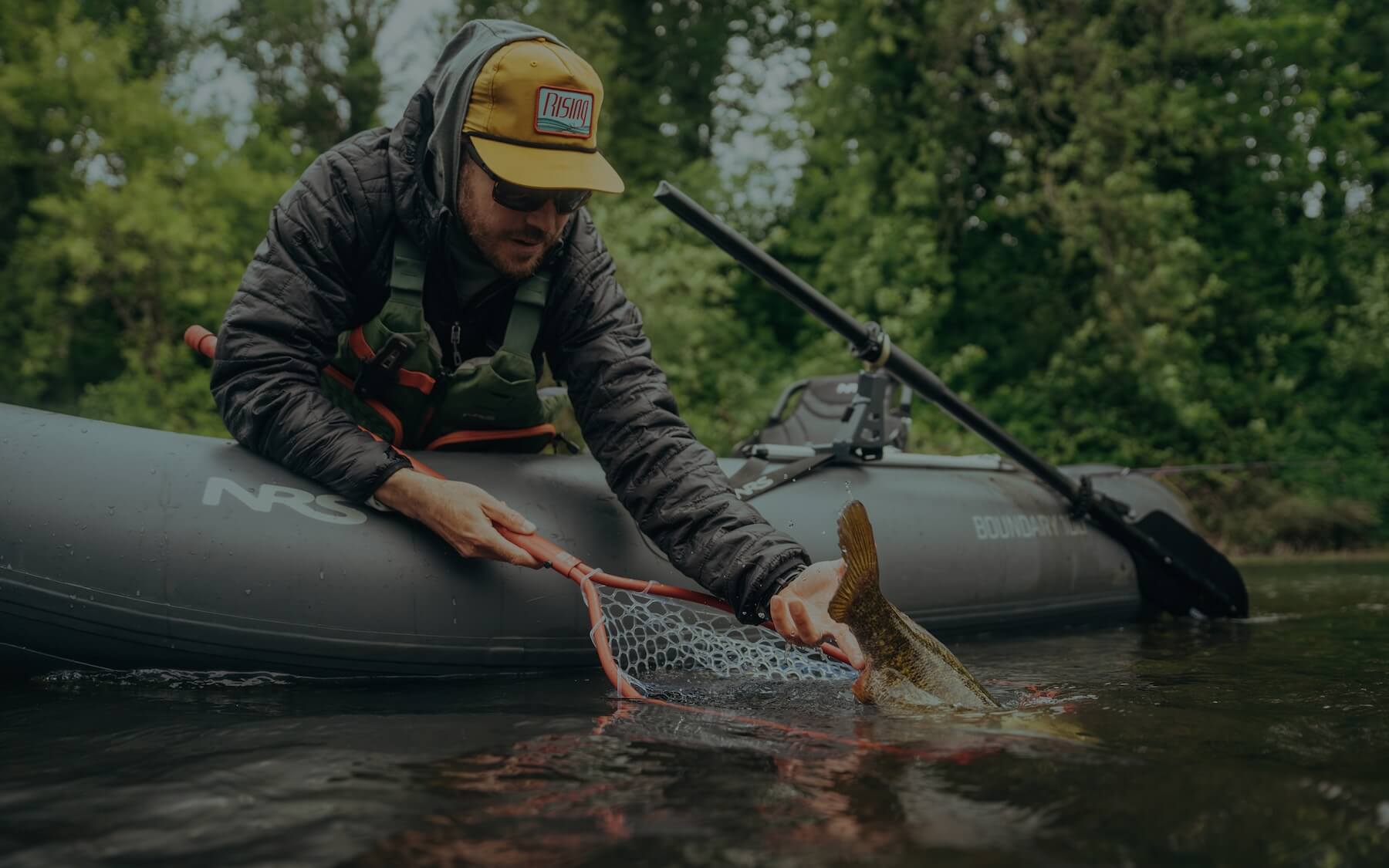
Smarter Fishing Starts in the App.
onWater Fish gives you everything you need to plan smarter, fish better, and own every trip from first cast to last.