Lake Whitefish
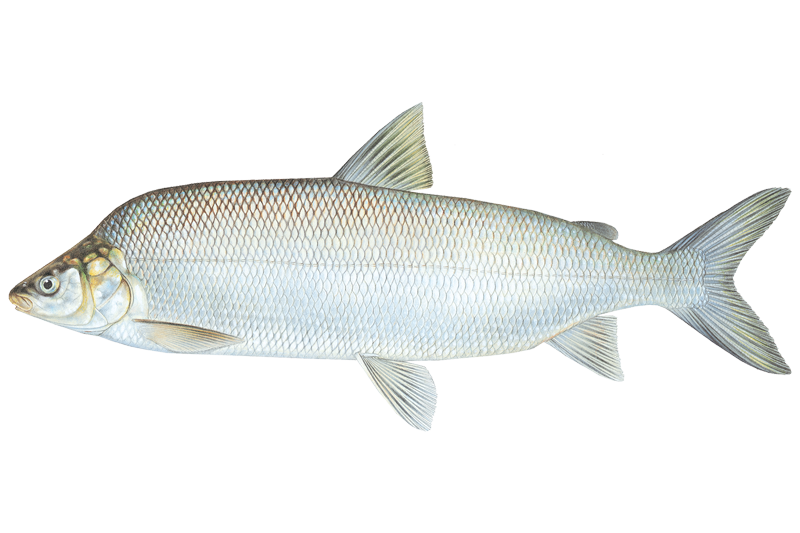
Lake whitefish are the backbone of Canada's inland freshwater fishery — commercially and recreationally. Native from Yukon to Labrador, they live in cold, deep lakes and large rivers across the country.
Anglers target them through the ice in winter, by jigging deep structure in summer, and on the fly during spring mayfly hatches — three very different fisheries on the same fish.
Scientific Name: Coregonus clupeaformis
Also known as Whitefish, whitey, grand corégone, humpback whitefish, common whitefish, Great Lakes whitefish
- Light green-brown to dark brown back, silver sides and belly; a slight hump behind the head gives the body a distinctive arched profile.
- Small, downturned mouth relative to body size — a key ID feature that also explains why they only take small hooks and small baits.
- Average catch runs 2–4 lbs; fish of 5–10 lbs are possible, and Ontario's record sits just under 15 lbs.
- In fall, both sexes develop small bumps (tubercles) on the scales and head — most visible on males during the spawning run.
What to know
Habitat Distribution
- Native across virtually all of Canada — from Yukon and the Northwest Territories south through the Prairie provinces, Ontario, Quebec, and east to Labrador.
- Primarily a deep, cold-lake fish; also found in large rivers and, occasionally, in brackish water near Hudson Bay and James Bay.
- Introduced populations exist in parts of Alberta, British Columbia, and Newfoundland.
- Northern range limit is near Cambridge Bay, Nunavut; the species makes up the second-largest freshwater fishery by landings in Canada.
Key Locations
- Northern Ontario lakes and river systems — including the Lake of the Woods area and Chapleau region — are well-known for consistent whitefish populations accessible to sport anglers.
- Lake Winnipeg, Manitoba: supports one of Canada's largest commercial whitefish fisheries and significant sport fishing.
- Great Lakes (Lakes Superior, Huron, Michigan): historically important for both commercial and recreational whitefish fishing.
- Prairie lakes in Saskatchewan and Alberta hold strong populations, with ice fishing a major draw in winter months.
Specific Spots
- In summer, find schools suspended over shoals surrounded by deeper water — electronics are nearly essential; fish move from shoal tops (around 28 ft) to basin edges (60+ ft) as the day progresses.
- In spring, look for whitefish in rivers and narrow lake channels where current concentrates food; they stack in deeper pools behind gravel beds.
- During mayfly hatches, fish hold just below the surface near any visible surface ripple or rise — they're keyed on the emerging insects, not structure.
- Ice fishing: mark the same shoals and drop-offs you'd fish in open water; whitefish often hold tight to bottom in winter and can be found in the same spots season to season.
Lake Whitefish FAQ
Answers from onWater's species guide.
What are the best lures and bait for Lake Whitefish?
Tiny jigs (1/16 oz or smaller) tipped with a wax worm or small grub are the go-to across seasons, in summer from a boat, in winter through the ice. The small profile matches their natural forage and fits their small mouths.
What flies work for Lake Whitefish?
During the mayfly hatch, small dry flies and emergers in sizes 14–18 that imitate the hatching mayfly, Comparaduns, Sparkle Duns, or simple parachute patterns, are the most effective surface option.
When is the best time to fish for Lake Whitefish?
Spring (ice-out through mayfly hatch): whitefish move into rivers and shallow lake areas, the most accessible and fly-friendly window of the year. Summer: fish push deep (30–70 ft) over basin structure; boat fishing with electronics and vertical jigging is the main method.
How do you catch Lake Whitefish?
Most Canadian anglers target whitefish by jigging vertically, either through the ice in winter or from a boat over deep shoals in summer, using sonar to locate schools first. In spring, a float-and-bait setup drifted through river current is the most productive approach during the egg-feeding and mayfly-hatch windows.
What do Lake Whitefish eat?
In spring, whitefish move into rivers to feed on the eggs of walleye, pike, and suckers, single salmon eggs, wax worms, or small grubs on tiny hooks directly imitate this forage.
See it in the app
Most maps show you water.
onWater shows you Lake Whitefish.



- 01 · Species map filter
Map every Lake Whitefish water
Pick Lake Whitefish and the map zeroes in on the waters they call home. No more guessing which lake holds them.
- 02 · Waterbody species
Tap any water. See what lives there.
Species, behavior and seasonal patterns for every lake, river and pond, before you leave the driveway.
- 03 · Angler Intelligence
Ask how to catch Lake Whitefish
Tactics, gear and timing from onWater's AI fishing guide, tuned to the species and the water you're on.
Stop guessing where Lake Whitefish are.
Open the map, filter by Lake Whitefish, and head to water that holds them. Download onWater and plan your next trip in minutes.
- Species map filter
- Angler Intelligence
- Fishing journal
Explore other species
Trout, bass, salmon, panfish and everything in between. Each guide unpacks the behavior, seasons, and tactics that put fish in the net.
No species information available.
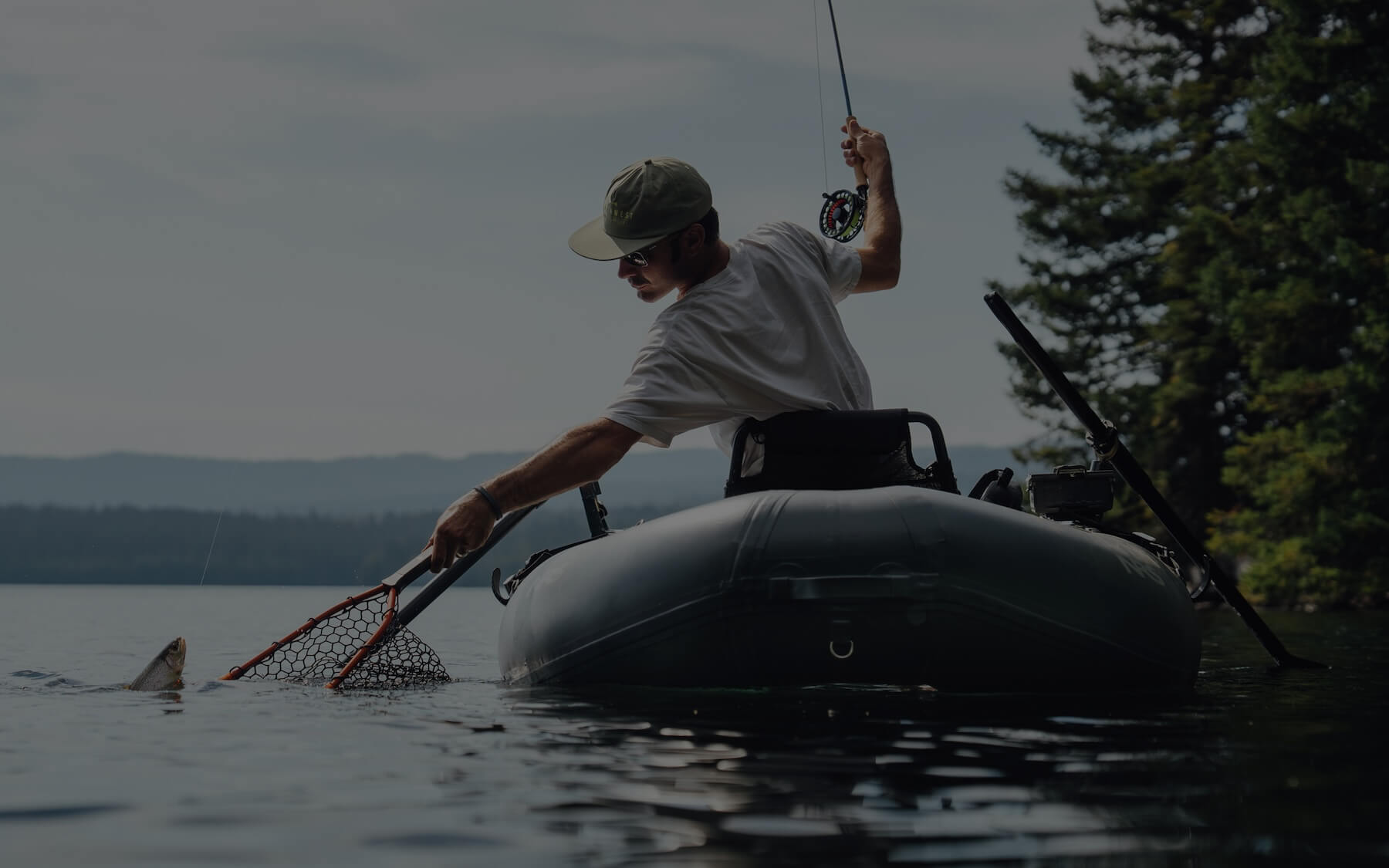
Smarter Fishing Starts in the App.
onWater Fish gives you everything you need to plan smarter, fish better, and own every trip from first cast to last.