Freshwater Drum
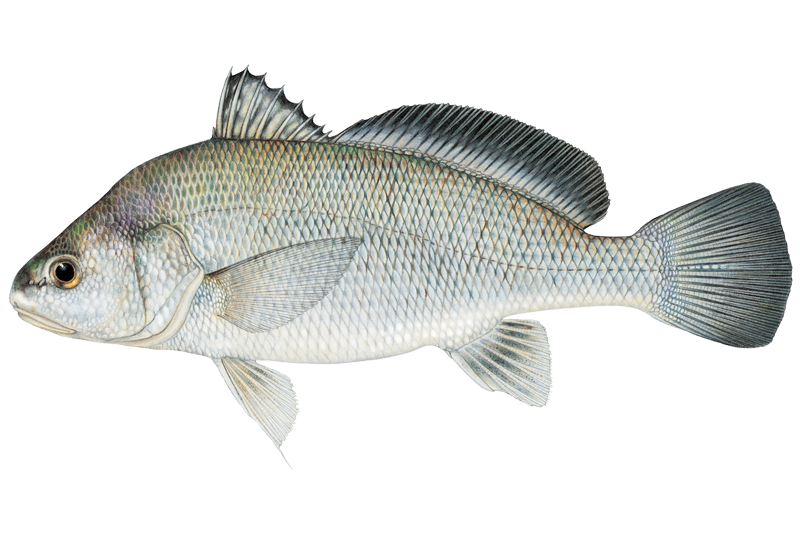
Freshwater drum are native to Canada's Great Lakes and Hudson Bay drainages, making them one of the few truly widespread native sportfish most anglers have never deliberately targeted.
They're the only member of the drum family that spends its entire life in freshwater.
In Canada they're caught incidentally by bass and walleye anglers, but a growing number of anglers target them specifically for their bulldogging fight and surprisingly good table fare.
Scientific Name: Aplodinotus grunniens
Also known as sheephead, sheepshead, sunfish (local Canadian usage), thunder pumper, gaspergou, gou, croaker, bubbler, lake drum
- Deep-bodied, laterally compressed fish with a silvery to pearl-gray coloration; color can darken in turbid water.
- Distinctive blunt, rounded snout with a downturned sub-terminal mouth — built for rooting along the bottom, not chasing prey at the surface.
- The lateral line is unique: it extends all the way into the rounded tail fin, a feature no other Canadian freshwater fish shares — useful for a quick in-hand ID.
- Common fish run 1–5 lbs; larger specimens reach 10–15 lbs. The IGFA all-tackle record is over 54 lbs, though fish that size are rare in Canadian waters.
What to know
Habitat Distribution
- Native to Canada — present in the St. Lawrence–Great Lakes basin, Hudson Bay drainage, and as far west as southern Manitoba and Saskatchewan.
- Abundant in Lakes Erie, Huron, Ontario, and Michigan, and well established in Lake Winnipeg (Manitoba), where telemetry studies show remarkably mobile populations.
- Prefer larger rivers, lakes, and reservoirs with sand or gravel bottoms; tolerant of turbid conditions when necessary, which lets them thrive in the silty lower reaches of major river systems.
- Found in both flowing rivers and open lake habitat — they move freely between the two depending on season.
Key Locations
- Lake Winnipeg, Manitoba — a major population with well-documented seasonal movements between the north and south basins and their tributary rivers.
- Lake Erie — one of the most productive drum fisheries in the Great Lakes, with large fish accessible from both Ontario shorelines and nearshore reefs.
- Lake Ontario and the St. Lawrence River — drum are present throughout, with rocky shoals and current areas near Kingston and the upper St. Lawrence holding fish.
- Red River, Manitoba — drum move into this system seasonally and are caught regularly by anglers targeting walleye and catfish.
Specific Spots
- Rocky or gravel shoals and reefs in lakes — drum work these areas to crush mussels and crayfish, so anywhere you find zebra mussel colonies on hard substrate is worth fishing.
- Current seams and tail-outs below dams and rapids, where invertebrates concentrate and drum stack up to feed.
- Sandy or gravelly river bends and deeper pools with a hard bottom — drum avoid soft muck where their preferred prey is scarce.
- In Lake Winnipeg and similar large lakes, fish tributary mouths in spring when drum move into rivers ahead of spawning, then follow them back to open lake structure post-spawn.
Freshwater Drum FAQ
Answers from onWater's species guide.
What are the best lures and bait for Freshwater Drum?
Bottom rigs with nightcrawlers or cut bait are the most consistent producers, a simple slip-sinker or three-way rig that keeps bait on or just above the bottom covers the drum's feeding zone.
When is the best time to fish for Freshwater Drum?
Spring, drum move into tributary rivers ahead of spawning and are concentrated and catchable near river mouths and current breaks. Early summer (post-spawn), fish disperse into open lake and main-river habitat; this is when they're most mobile and spread across structure.
How do you catch Freshwater Drum?
Most Canadian anglers encounter drum while bottom-fishing for walleye or catfish, but deliberate drum fishing means anchoring or slow-drifting over gravel and rock structure with bottom rigs baited with nightcrawlers or minnows.
What do Freshwater Drum eat?
Mussels and clams are the core of the diet, drum have strong pharyngeal (throat) teeth purpose-built for crushing shells. In the Great Lakes, zebra mussel colonies draw drum like a magnet; bottom-bounced rigs near hard structure imitate this feeding directly. Crayfish and aquatic insect larvae round out the menu.
Where do Freshwater Drum live?
Native to Canada, present in the St. Lawrence–Great Lakes basin, Hudson Bay drainage, and as far west as southern Manitoba and Saskatchewan. Abundant in Lakes Erie, Huron, Ontario, and Michigan, and well established in Lake Winnipeg (Manitoba), where telemetry studies show remarkably mobile populations.
See it in the app
Most maps show you water.
onWater shows you Freshwater Drum.



- 01 · Species map filter
Map every Freshwater Drum water
Pick Freshwater Drum and the map zeroes in on the waters they call home. No more guessing which lake holds them.
- 02 · Waterbody species
Tap any water. See what lives there.
Species, behavior and seasonal patterns for every lake, river and pond, before you leave the driveway.
- 03 · Angler Intelligence
Ask how to catch Freshwater Drum
Tactics, gear and timing from onWater's AI fishing guide, tuned to the species and the water you're on.
Stop guessing where Freshwater Drum are.
Open the map, filter by Freshwater Drum, and head to water that holds them. Download onWater and plan your next trip in minutes.
- Species map filter
- Angler Intelligence
- Fishing journal
Explore other species
Trout, bass, salmon, panfish and everything in between. Each guide unpacks the behavior, seasons, and tactics that put fish in the net.
No species information available.
Smarter Fishing Starts in the App.
onWater Fish gives you everything you need to plan smarter, fish better, and own every trip from first cast to last.