Brown Bullhead
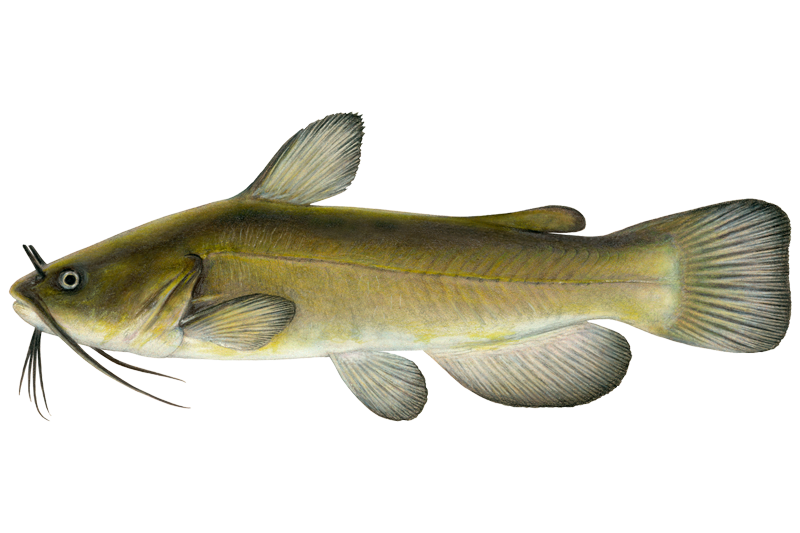
Brown bullhead are native to much of eastern Canada — from New Brunswick and Nova Scotia through Quebec and the Great Lakes — and are one of the most accessible catfish species Canadian anglers can target.
They thrive in warm, weedy, low-oxygen water that other species avoid, making them a reliable catch from shore after dark, especially in spring and early summer.
Scientific Name: Ameiurus nebulosus
Also known as Bullpout, horned pout, hornpout, mud pout, mud cat, wawaazisii (Ojibwe)
- Dark olive-brown to yellow-brown on the back and sides, with mottled patterning; belly is creamy white or grayish white — the pale belly distinguishes it from the black bullhead.
- Chin barbels are dark grayish-black, sometimes whitish at the base — a key ID point separating it from yellow bullhead, which has pale off-white chin barbels.
- Scaleless, leathery skin; squared or slightly rounded tail; stout pectoral fin spines with sawlike teeth on the rear edge — handle carefully.
- Most fish run 12–15 inches; an 18-inch, 3-pound fish is near the top end of the size range for the species.
What to know
Habitat Distribution
- Native to Atlantic and Gulf drainages of eastern Canada — Nova Scotia, New Brunswick, Quebec — and the Great Lakes basin; introduced to British Columbia's Fraser River and Vancouver Island.
- Introduced to Prince Edward Island, where it is considered invasive; no bullheads are native to PEI.
- Prefers warm, slow-moving or still water: ponds, lake bays, weedy backwaters, and sluggish river pools with soft mud or muck bottoms.
- Tolerates low oxygen, high turbidity, and warm temperatures that push out most other species — common in urban and agricultural waterways across southern Ontario and Quebec.
Key Locations
- Lake Champlain watershed (Quebec border) — historically productive bullhead water, especially in spring as ice clears.
- Southern Ontario rivers and ponds — bullhead are widespread in warm, slow waterways across the region, including urban and agricultural drainages.
- Nova Scotia and New Brunswick lakes and slow rivers — part of the species' native Atlantic Canada range; local anglers fish them from shore at night.
- Lower Fraser River, British Columbia — an introduced population established in the lower river and surrounding sloughs.
Specific Spots
- Mouths of swamps, wetlands, and marshy bays — these warm up first in spring and concentrate bullhead early in the season.
- Soft mud or muck bottom with submerged vegetation; bullhead use their barbels to root for food along the bottom in these areas.
- Shallow lake bays and slow river pools, especially where organic debris accumulates — the low-oxygen conditions here deter competing species.
- After dark, bullhead move into very shallow water along weedy shorelines; fishing tight to the bank at night consistently outproduces daytime efforts.
Brown Bullhead FAQ
Answers from onWater's species guide.
What are the best lures and bait for Brown Bullhead?
Nightcrawlers and earthworms are the go-to bait across Canada, fished on the bottom on a weighted rig, they account for the majority of bullhead caught.
When is the best time to fish for Brown Bullhead?
Early spring (ice-out through May), bullhead are among the first fish active after winter; fishing the warmest, shallowest bays produces well before other species turn on. Late spring through summer, peak season across most of Canada; night fishing is most productive during warm months.
How do you catch Brown Bullhead?
Most Canadian anglers fish bullhead from shore or a dock after dark, using a simple bottom rig baited with worms or cut bait cast into weedy bays or slow pools. Spring, as soon as ice leaves the shallows, is the most productive window.
What do Brown Bullhead eat?
Bottom-oriented feeders that eat worms, insect larvae, crayfish, small fish, and organic debris, earthworms and nightcrawlers fished on the bottom are the single most reliable bait across Canada.
Where do Brown Bullhead live?
Native to Atlantic and Gulf drainages of eastern Canada, Nova Scotia, New Brunswick, Quebec, and the Great Lakes basin; introduced to British Columbia's Fraser River and Vancouver Island. Introduced to Prince Edward Island, where it is considered invasive; no bullheads are native to PEI.
See it in the app
Most maps show you water.
onWater shows you Brown Bullhead.



- 01 · Species map filter
Map every Brown Bullhead water
Pick Brown Bullhead and the map zeroes in on the waters they call home. No more guessing which lake holds them.
- 02 · Waterbody species
Tap any water. See what lives there.
Species, behavior and seasonal patterns for every lake, river and pond, before you leave the driveway.
- 03 · Angler Intelligence
Ask how to catch Brown Bullhead
Tactics, gear and timing from onWater's AI fishing guide, tuned to the species and the water you're on.
Stop guessing where Brown Bullhead are.
Open the map, filter by Brown Bullhead, and head to water that holds them. Download onWater and plan your next trip in minutes.
- Species map filter
- Angler Intelligence
- Fishing journal
Explore other species
Trout, bass, salmon, panfish and everything in between. Each guide unpacks the behavior, seasons, and tactics that put fish in the net.
No species information available.

Smarter Fishing Starts in the App.
onWater Fish gives you everything you need to plan smarter, fish better, and own every trip from first cast to last.