Bluegill Sunfish
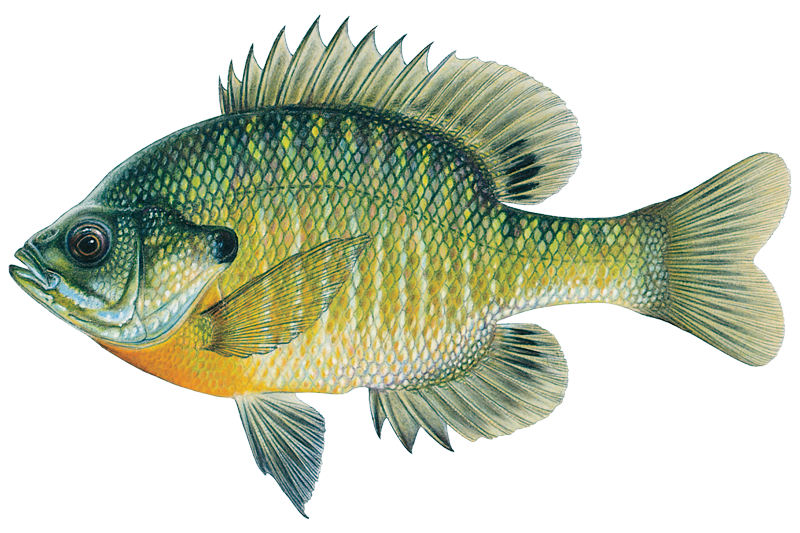
Bluegill are native to the St. Lawrence–Great Lakes basin, putting southern Ontario and Quebec within their original range. Across Canada they're a gateway fish — the species that hands kids their first catch and keeps light-tackle anglers busy all summer.
Small enough to chase on ultralight gear or a fly rod, they school up in numbers that keep action steady.
Scientific Name: Lepomis macrochirus
Also known as Bream, sunny, sunfish, 'gills, perch (informal, though incorrect)
- Deep, slab-sided body — tall and flat — with a distinctively small mouth and rounded pectoral fins; the compressed shape makes even a 7-inch fish feel surprisingly solid on light line.
- Named for the blue-purple wash on the cheek and gill cover; body is olive to gold with faint vertical bars and an orange-yellow belly on breeding males.
- A solid black ear-flap (opercular tab) with no red or orange edge distinguishes bluegill from pumpkinseed, which shows a red or orange spot on that same tab.
- Common size in Canadian waters runs 6–9 inches; fish pushing 10–11 inches are genuinely large for the species.
What to know
Habitat Distribution
- Native to the St. Lawrence–Great Lakes drainage, including southern Ontario and southwestern Quebec; populations elsewhere in Canada are the result of intentional stocking for sport fishing.
- Warmwater lakes, ponds, slow river backwaters, and weedy bays — anywhere with warm, calm water and some vegetation or structure to hold around.
- Rarely found in fast or cold water; the species is essentially confined to the southern fringe of Canada where summer water temperatures climb high enough to support spawning.
Key Locations
- Lake Erie and Lake Ontario shorelines and connected bays in southern Ontario hold native bluegill populations and produce consistent fishing through summer.
- Inland lakes across the Kawartha Lakes region of Ontario are well-known warmwater fisheries where bluegill share water with bass and pike.
- The Rideau Lakes system in eastern Ontario supports healthy bluegill populations in its weedy, warm bays.
- Southwestern Quebec lakes near the Ontario border, within the St. Lawrence drainage, hold native populations that see relatively light pressure.
Specific Spots
- Dock edges and overhanging trees cast shade that concentrates bluegill during bright midday hours — work the shaded side first.
- Weed edges and lily pad margins give bluegill both cover from predators and a steady supply of insects and invertebrates; cast right to the edge rather than into open water.
- During the spawn, look for shallow sandy or gravelly flats in protected bays — males fan out dish-shaped nests in colonies and will strike almost anything that drifts over the bed.
- In summer heat and under ice in winter, larger fish drop to 10–15 feet near drop-offs or submerged timber, where oxygen and temperature are more stable.
Bluegill Sunfish FAQ
Answers from onWater's species guide.
What are the best lures and bait for Bluegill Sunfish?
Small jigs (1/32 oz or lighter) in black, chartreuse, or white with a tiny soft-plastic grub body are the most versatile bluegill lure, fish them under a bobber or on a straight retrieve near structure.
What flies work for Bluegill Sunfish?
Small foam or deer-hair poppers (size 8–10) fished on the surface imitate struggling insects and draw explosive surface takes, one of the most entertaining ways to fish for bluegill on a fly rod.
When is the best time to fish for Bluegill Sunfish?
Late spring through early summer is the most productive period, spawning fish are shallow, visible, and aggressive in protected bays and along sandy flats. Midsummer fishing holds up well early and late in the day around shade and weed cover; midday fish push slightly deeper to cooler water near drop-offs.
How do you catch Bluegill Sunfish?
Most Canadian anglers fish bluegill from shore or a small boat, working dock edges, weed margins, and shallow bays with light spinning gear or a fly rod. During the spawn, sight-fishing to visible nesting colonies in clear, shallow water is a reliable and visual approach.
What do Bluegill Sunfish eat?
Insects and their larvae make up the core of the diet, aquatic midges, mayfly nymphs, and damselfly nymphs are all fair game; small jigs (1/32 oz and under) and wet flies imitate these well.
See it in the app
Most maps show you water.
onWater shows you Bluegill Sunfish.



- 01 · Species map filter
Map every Bluegill Sunfish water
Pick Bluegill Sunfish and the map zeroes in on the waters they call home. No more guessing which lake holds them.
- 02 · Waterbody species
Tap any water. See what lives there.
Species, behavior and seasonal patterns for every lake, river and pond, before you leave the driveway.
- 03 · Angler Intelligence
Ask how to catch Bluegill Sunfish
Tactics, gear and timing from onWater's AI fishing guide, tuned to the species and the water you're on.
Stop guessing where Bluegill Sunfish are.
Open the map, filter by Bluegill Sunfish, and head to water that holds them. Download onWater and plan your next trip in minutes.
- Species map filter
- Angler Intelligence
- Fishing journal
Explore other species
Trout, bass, salmon, panfish and everything in between. Each guide unpacks the behavior, seasons, and tactics that put fish in the net.
No species information available.

Smarter Fishing Starts in the App.
onWater Fish gives you everything you need to plan smarter, fish better, and own every trip from first cast to last.