

You already run a checklist before a lake day. Water temp. Wind. Whether the ramp is open and what the weather is doing at noon. Which rods ride up front and whether the dog is coming. It is habit, and it is why most trips go the way they should.
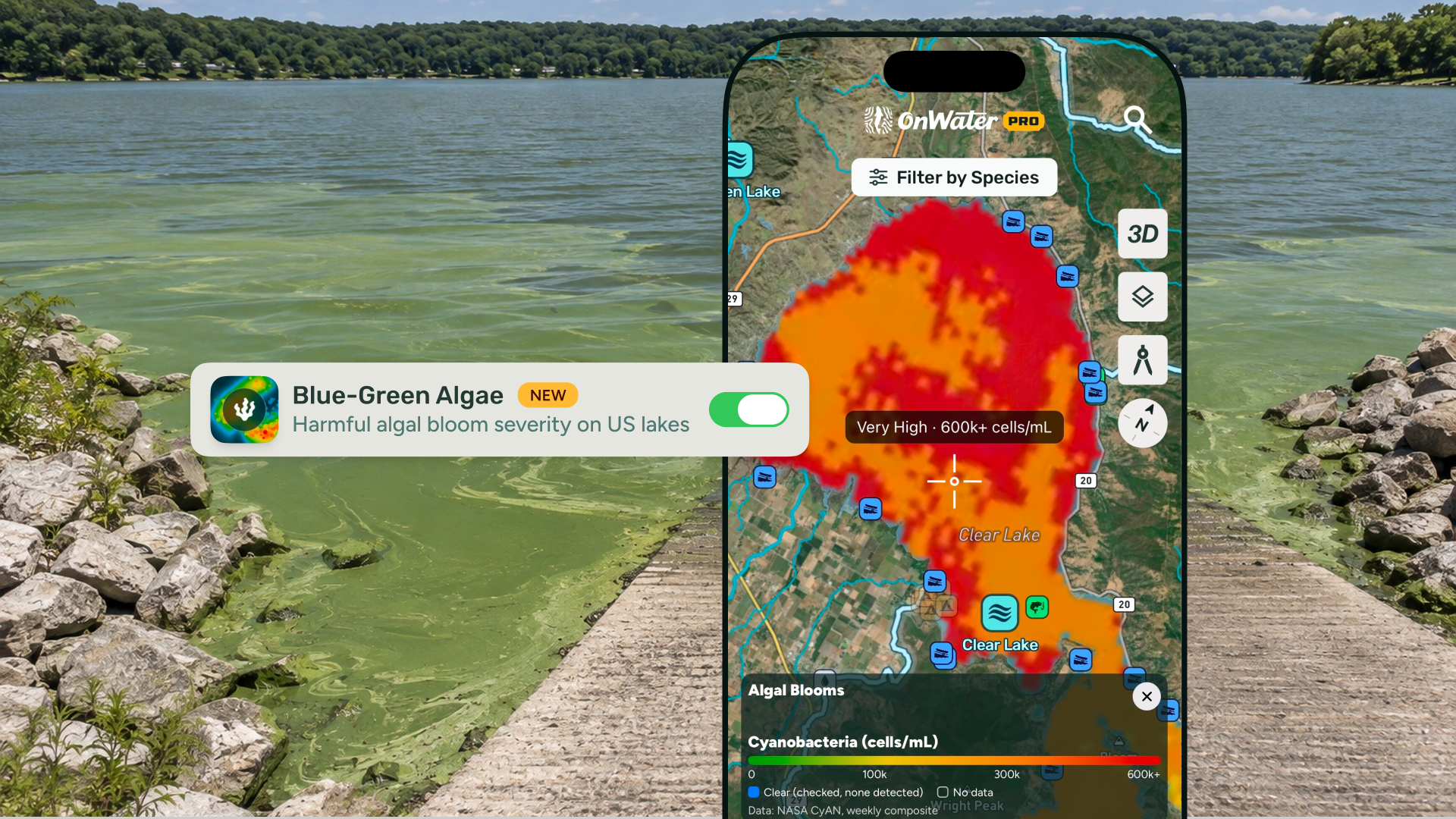
There is one check most anglers skip, mostly because until now there was no good way to make it: whether the lake has a blue-green algae bloom. You find out at the ramp, when the shallows look like someone dumped a can of green paint in them and the dog is already halfway out of the truck. By then you have driven two hours, and the only good decision left is to turn around.
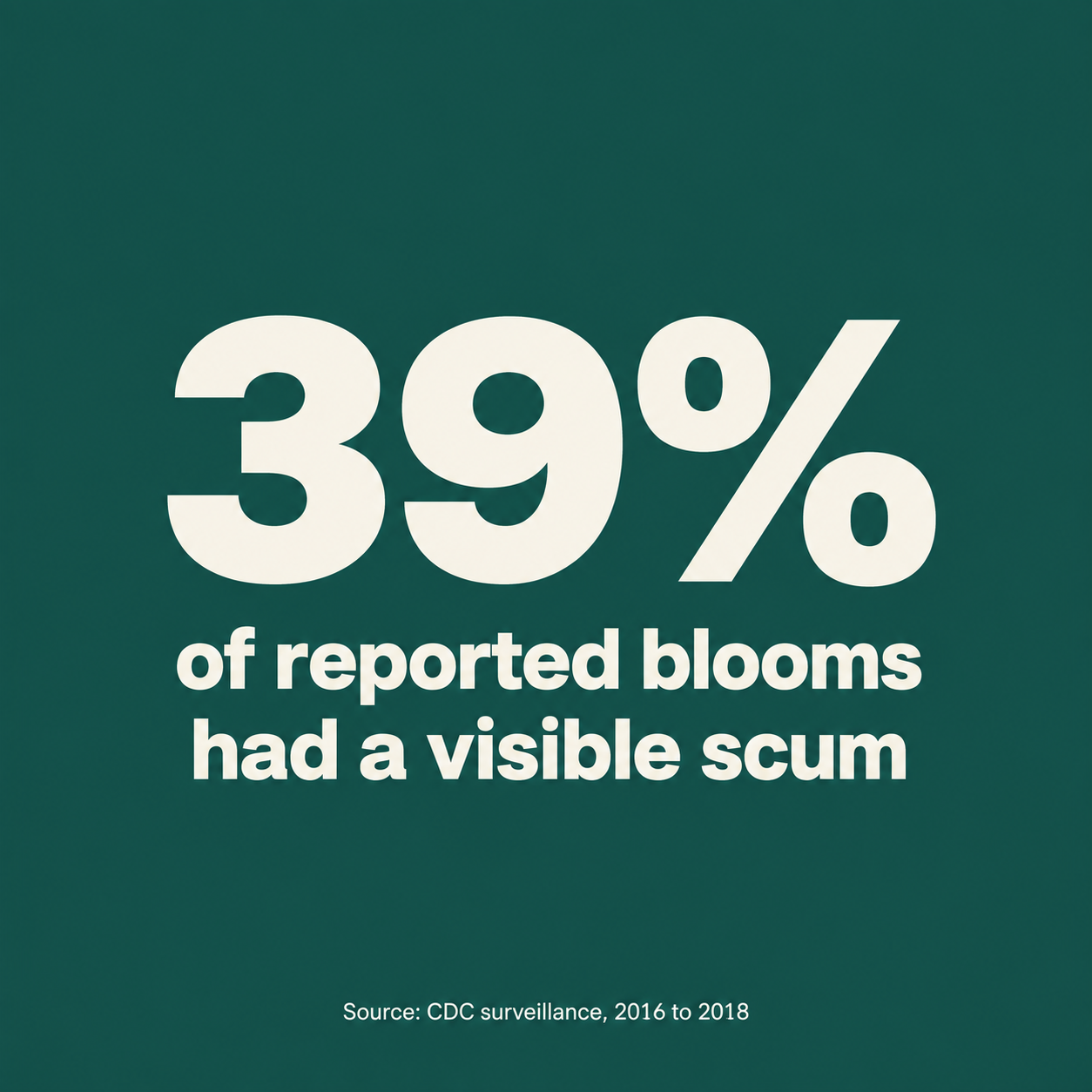
Here is the part that changes the math. You cannot tell a toxic bloom from a harmless one by looking, and a lot of the time you cannot see the bloom at all. In the CDC's most recent national surveillance, only about 39 percent of reported bloom events had a visible scum. The water can look a little off, or fine, and still be carrying a heavy load of cyanobacteria. Checking at the ramp is not a plan.
onWater Fish now shows this on the map. More on that below. First, what you are dealing with.
The dog problem
If you fish with a dog, this is the section that matters.
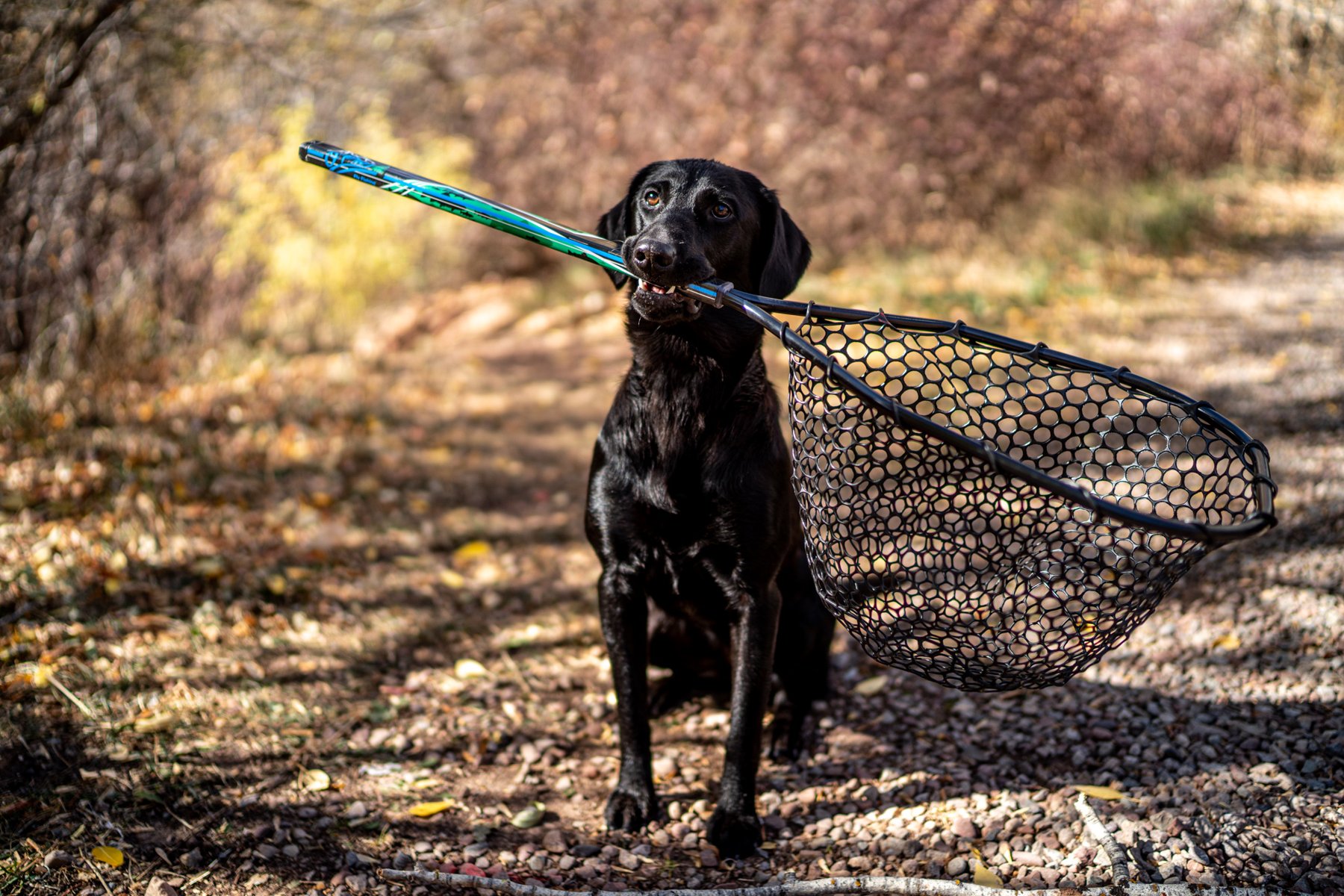
Dogs swim in it, drink it, and lick it off their fur. Minnesota's health department is blunt about why they are at higher risk: "Pets, especially dogs, are susceptible to harmful algae because they swallow more water while swimming and doing other activities like retrieving a ball from the water."
The CDC's warning is short: "Pets and livestock can get very sick and die within hours to days after swallowing cyanobacterial toxins." In the CDC's 2016 to 2018 surveillance, 50 dog illnesses were reported from bloom exposure, and 89 percent of all reported animal cases were fatal. Only 18 states reported, and the CDC says the counts underrepresent the true total.
Watch for loss of energy, vomiting, diarrhea, stumbling, drooling, foaming at the mouth, tremors, and seizures. If your dog gets into questionable water, rinse it with clean water right away, do not let it lick its fur, and call a vet if anything looks off. Better yet, know before you launch whether the lake is a problem, and leave the dog home if it is.
What it does to you
Blue-green algae is cyanobacteria, and it lives in nearly every lake in the country in numbers too small to matter. A bloom is what happens when warm, still water and a load of nutrients from fields, lawns, and septic systems let it multiply fast. That is why blooms peak in late summer and early fall, and why the same reservoirs tend to bloom year after year.
Some blooms produce toxins that attack the liver, kidneys, and nervous system. Some do not. Minnesota's health department puts it plainly: "There is no way to tell if a blue-green algal bloom is toxic just by looking at it."
For people, exposure comes from swallowing water, getting it on your skin, or breathing spray. The CDC lists rash, eye and nose irritation, sore throat, and cough from contact, and stomach pain, vomiting, diarrhea, headache, muscle weakness, dizziness, and liver damage from swallowing it. CDC surveillance from 2016 through 2018 logged 389 human illnesses tied to blooms and no human deaths. Most reported cases were rashes and stomach trouble. Serious ones are uncommon, but they happen, and the people most likely to swallow water are kids.
What it does to the fishing
Dense blooms block light, then die off and rot, and the decomposition strips oxygen out of the water. The EPA notes that blooms "can lead to harmful impacts on the environment, such as low/no oxygen (hypoxia/anoxia)." Fish cannot live in water with no oxygen, and neither can what they eat. Late-summer fish kills on warm reservoirs are sometimes tied to bloom die-offs.
Can you eat what you catch? Microcystins, the most common bloom toxin, build up in fish tissue, but they concentrate in the organs, especially the liver, and in fat. Muscle typically holds less. State guidance is consistent: if you are going to eat fish from a lake with a bloom, fillet it, throw out the guts and skin, and rinse the meat in clean water before cooking. Utah's health guidance spells all of that out, and Michigan's says the same about guts and rinsing. If a local advisory says not to eat fish from that water, listen to it.
Then there is the plain question of whether the day is worth the drive. Anglers will tell you fishing goes dead in a heavy bloom. We do not have hard data on that, so take it as experience rather than science. But we have never met anyone who drove two hours to fish a lake covered in green scum and called it a good trip.
What a bloom looks like (and what it doesn't)
When you can see one, a cyanobacteria bloom usually looks like spilled paint, pea soup, or a slick scum on the surface. Green is most common, but they can also be blue, turquoise, brown, or reddish. Sometimes there is foam along the shore, and wind piles scum onto the downwind bank and into the backs of cove

Not everything green is a bloom. Long, stringy filamentous algae is a nuisance, not a hazard. Duckweed, the tiny floating plants that cover backwaters, is harmless. Yellow pollen on the surface in spring fools plenty of people.
And as covered above, most blooms are not obvious at all. That is the gap the satellite fills.
How the Blue-Green Algae Map Layer works
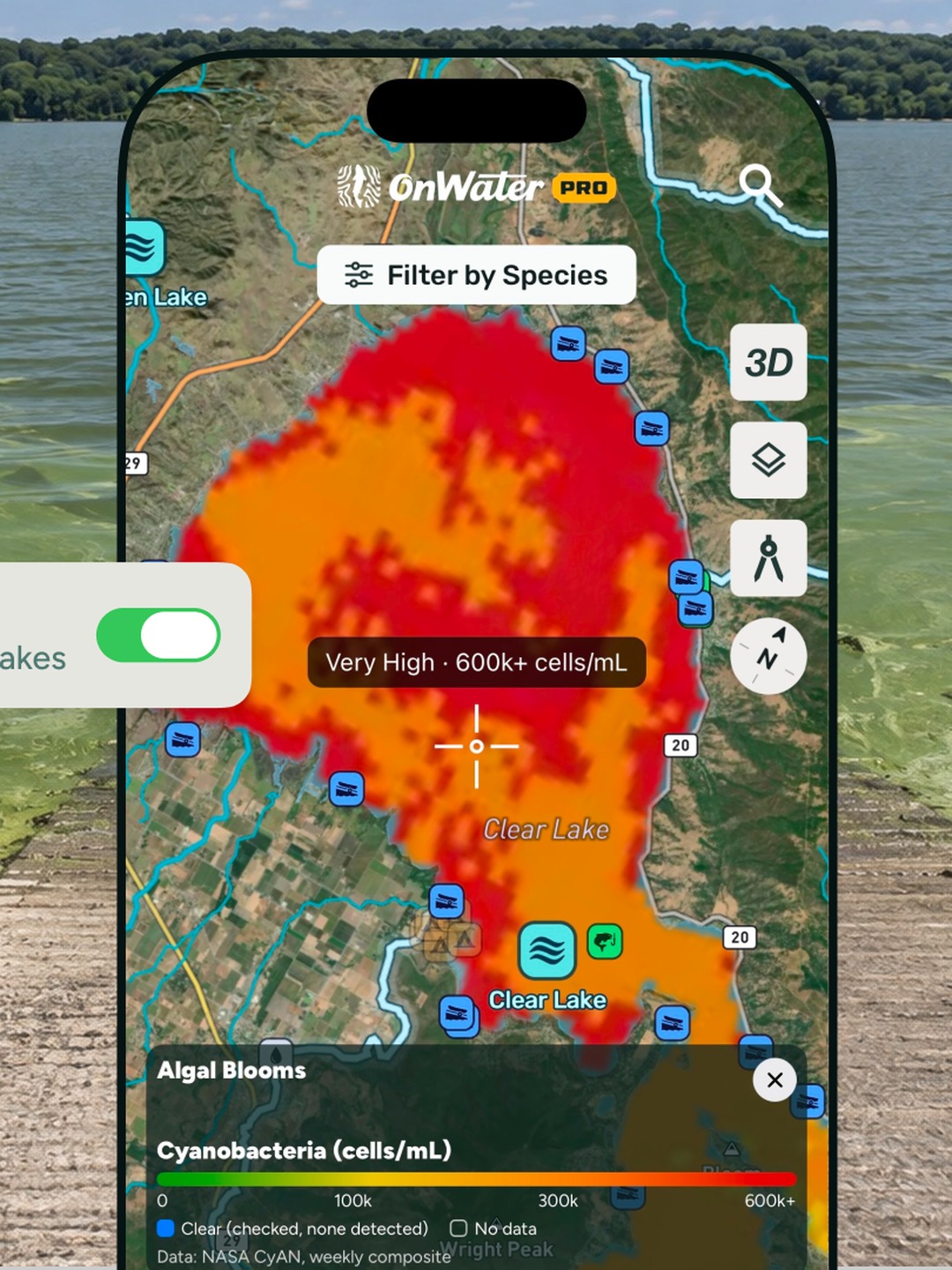
onWater Fish is the first fishing app to put satellite cyanobacteria data for lakes directly on its map. The data comes from CyAN, a federal program run by the EPA with NASA, NOAA, and USGS. Satellites pass over every two to three days and estimate cyanobacteria concentration in each 300-meter square of lake surface, covering more than 2,000 of the largest lakes and reservoirs in the continental US.
The EPA publishes this data itself, and you can go dig through it on their website. What onWater does is put it on the map you already use to plan the trip, next to the ramp, the forecast, and the water you saved.
The layer shows the weekly composite. For each spot on the lake, that is the highest reading the satellite recorded over the past seven days. It is deliberately conservative: if a bloom showed up any day that week, you will see it. Colors step from green (low) through yellow and orange to red (very high). Blue means the satellite looked and found nothing above its detection limit. That is not a guarantee, but it is a good sign. Unshaded water has no current reading, usually because clouds blocked the view or the lake is too small for the satellite to resolve.
To turn it on, open Map Layers, go to Conditions, and switch on Blue-Green Algae. The layer is available with onWater+ and onWater Pro.
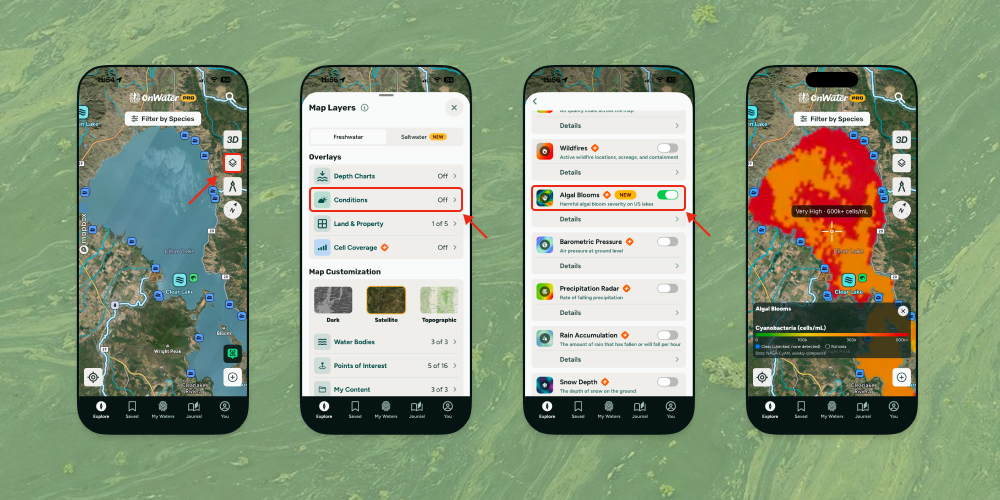
A few honest caveats. The satellite measures cyanobacteria, not toxins, so a red lake is a lake with a heavy bloom, not a lake with confirmed toxin levels. The EPA calls the data provisional and says it "should be considered a research level tool." Wind pushes scum around, and a week-old max reading can be stale by Saturday. Treat the layer as the first check, not the last one. If a lake shows orange or red, look for a state or county advisory before you go, and keep people and dogs out of the water regardless.
How to use it on a real trip
The night before, open Map Layers, go to Conditions, turn on Blue-Green Algae, and look at the lake you are planning to fish. Yellow or orange pixels already on the map, a warm lake, and a hot calm stretch ahead is a lake trending the wrong way. Pick a different one. Getting there early does not change what is in the water.
If a lake is blue or unshaded, it is not a guarantee, but it is a good sign. Still look the water over at the ramp when you get there, especially the downwind shore and the back of any cove.
If the lake shows red, the dog is with you, and there is other water within an hour, fish the other water. No bass is worth a vet bill.
Check the layer before you go
Blue-green algae is not new. What is new is being able to see it from your kitchen table, on the same map where you already check flows, weather, and access. Turn on the Blue-Green Algae layer, check it before every warm-weather lake trip, and keep yourself, your dog, and the fishery out of the bad water.
Sources
- CDC, About Harmful Algal Blooms
- CDC, Symptoms of Freshwater Harmful Algal Blooms
- CDC, Preventing Pet and Livestock Illnesses
- CDC MMWR, OHHABS 2016 to 2018 summary
- EPA, Learn about Cyanobacteria and Cyanotoxins
- EPA, Cyanobacteria Assessment Network (CyAN)
- EPA, CyAN Application
- NASA Ocean Color, CyAN project
- Minnesota Department of Health, Harmful Algal Blooms
- Michigan EGLE, HAB FAQ
- Utah DEQ, Hunting and Fishing During HABs
- WHO, Guidelines on Recreational Water Quality, cyanobacteria chapter
- Wisconsin DHS, bloom identification guide