Common Carp
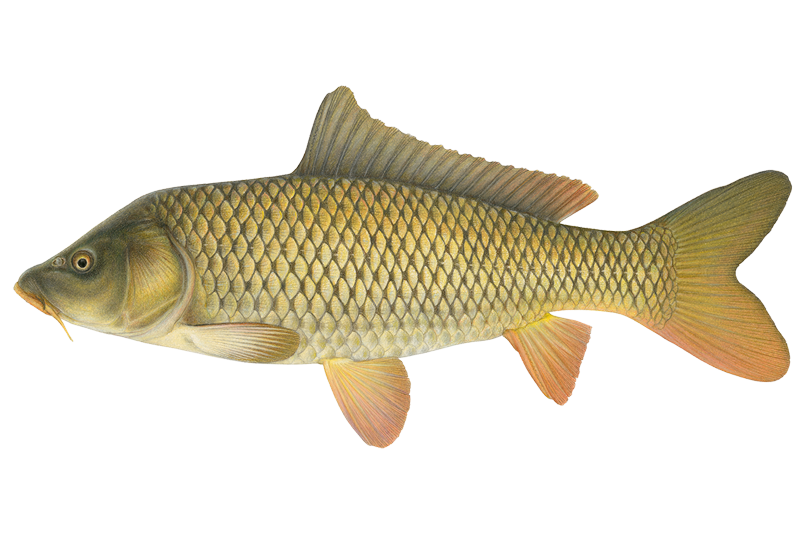
Common carp are an introduced species that have spread through much of Argentina's freshwater system since their arrival in the 20th century.
They're now one of the most widely available freshwater targets in the country, particularly across the Pampas region, where slow rivers, lagoons, and reservoirs hold large populations.
Carp fishing here draws both casual bait anglers and dedicated European-style carp specialists.
Scientific Name: Cyprinus carpio
Also known as carpa, carpa común, carpa europea
- Dark bronze to golden-brown body covered in large, uniform scales; reddish-tinted fins are a reliable field mark.
- Long dorsal fin runs most of the back; protruding, extendable mouth with two small barbels on each side — built for rooting the bottom.
- Body shape varies: river fish tend to be longer and leaner; lake fish often grow deep and broad across the shoulders.
- Typical fish run 2–10 kg; larger specimens exceeding 15 kg are possible in well-established Argentine waters.
What to know
Habitat Distribution
- Introduced — not native to Argentina. Research has documented carp in over 119 natural and 49 artificial water bodies across the country, with populations still expanding.
- Heaviest concentrations are in the Pampas lowlands of Buenos Aires province, where slow-moving streams, lagoons, and irrigation reservoirs provide ideal habitat.
- Tolerates a wide range of conditions — from clear lakes to turbid, silty lowland rivers — which has allowed them to colonize waters where most native species struggle.
- Prefer slow or standing water with soft, muddy or sandy bottoms where they can root for food.
Key Locations
- Buenos Aires province lagoons and lowland streams — the core of Argentine carp fishing, with waters like Arroyo Tapalquén holding established populations.
- Pampas reservoirs and irrigation impoundments — artificial water bodies that carp colonized early and where large fish are regularly reported.
- Slow-moving tributaries of the Río Salado basin — classic lowland carp habitat with soft bottoms and abundant food.
Specific Spots
- Shallow, silty bays and backwaters — carp feed heavily in these areas, and you'll often spot them by the strings of bubbles rising as they root through the bottom.
- Weed edges and submerged vegetation hold carp throughout the day, especially in warmer months when aquatic plants concentrate invertebrates.
- Current breaks and slack water behind bends in lowland rivers — carp avoid strong flow and stack up wherever the current eases.
- Inlet channels where water enters a lagoon or reservoir; the disturbed bottom and food carried in by flow draw fish consistently.
Common Carp FAQ
Answers from onWater's species guide.
What are the best lures and bait for Common Carp?
Boilies (flavored, hardened dough balls in sizes from 15–20 mm) fished on a hair rig over a bed of loose offerings are the most productive method; fruit, fishmeal, and spice flavors all work.
When is the best time to fish for Common Carp?
Spring (September–November), water warms and carp become increasingly active after winter; pre-spawn fish feed heavily and are easier to locate in the shallows. Summer (December–February), peak feeding activity; early mornings and evenings produce best as midday heat pushes fish deeper or into shade.
How do you catch Common Carp?
Most Argentine carp anglers fish from the bank, European style, casting ledgered boilies or corn to likely feeding areas, setting the rod on rests, and waiting with a baitrunner reel to detect takes. Prebaiting a spot with loose offerings before fishing significantly improves results.
What do Common Carp eat?
Bottom feeders that root through soft sediment for aquatic insect larvae, worms, crustaceans, and plant material, a mix that makes natural baits like worms, corn, and bread highly effective.
Where do Common Carp live?
Introduced, not native to Argentina. Research has documented carp in over 119 natural and 49 artificial water bodies across the country, with populations still expanding.
See it in the app
Most maps show you water.
onWater shows you Common Carp.



- 01 · Species map filter
Map every Common Carp water
Pick Common Carp and the map zeroes in on the waters they call home. No more guessing which lake holds them.
- 02 · Waterbody species
Tap any water. See what lives there.
Species, behavior and seasonal patterns for every lake, river and pond, before you leave the driveway.
- 03 · Angler Intelligence
Ask how to catch Common Carp
Tactics, gear and timing from onWater's AI fishing guide, tuned to the species and the water you're on.
Stop guessing where Common Carp are.
Open the map, filter by Common Carp, and head to water that holds them. Download onWater and plan your next trip in minutes.
- Species map filter
- Angler Intelligence
- Fishing journal
Explore other species
Trout, bass, salmon, panfish and everything in between. Each guide unpacks the behavior, seasons, and tactics that put fish in the net.
No species information available.
Smarter Fishing Starts in the App.
onWater Fish gives you everything you need to plan smarter, fish better, and own every trip from first cast to last.